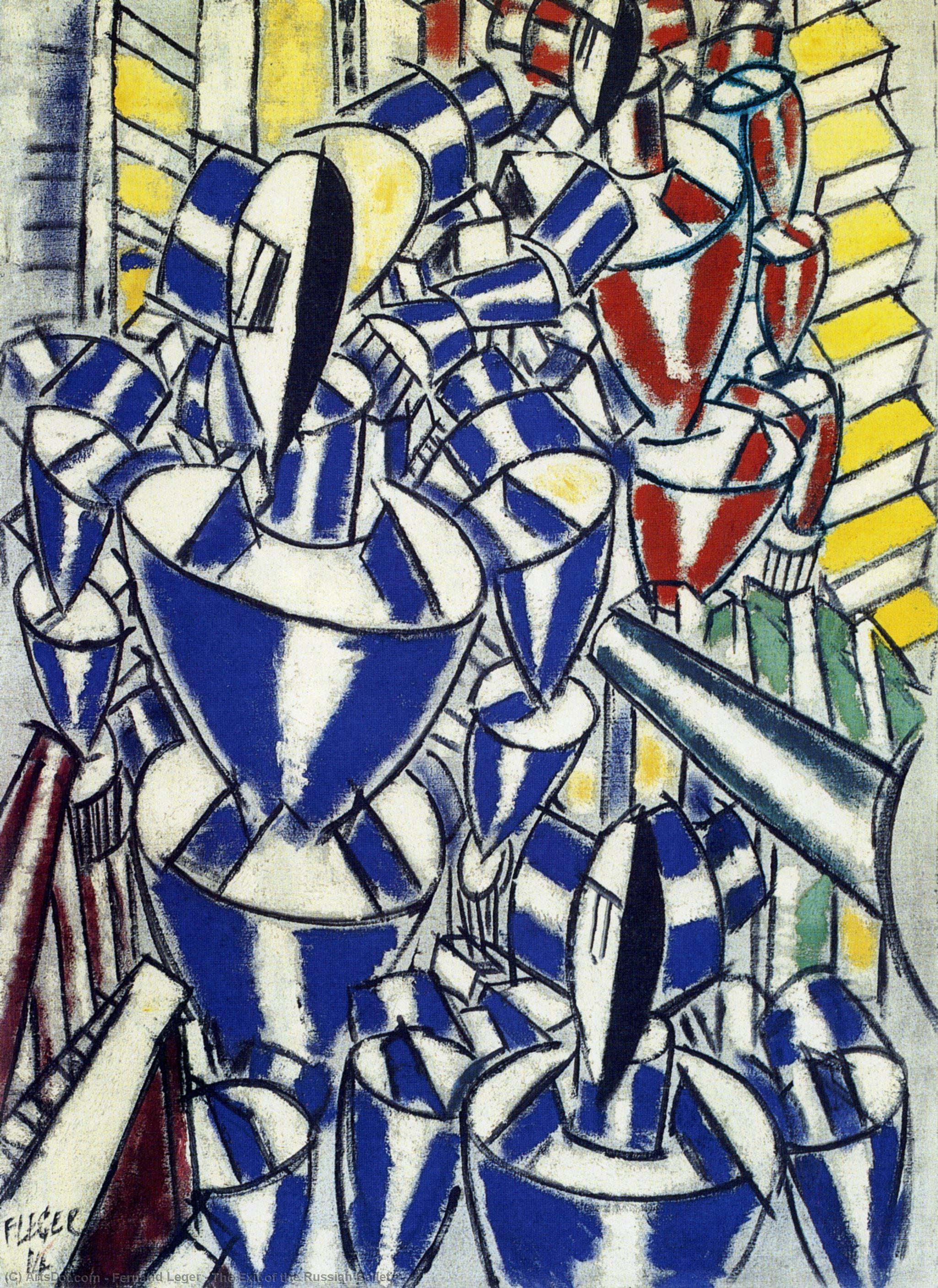
The Exit of the Russian Ballet by Fernand Léger – A striking painting depicting a group of figures standing before a building, adorned with scattered cups and bowls, capturing the energy of urban life through Léger’s distinctive geometric abstraction.
The Exit of the Russian Ballet – A Fragment of Parisian Modernism
Fernand Léger’s “The Exit of the Russian Ballet,” completed in 1914, isn't merely a depiction of a ballet performance; it’s a crystallized moment of artistic ferment—a snapshot of Paris grappling with the burgeoning influence of industrial design and the anxieties surrounding the impending Great War. Léger, already establishing himself as a champion of geometric abstraction, sought to translate the frenetic energy of the city into a visual vocabulary that defied traditional representation.
- Subject Matter: The painting captures the aftermath of a ballet performance, focusing on figures emerging from the auditorium and gathering around scattered objects – primarily cups and bowls. This seemingly mundane scene is imbued with significance through Léger’s stylistic choices.
- Style & Technique: Léger employed his signature Cubist-influenced style, characterized by fractured planes and simplified forms. However, unlike Picasso or Braque's explorations of Cubism, Léger deliberately rejected illusionistic depth, prioritizing instead the flattened surface to emphasize geometric shapes and rhythmic patterns.
The deliberate flatness of “The Exit” isn’t simply aesthetic; it reflects Léger’s fascination with the machine age. The repetitive forms – circles, squares, triangles – mirror the precision and efficiency of industrial production, mirroring the anxieties felt by many artists at the time about the rapid pace of technological advancement.
- Historical Context: Created just before World War I erupted, the painting embodies a sense of unease and disorientation. Léger’s rejection of traditional perspective speaks to a broader artistic impulse to break free from established conventions and confront the unsettling realities of modernity.
- Symbolism: The scattered cups and bowls can be interpreted as symbols of fragmented identities and disrupted routines—a visual representation of the anxieties experienced by individuals navigating a rapidly changing world. Léger’s use of color is restrained, favoring muted tones that contribute to the painting's contemplative mood.
“The Exit of the Russian Ballet” transcends its subject matter to become an emblem of Parisian Modernism—a testament to Léger’s unwavering belief in the transformative power of abstraction. It invites viewers to contemplate not just what is seen, but also how it feels: a quiet stillness amidst the chaos of progress, a poignant reminder that even seemingly insignificant moments can encapsulate profound artistic ideas.
Reproductions of “The Exit of the Russian Ballet” are available in high-quality prints and canvases from ArtsDot.com.