A Collision of Eras: The Reimagined Icon
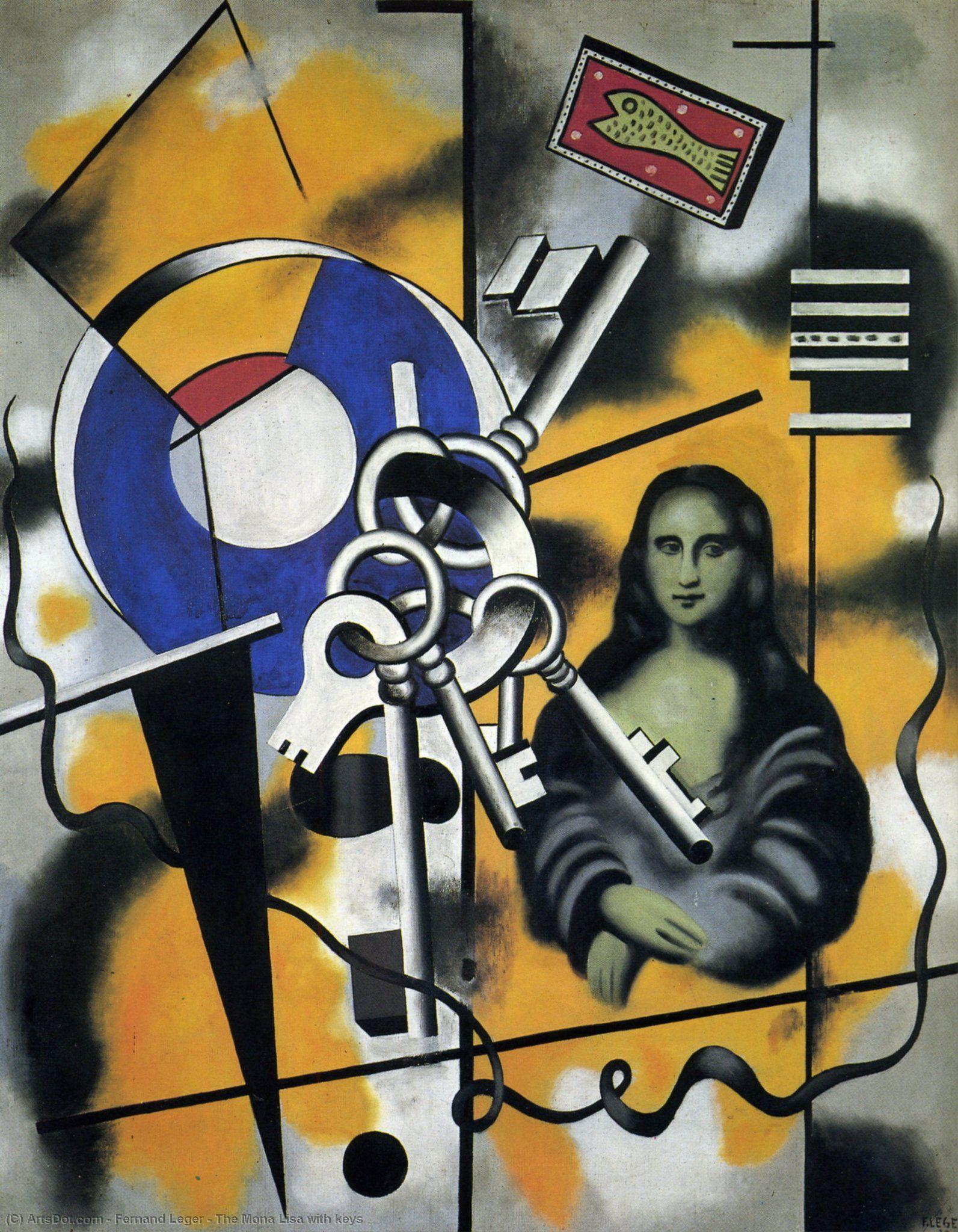
In the vast tapestry of art history, few images possess the enduring magnetism of Leonardo da Vinci’s Mona Lisa. Yet, in 1953, Fernand Léger performed a daring act of artistic alchemy, stripping away the soft sfumato of the Renaissance to reveal something far more mechanical and modern. The Mona Lisa with Keys is not merely a tribute; it is an audacious collision between a timeless icon and the industrial obsession of the twentieth century. As one contemplates this masterpiece, they are invited into a world where the serene gaze of the Florentine lady meets the fragmented, rhythmic energy of the machine age. It is a piece that demands attention, pulling the viewer into a dialogue between the classical past and an uncertain, technological future.
Léger, a master who found beauty in the dynamism of urban life, utilizes a fractured perspective to deconstruct the subject. Rather than presenting a unified, soft-edged figure, he presents a constellation of intersecting planes and bold, angular lines. This technique, deeply rooted in his Cubist foundations, creates a sense of movement and structural tension. The woman’s face remains hauntingly recognizable, serving as an emotional anchor amidst a sea of geometric distortions. For the collector or interior designer, this painting offers a sophisticated balance; it possesses the familiarity of a legendary portrait while providing the avant-garde edge necessary to serve as a provocative focal point in a contemporary space.
The Symbolism of Progress and Control
Surrounding the central figure is a multitude of keys, scattered across the canvas like fragments of a complex machine. These are not mere decorative flourishes; they are profound symbols of transformation. In the hands of Léger, the key represents both access and constraint—the power to unlock new dimensions of thought and the imposition of industrial order upon the natural world. The presence of these metallic elements creates a fascinating tension with the organic presence of the woman, suggesting a life caught between human intuition and the relentless march of progress.
The composition is further enriched by unexpected surrealist touches, such as the subtle inclusion of fish and a clock, which drift through the background like fragments of a dream. These elements disrupt the industrial rigidity, adding layers of mystery and whimsy to the work. The interplay between the mechanical keys and these organic, temporal symbols invites deep contemplation regarding our relationship with technology. To hang this reproduction in a home or gallery is to invite a constant, evolving conversation about identity, perception, and the beautiful chaos of modern existence.
A Timeless Addition to the Modern Collection
For those seeking to curate an environment of intellectual depth and visual intrigue, The Mona Lisa with Keys offers unparalleled inspiration. The painting’s unique ability to blend historical reverence with radical modernity makes it a versatile choice for high-end interior design. It complements minimalist settings with its strong geometric forms, yet provides enough narrative complexity to enrich more eclectic, maximalist decors.
Owning a high-quality reproduction of this work allows the collector to possess a piece of the avant-garde spirit. The bold colors and structural precision of Léger’s style provide a sense of strength and stability, while the underlying mystery of the composition ensures that the artwork never becomes static. It is an investment in emotion, a tribute to the enduring power of reinvention, and a striking statement of sophisticated taste.