A Vision of Volumetric Stillness
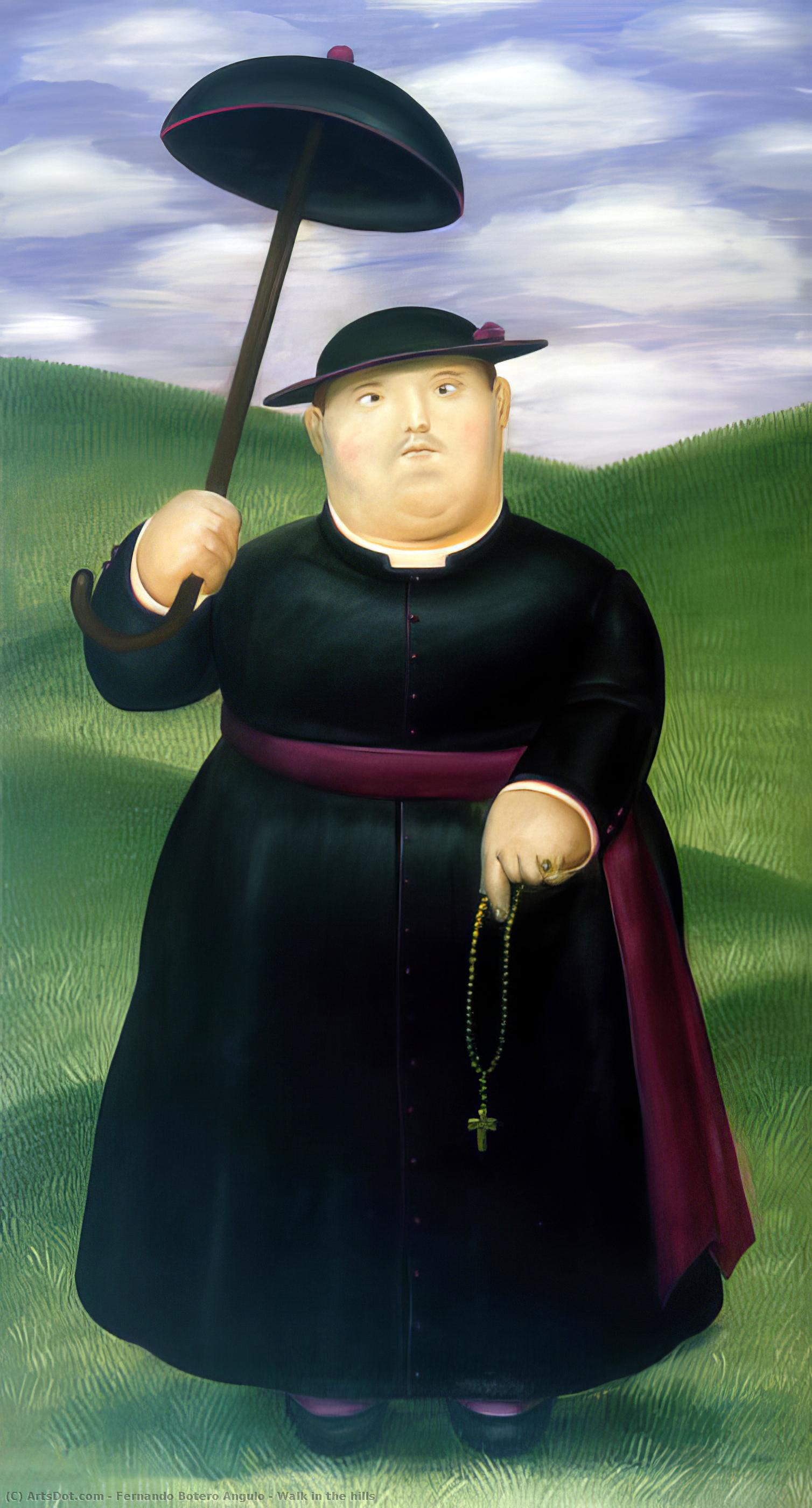
In the vast landscape of twentieth-century Latin American art, few figures command attention with as much whimsical gravity as Fernando Botero. His 1977 masterpiece, Walk in the hills, serves as a profound window into the artist's signature aesthetic, often referred to as "Boterismo." At first glance, the painting presents a scene of quietude: a solitary figure, draped in heavy, dark garments and crowned with a black hat, stands amidst the rolling greenery of a hillside. Yet, beneath this deceptively simple surface lies a complex exploration of form and presence. Botero utilizes exaggerated volumes to breathe life into his subjects, transforming the human figure into a monumental sculpture of flesh and fabric that commands the space it occupies.
The technique employed in this work is a masterful nod to the Naïve Art and Primitivism movements. Rather than striving for hyper-realistic anatomical precision, Botero embraces a deliberate, smoothed texture and a simplified perspective that evokes a sense of timelessness and innocence. This stylistic choice allows the viewer to bypass the distractions of modern complexity and focus on the pure, sculptural essence of the subject. The brushwork is controlled and smooth, creating a surface where light and shadow play softly across the rounded contours of the priest, lending the piece a tactile quality that makes it an exquisite centerpiece for any sophisticated interior.
Symbolism and the Weight of Tradition
Beyond its aesthetic allure, Walk in the hills is a deeply symbolic narrative that invites intense contemplation. The central figure, a priest characterized by a peculiar, cross-eyed gaze, stands as a silent sentinel within the natural world. He holds an umbrella—a curious object to carry on a clear day—which serves as a poignant metaphor for a psychological or institutional defense mechanism. This umbrella represents a barrier, a way of shielding oneself from the external realities of the world, much like the insulating layers of bureaucracy or religious dogma can isolate an individual from true experience. The presence of the cross in his hand further anchors the piece in themes of spirituality and the heavy mantle of tradition.
There is a palpable sense of inertia within the composition; the priest does not move through the hills so much as he exists within them, embodying a state of passive existence. This tension between the vibrant, living landscape and the static, shielded figure creates an emotional resonance that is both unsettling and deeply moving. For the collector, this painting offers more than just visual beauty; it provides a conversation piece that explores the human condition, the concept of isolation, and the delicate balance between protection and disconnection.
An Elegant Addition to the Modern Collection
For interior designers and art enthusiasts alike, a high-quality reproduction of Walk in the hills offers a unique opportunity to introduce character and intellectual depth into a living space. The painting’s palette—a harmonious blend of earthy greens, deep blacks, and soft sky tones—allows it to integrate seamlessly into various decor styles, from contemporary minimalism to classic, traditional settings. Its ability to evoke both a sense of peace and a subtle, underlying critique makes it a versatile and captivating work.
Owning a piece that captures the essence of Botero’s genius means bringing a fragment of Colombian visionary art into one's private sanctuary. Whether placed in a sunlit gallery or a quiet study, this work continues to perform its primary function: inviting the observer to pause, to look closer, and to reflect on the beautiful, voluminous complexities of life itself.