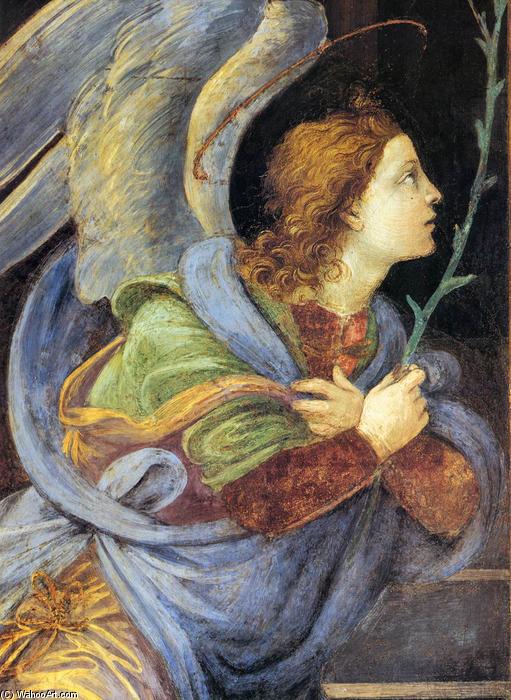
Exquisite Annunciation detail by Filippo Lippi (1489). Admire Renaissance beauty, flowing red hair, & serene expression in this oil painting masterpiece. Explore art history!
Explore Filippino Lippi (1457-1504), son of Fra Filippo Lippi! Discover his High Renaissance paintings, expressive Madonnas & collaborations with Botticelli & Perugino.
Explore the Basilica di Santa Maria sopra Minerva, Rome! Witness Michelangelo's Risen Christ, Catherine of Siena’s tomb & ancient Roman roots in this Gothic marvel – a unique blend of art and history.
A Moment of Divine Grace: Analyzing Filippo Lippi’s Annunciation
The Annunciation by Filippo Lippi remains an arresting testament to the High Renaissance's pursuit of idealized beauty and spiritual contemplation. Painted in 1489, this masterpiece resides within the National Gallery of Art’s collection, offering viewers a glimpse into a pivotal moment in Florentine artistic history—a collaboration between luminaries like Perugino, Ghirlandaio, and Botticelli aimed at elevating Lorenzo de' Medici’s villa to unparalleled splendor. Examining its intricate details reveals not merely visual artistry but also profound symbolic resonance and masterful execution.
Composition and Style: Renaissance Idealism Embodied
Lippi’s depiction centers on a close-up portrait of the Virgin Mary receiving the divine messenger Gabriel, capturing an instant brimming with serene grace. The artist skillfully employs classical compositional principles—a pyramidal structure grounding the figure—to convey stability and reverence. Lines dominate the image, delineating the contours of Mary's face, hair, and robe with precision, mirroring the humanist fascination with anatomical accuracy prevalent during this era. The style is unmistakably Renaissance, prioritizing realistic representation alongside idealized proportions and drapery folds characteristic of the period’s artistic canon. This deliberate aesthetic choice reflects the broader cultural aspiration to emulate classical perfection—a cornerstone of humanist thought that profoundly influenced Florentine art.
Technique: Oil Painting – Layers of Light and Texture
The artwork is executed in oil paint on canvas, a technique favored by Renaissance masters for its ability to achieve luminous color palettes and nuanced textural effects. Careful blending creates subtle gradations of light and shadow, enhancing the sense of depth and dimensionality—a hallmark of perspective achieved through atmospheric haze. Brushstrokes are layered meticulously, imparting a velvety surface quality that captures the ethereal glow surrounding Mary’s figure. The artist's meticulous attention to detail is evident in the rendering of Gabriel’s drapery, which cascades gracefully around him, mirroring the Virgin’s flowing robe and conveying an impression of movement and dynamism within the stillness of prayer.
Symbolism: Divine Grace and Spiritual Reverence
Beyond its aesthetic beauty, *The Annunciation* carries significant symbolic weight. Mary embodies purity and humility—qualities revered throughout Christian tradition—while Gabriel represents divine grace and heraldship, delivering God’s message to humankind. The halo encircling Mary's head symbolizes her holiness and spiritual illumination, emphasizing the sanctity of the event depicted. Furthermore, the branch held by Gabriel signifies hope and resurrection—a visual allusion to Christ’s crucifixion and ascension, underscoring the overarching narrative of salvation.
Emotional Impact: Serenity Amidst Transcendence
The image evokes a palpable sense of serenity and wonder—a contemplative gaze directed upwards conveying reverence for the divine presence. The artist's masterful use of color and light contributes to this emotional resonance, casting gentle shadows that illuminate Mary’s face and hair with warmth. *The Annunciation* transcends mere visual representation; it invites viewers into a realm of spiritual contemplation, prompting reflection on themes of faith, grace, and the transformative power of divine revelation. Its enduring appeal testifies to the timeless beauty of Renaissance art—a celebration of human intellect and artistic achievement that continues to inspire admiration centuries later.