A Renaissance Revelation in Wood
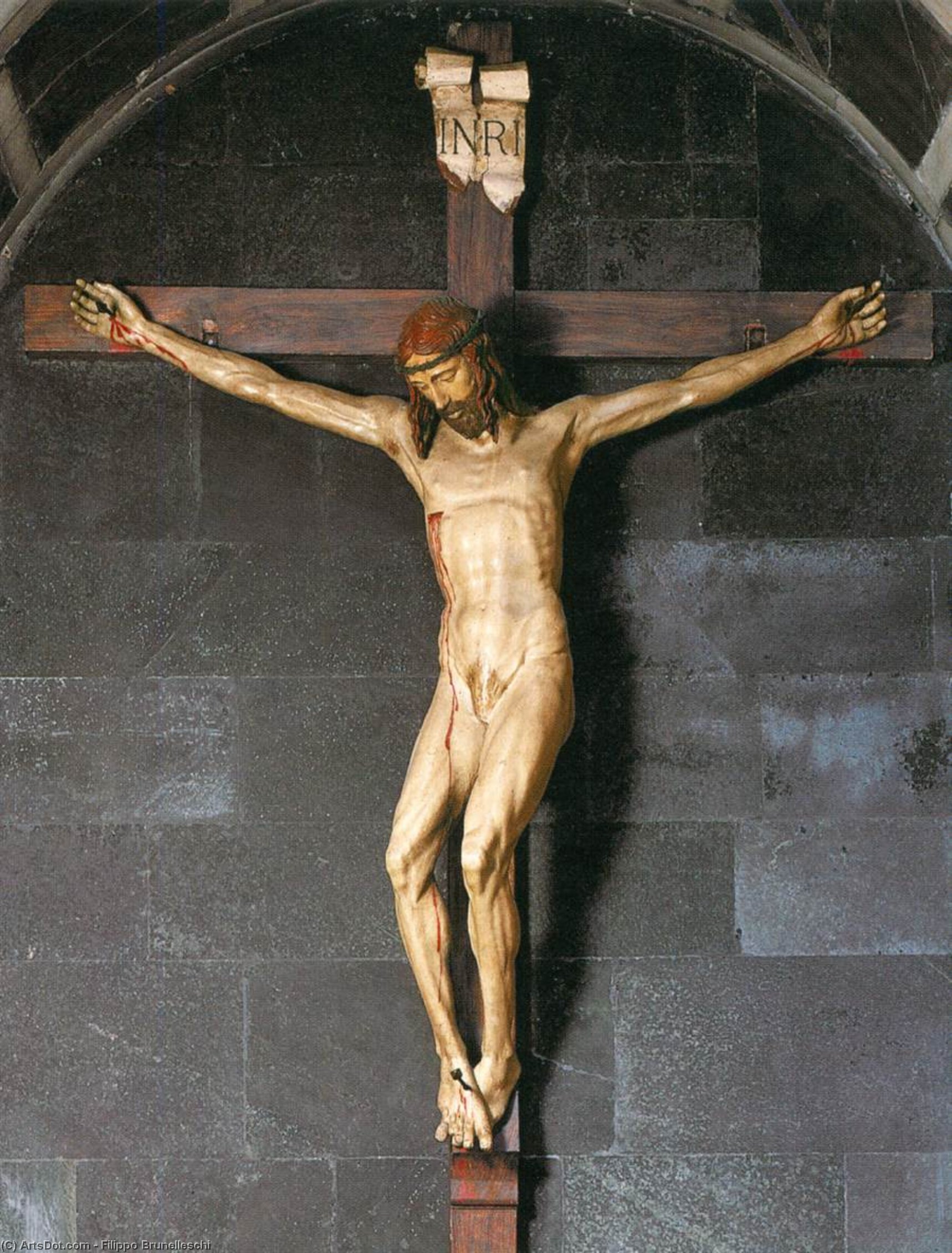
In the quiet, hallowed atmosphere of the Gondi Chapel within Florence’s Santa Maria Novella, there exists a profound encounter with the dawn of a new era. Filippo Brunelleschi’s Crucifix is not merely a religious icon; it is a radical manifesto carved in pearwood. Created around 1412, this masterpiece emerged from a moment of intense artistic rivalry and intellectual fervor. Legend tells us that the work was born from a spirited challenge—a creative duel between Brunelleschi and his contemporaries like Lorenzo Ghiberti and Donatello. In this sculptural triumph, we witness the precise moment when the stylized, symbolic rigidity of the Middle Ages began to dissolve, making way for the anatomical truth and humanistic grace of the Early Renaissance.
The sculpture captures the very essence of Christ’s sacrifice through a lens of burgeoning realism. Unlike the flatter, more decorative crucifixes of previous centuries, Brunelleschi employs a revolutionary approach to form and volume. The figure of Jesus is rendered with an unprecedented attention to the weight of the body and the tension of the limbs. Every curve of the musculature and every subtle fold of the skin speaks to the artist's deep engagement with classical principles. By looking back to the anatomical precision of antiquity, Brunelleschi breathed a new, palpable life into the divine, inviting the viewer to feel the physical reality of the suffering depicted.
The Harmony of Form and Spirit
Technically, the Crucifix is a marvel of early Renaissance innovation. Working with pearwood, a medium that allows for exquisite detail, Brunelleschi utilized masterful carving techniques to create a sense of three-dimensional movement. He subtly integrated the principles of linear perspective and proportion—concepts he would later use to revolutionize architecture—into the very anatomy of the Christ figure. The way the arms extend and the torso hangs suggests a gravitational pull that is both physically accurate and emotionally heavy. This meticulous execution ensures that the viewer's gaze is never static; it wanders across the textured surface, tracing the path of agony and grace in equal measure.
For the discerning collector or the designer of contemplative spaces, this piece offers more than just aesthetic beauty; it provides a profound emotional anchor. The symbolism of the cross—a site of ultimate redemption—is elevated by Brunelleschi’s ability to balance pathos with idealism. While the crown of thorns and the expression of suffering remind us of the human tragedy, the harmonious proportions and balanced composition evoke a sense of divine order and eternal peace. It is a work that commands presence, making it an extraordinary centerpiece for any collection dedicated to the transformative power of the Italian Renaissance.
To possess a high-quality reproduction of this Florentine masterpiece is to bring a fragment of history into the modern home. Whether placed in a sunlit study or a quiet corner of a grand hall, the Crucifix serves as a timeless reminder of human ingenuity and the enduring strength of the spirit. It is an invitation to reflect on the beauty found in the intersection of technical mastery and profound faith.