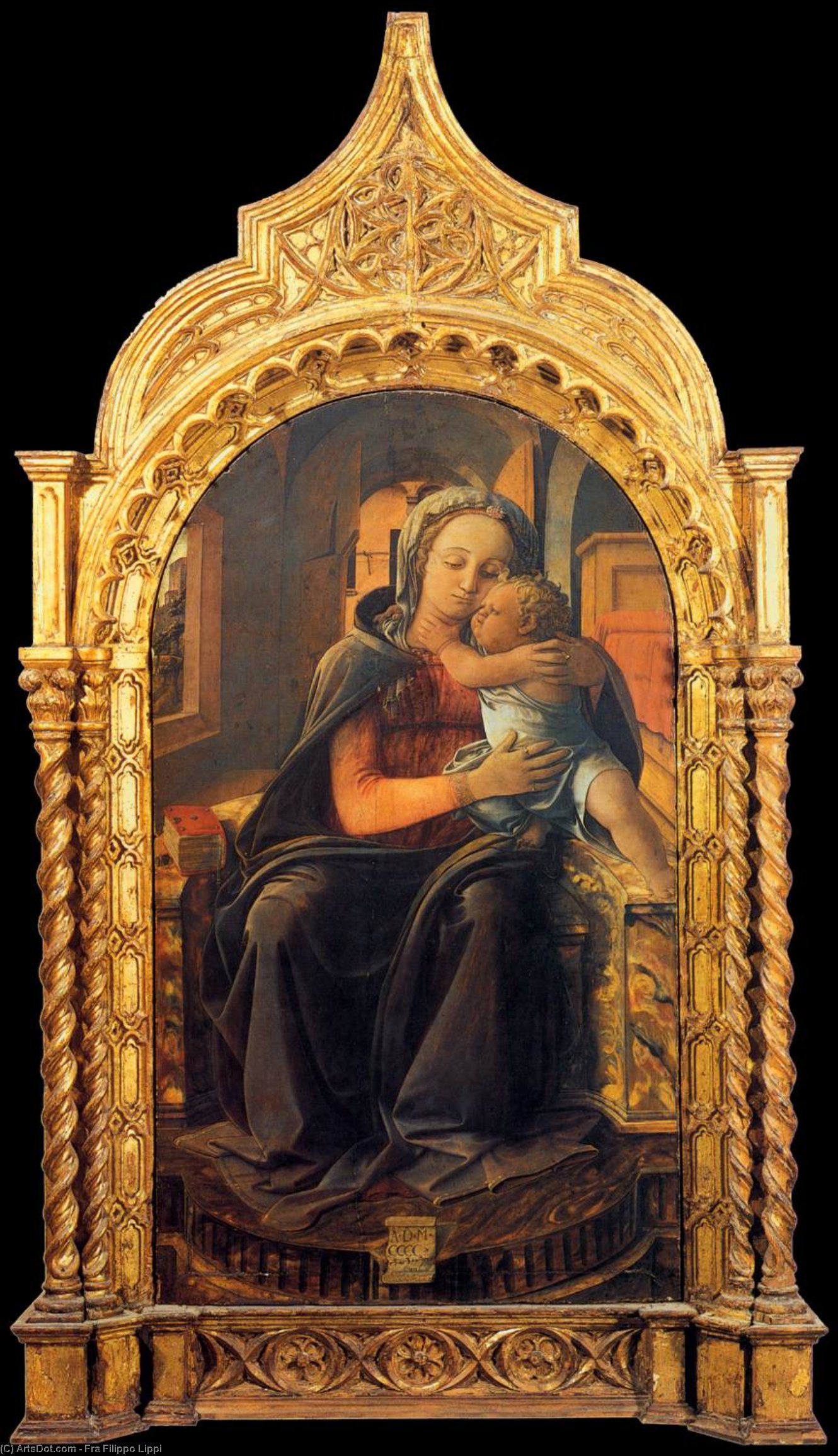
The Tarquinia Madonna: A Window into Fra Filippo’s Soul
Filippo Lippi's Madonna with Child (Tarquinia Madonna), painted in 1437, isn’t merely a depiction of the Virgin and infant Jesus; it’s a profound meditation on faith, humanity, and the artist’s own complex inner world. Housed within the National Gallery of Ancient Art at Palazzo Barberini in Rome, this masterpiece immediately draws the viewer into its intimate space – a carefully constructed tableau that speaks volumes about Lippi's artistic vision and his unique perspective on religious iconography.
The painting’s genesis is intertwined with the tumultuous life of Fra Filippo himself. Commissioned by Archbishop Giovanni Vitelleschi, a powerful figure in Florentine politics, the Madonna was intended for his palace at Corneto – now Tarquinia – reflecting both the patron's status and the artist’s growing reputation. However, Lippi’s biography is as captivating as his art; a life marked by monastic vows, scandalous affairs, and periods of exile, all contributing to an aura of enigmatic intensity that permeates this work. The painting feels less like a detached representation of divine motherhood and more like a glimpse into the soul of a man wrestling with faith, desire, and artistic ambition.
A Masterclass in Masaccian Influence
Lippi’s technical skill is immediately apparent – a remarkable synthesis of Florentine tradition and Northern European influences. The composition is deeply rooted in the principles established by Masaccio, particularly evident in the masterful use of perspective and spatial depth. The throne upon which the Madonna sits isn't simply a decorative element; it’s a carefully rendered architectural structure that anchors the scene and draws the eye inward. The foreshortened window on the left, bathed in a luminous light, creates an illusion of three-dimensionality, inviting the viewer to step into the intimate domestic setting.
However, Lippi departs from Masaccio’s rigid geometric approach with a subtle lyricism. The drapery is rendered with a flowing grace, and the figures possess a palpable sense of volume and weight. The Virgin's face, serene yet subtly expressive, conveys a quiet dignity – a stark contrast to the more overtly emotional depictions common in contemporary art. This delicate balance between realism and idealism is a hallmark of Lippi’s style.
Symbolism and the Language of Faith
Beyond its technical brilliance, the Tarquinia Madonna is rich in symbolic detail. The infant Jesus, nursing at his mother's breast, embodies themes of nourishment, protection, and divine grace. The presence of two additional figures – a man on the left and a woman near the top right corner – adds layers of complexity to the scene. These enigmatic additions have fueled centuries of speculation; some scholars believe they represent St. Fredianus and St. Augustine, invoking the patronage of the church and highlighting the importance of Christian doctrine. The pomegranate resting on the table is another potent symbol, representing fertility, abundance, and the promise of new life – a visual echo of the Virgin’s role as the source of salvation.
An Enduring Legacy: Beauty and Mystery
The Madonna with Child (Tarquinia Madonna) remains a profoundly moving work of art. It's not just a beautiful image; it’s an invitation to contemplate the mysteries of faith, the complexities of human experience, and the genius of one of Renaissance Italy’s most intriguing artists. Lippi’s ability to infuse his paintings with both technical mastery and emotional depth is what secures its place as a cornerstone of Florentine art history – a testament to the enduring power of beauty and the captivating allure of an artist's soul.