Fra Filippo Lippi’s St Michael: A Renaissance Vision of Divine Justice
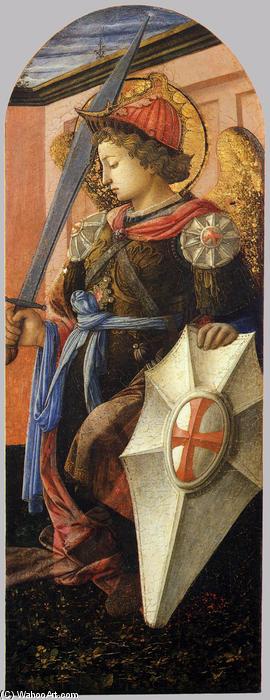
Fra Filippo Lippi’s “St Michael,” painted in 1456, stands as a cornerstone of Florentine Renaissance art—a testament to the burgeoning humanist spirit and masterful execution that defined the era. Housed at the Museum of Art in Cleveland, this tempera painting transcends mere depiction; it embodies a profound meditation on faith, courage, and the triumph of righteousness over darkness.
Subject Matter and Narrative Composition
The artwork portrays St Michael, the Archangel—a figure revered throughout Christian tradition as protector of Christendom and vanquisher of evil—engaged in a dramatic confrontation with Lucifer, the embodiment of Satan. The scene unfolds dynamically: St Michael dominates the central space, wielding his sword with unwavering determination as he pursues Lucifer’s dragon form across the lower portion of the canvas. This juxtaposition isn't merely visual; it speaks to an underlying theological narrative – the eternal battle between God and demonic forces.
Style and Technique: Renaissance Realism Elevated
Lippi’s approach aligns perfectly with the stylistic precepts of the Quattrocento, prioritizing realism while simultaneously imbuing his work with spiritual depth. The artist skillfully employs perspective—a revolutionary innovation championed by Masaccio—to create a convincing illusion of three dimensions, anchoring St Michael and Lucifer within a meticulously rendered landscape. Detailed shading and highlights sculpt the figures’ musculature and armor, conveying texture and volume. Furthermore, Lippi's masterful use of tempera paint—known for its luminosity and durability—allowed him to achieve remarkable tonal richness and vibrancy.
Historical Context: Florence Under Lorenzo Medici
“St Michael” was created during the reign of Lorenzo de’ Medici (“Lorenzo the Magnificent”), whose patronage fostered an unprecedented flourishing of artistic creativity in Florence. This period witnessed a renewed interest in classical ideals alongside a fervent devotion to Christian faith—themes powerfully expressed in artworks like Lippi's. The painting reflects the humanist conviction that humanity possessed inherent dignity and potential for moral excellence, mirroring the broader cultural currents shaping Renaissance thought.
Symbolism: Light Versus Darkness – Divine Order Restored
Beyond its narrative depiction of angelic warfare, “St Michael” is laden with symbolic significance. The radiant light emanating from St Michael’s halo symbolizes divine grace and illumination—a beacon guiding Lucifer’s descent into darkness. The dragon represents evil, temptation, and the forces opposing God’s will. Ultimately, Lippi's portrayal underscores the belief that goodness prevails over wickedness through unwavering faith and righteous action – a message resonating powerfully across centuries.
Emotional Impact: A Portrait of Heroic Virtue
"St Michael" captivates viewers with its palpable energy and conveys an overwhelming sense of heroic virtue. Lippi’s meticulous attention to detail—from the intricate folds of St Michael's cloak to the textured scales of Lucifer’s dragon—invites contemplation on themes of courage, faith, and spiritual fortitude. The painting serves as a timeless reminder of humanity’s capacity for moral resilience in confronting adversity – an enduring legacy of Renaissance artistic genius.