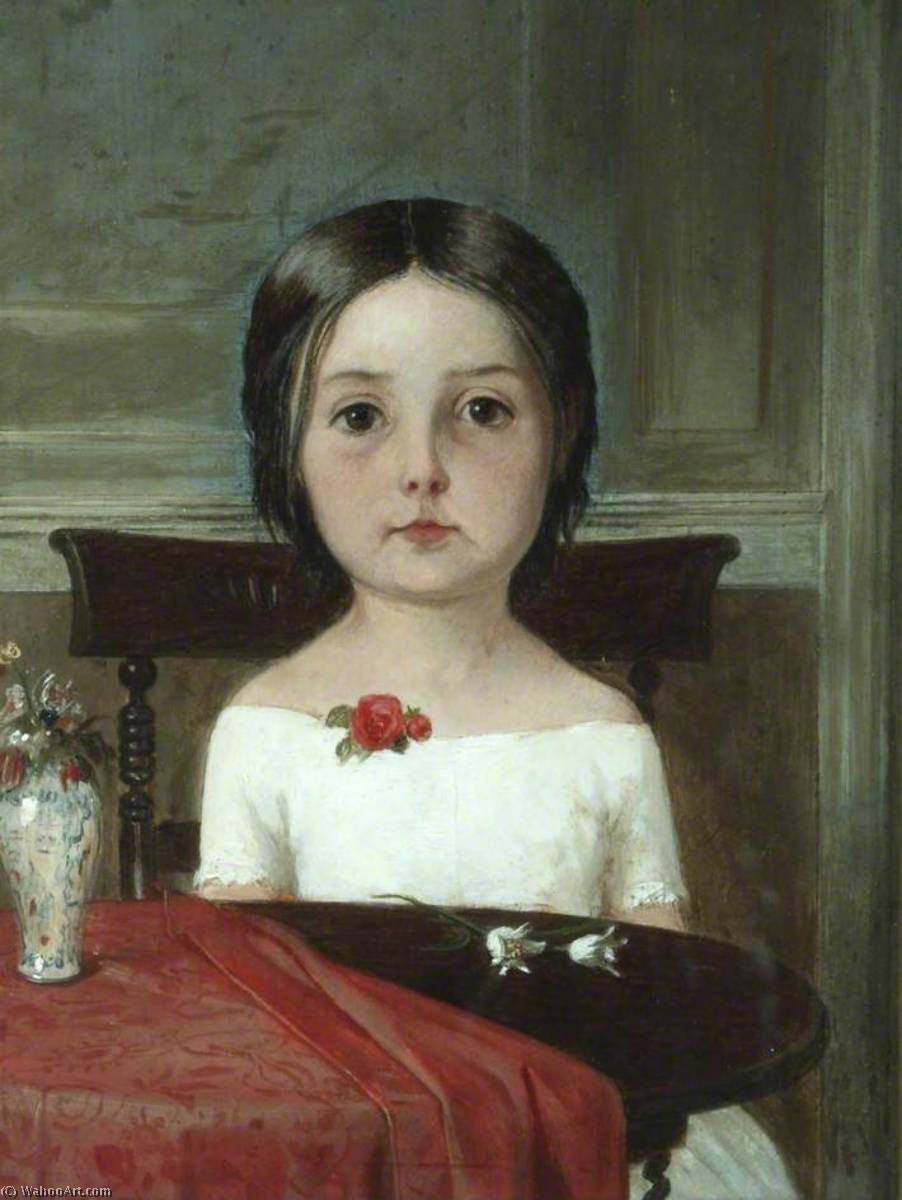
Millie Smith: A Pre-Raphaelite Portrait of Innocence Amidst Victorian Realism
Ford Madox Brown’s “Millie Smith,” completed in 1846, stands as a cornerstone of the Pre-Raphaelite movement and a poignant reflection on Victorian society. More than just a depiction of a young girl—a common subject for portraiture at the time—the painting embodies Brown's revolutionary approach to artistic representation, prioritizing psychological depth and emotional resonance over mere surface beauty.
Subject Matter & Context: The portrait captures Millie Smith, daughter of Landlady Mary Smith, who resided in Southend-on-Sea where Brown was staying during his visit. Lucy, Brown’s three-year-old daughter, accompanied him on this journey, providing a crucial element to the scene—a child's presence intended to convey vulnerability and innocence. The Victorian era was marked by strict social conventions and anxieties surrounding morality; Brown deliberately challenged these expectations by portraying Millie with an unprecedented level of naturalism, eschewing idealized poses and expressions.
Style & Technique: Brown’s distinctive style—characterized by a rejection of academic conventions—is immediately apparent. He abandoned the luminous glazing favored by his contemporaries and opted for a darker palette dominated by browns and ochres, mirroring the muted tones of everyday life. The meticulous attention to detail is remarkable; observe the careful rendering of the flower vase, tablecloth, and Millie’s skin tone – techniques honed during Brown's studies in Italy where he absorbed influences from artists like Giuseppe Verdi and Giovanni Battista Tiepolo. He deliberately avoided excessive shading, prioritizing clarity and directness.
Symbolism & Emotional Impact: The composition itself speaks volumes about Brown’s artistic intentions. Millie’s gaze directly confronts the viewer, creating an unsettling intimacy that transcends mere visual representation. This bold gesture underscores Brown's fascination with capturing inner emotion—a hallmark of Pre-Raphaelite art. The brick wall backdrop serves as a grounding element, emphasizing Millie’s isolation and vulnerability against the grandeur of Victorian society. The painting isn’t merely aesthetically pleasing; it prompts contemplation about childhood innocence and the complexities of human experience.
Provenance & Legacy: “Millie Smith” entered the Walker Art Gallery's collection in 1972, securing its place as a celebrated masterpiece. Its enduring appeal lies not only in its technical brilliance but also in its ability to evoke empathy and provoke discussion about art’s role in capturing the spirit of an era. Today, reproductions of this iconic painting continue to inspire artists and collectors alike—a testament to Brown's visionary approach to portraiture and his unwavering commitment to portraying truthfulness with profound emotional impact.
- Artist: Ford Madox Brown
- Year Created: 1846
- Medium: Oil on Panel
- Dimensions: 23 x 18 cm
- Location: Walker Art Gallery, Liverpool