Take Your Son, Sir!: A Pre-Raphaelite Meditation on Maternal Vulnerability
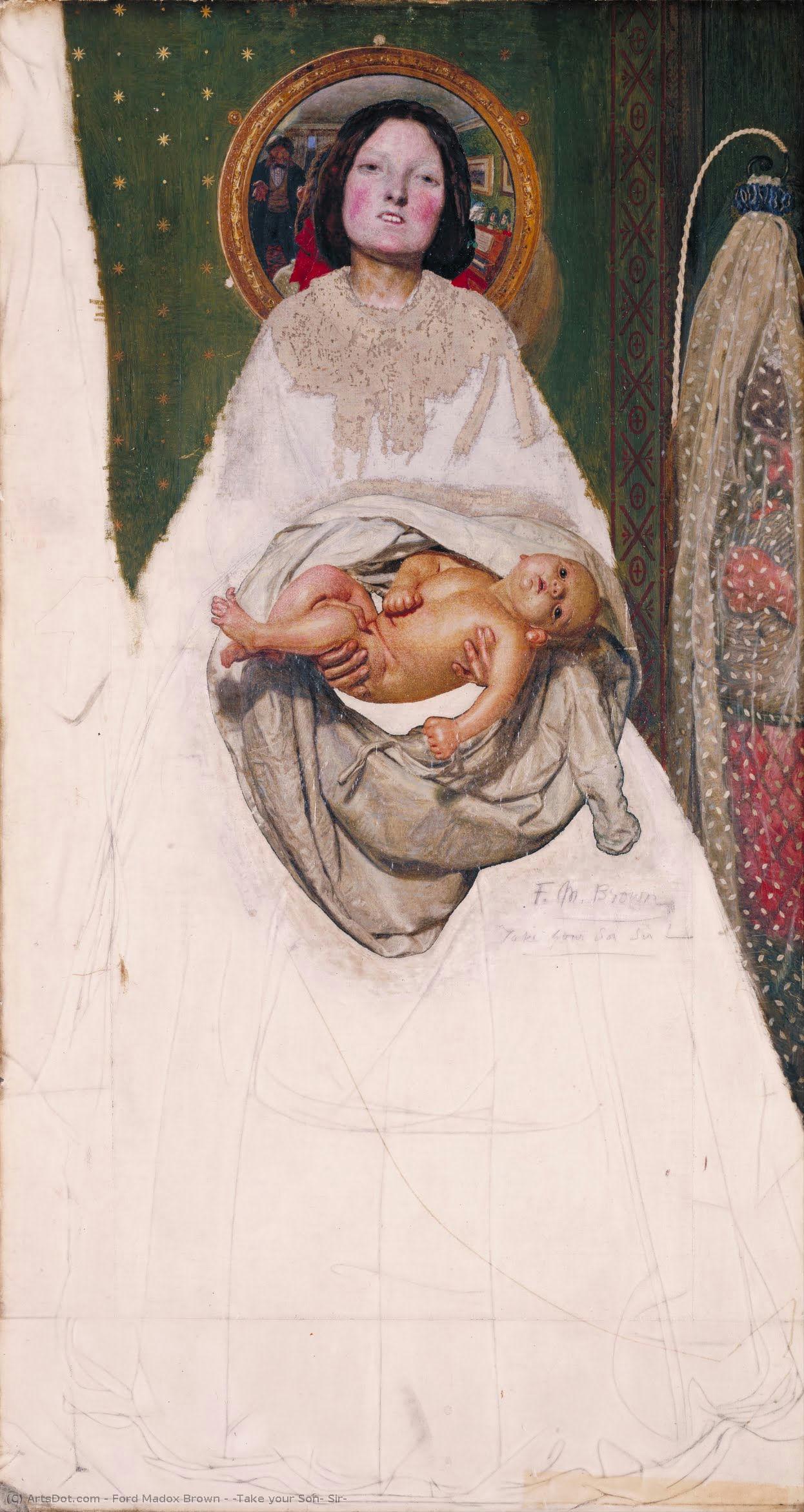
Ford Madox Brown’s “Take Your Son, Sir!” stands as an arresting testament to the Pre-Raphaelites' fascination with moral and psychological depth—a painting that transcends mere visual representation to delve into profound themes of motherhood, innocence, and societal responsibility. Completed in 1851 during a period marked by significant social reform movements, this unfinished masterpiece captures a moment frozen in time, embodying the anxieties and aspirations of Victorian England.
The scene depicts a woman seated on a draped bed, tenderly holding her infant son. The composition is deliberately understated, prioritizing emotional resonance over elaborate ornamentation. Brown’s masterful use of muted colors—primarily ochres, browns, and creams—creates an atmosphere of quiet intimacy and seclusion. Light filters softly through the window behind the bed, illuminating the woman's face and casting shadows across the room, emphasizing her vulnerability and conveying a palpable sense of melancholy.
- Style: Romanticism with Pre-Raphaelite Influences – Brown’s style blends elements of Romantic idealism with the meticulous realism championed by the Pre-Raphaelites, reflecting their desire to recapture the spirit of artistic expression before Raphael.
- Technique: Layered Oil Painting – The painting employs a technique characterized by multiple layers of oil paint—a deliberate decision that underscores Brown’s process and contributes to the artwork's textural richness. An initial underpainting establishes tonal harmony, followed by subsequent applications of color and detail, resulting in a complex interplay of surfaces and hues.
- Historical Context: Victorian Social Reform – “Take Your Son, Sir!” emerged during a time when British society grappled with issues of poverty, child labor, and social injustice. Brown’s depiction of domestic life subtly critiques the prevailing societal norms, prompting viewers to contemplate the role of women and families in shaping moral values.
- Symbolism: Maternal Protection – The woman's posture—seated calmly yet resolutely guarding her son—symbolizes maternal fortitude and unwavering devotion. The mirror reflecting a figure adds another layer of symbolism, representing introspection and confronting societal pressures.
The artist’s meticulous attention to detail—particularly in capturing the textures of fabric and skin—demonstrates Brown's commitment to portraying reality with uncompromising honesty. Visible sketch lines reveal his artistic process, inviting contemplation on the creative journey itself. The overall impression is one of quiet beauty tinged with sadness, a poignant reminder of the fragility of human existence and the enduring importance of familial bonds.
“Take Your Son, Sir!” remains an iconic work within Pre-Raphaelite art history—a painting that continues to inspire admiration for its masterful composition, evocative symbolism, and profound exploration of human emotion. Its understated elegance speaks volumes about Brown’s artistic vision and his enduring legacy as a champion of moral and psychological realism.