Explore Ford Madox Brown’s ‘The Last of England,’ a poignant Romantic masterpiece. Discover its intricate details, light & composition, and historical significance on ArtsDot.com.
The painting
The Last of England by
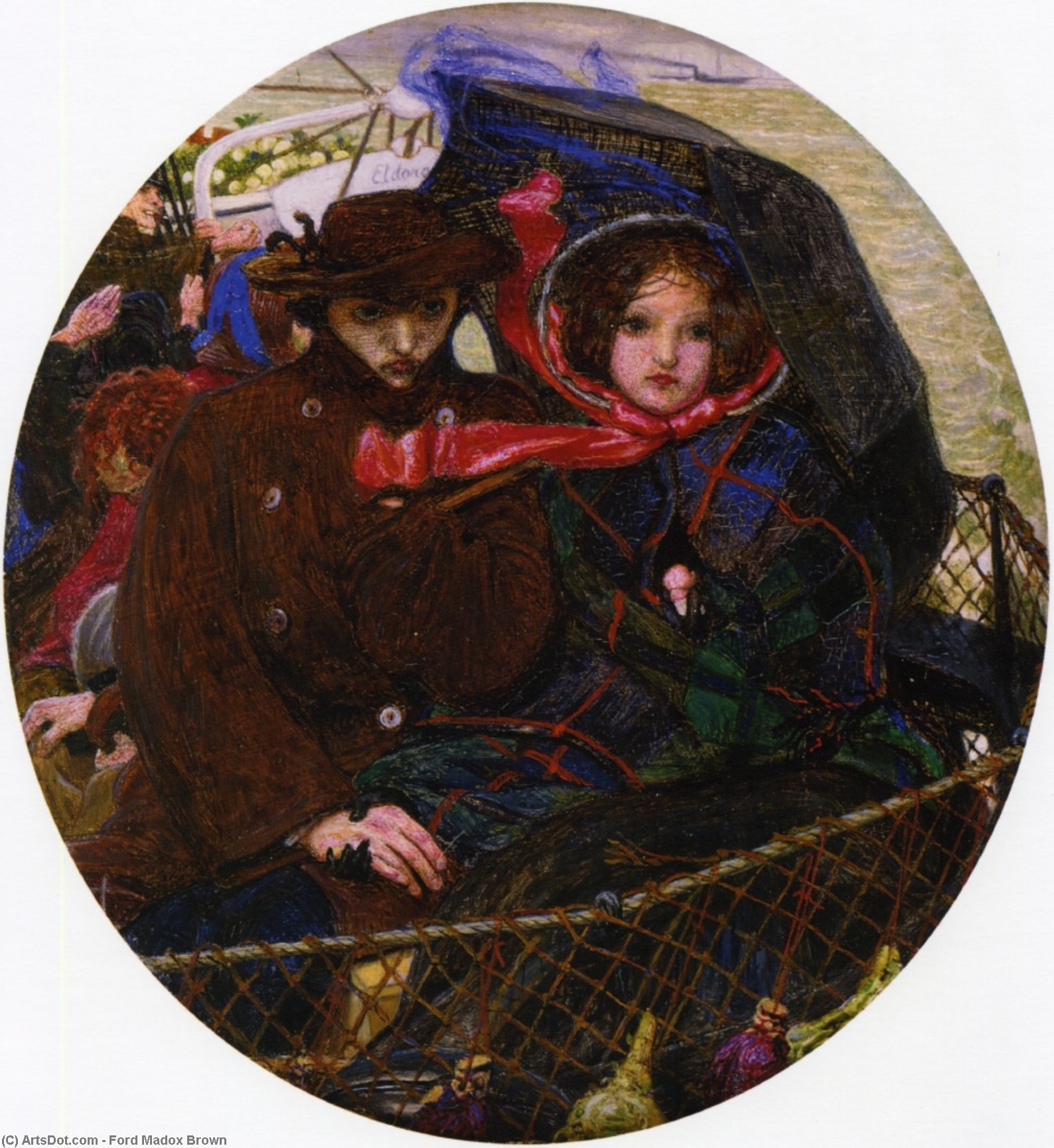
Ford Madox Brown is a beautiful example of Romanticism in art. Created in 1860, this oil on canvas piece measures 43 x 47 cm and showcases the artist's ability to capture emotion and intimacy. The scene depicts a man and woman sitting together in a boat, surrounded by other people, with an umbrella and handbag visible in the background.
Artist Background
Ford Madox Brown was a prominent English painter known for his work in the Romanticism style. His paintings often featured everyday life scenes, landscapes, and historical events.
The Last of England is one of his most famous works, and it can be found on
ArtsDot.com, where you can also discover other paintings by the artist, such as
The Bromley Children.
Light and Composition
The use of light in
The Last of England is noteworthy. As explained on
Wikipedia, light fulfills several objectives in painting, including technical representation and aesthetic value. In this piece, the light enhances the emotional connection between the couple and creates a sense of warmth and intimacy.
- The play of light and shadow is a key element in the composition of the painting.
- The artist's use of color and texture adds depth and dimension to the scene.
- The overall effect is a sense of serenity and contemplation.
Handmade oil paintings reproductions of
The Last of England can be found on
ArtsDot.com, allowing art lovers to own a piece of history. The website also features other notable artists, such as
Chester Harding, and museums like the
Musée Girodet in Montargis, France.
The beauty of
The Last of England lies in its ability to evoke emotions and create a sense of connection with the viewer. As a masterpiece of Romanticism, it continues to inspire and captivate art enthusiasts around the world.