The Profound Vision of Fra Angelico
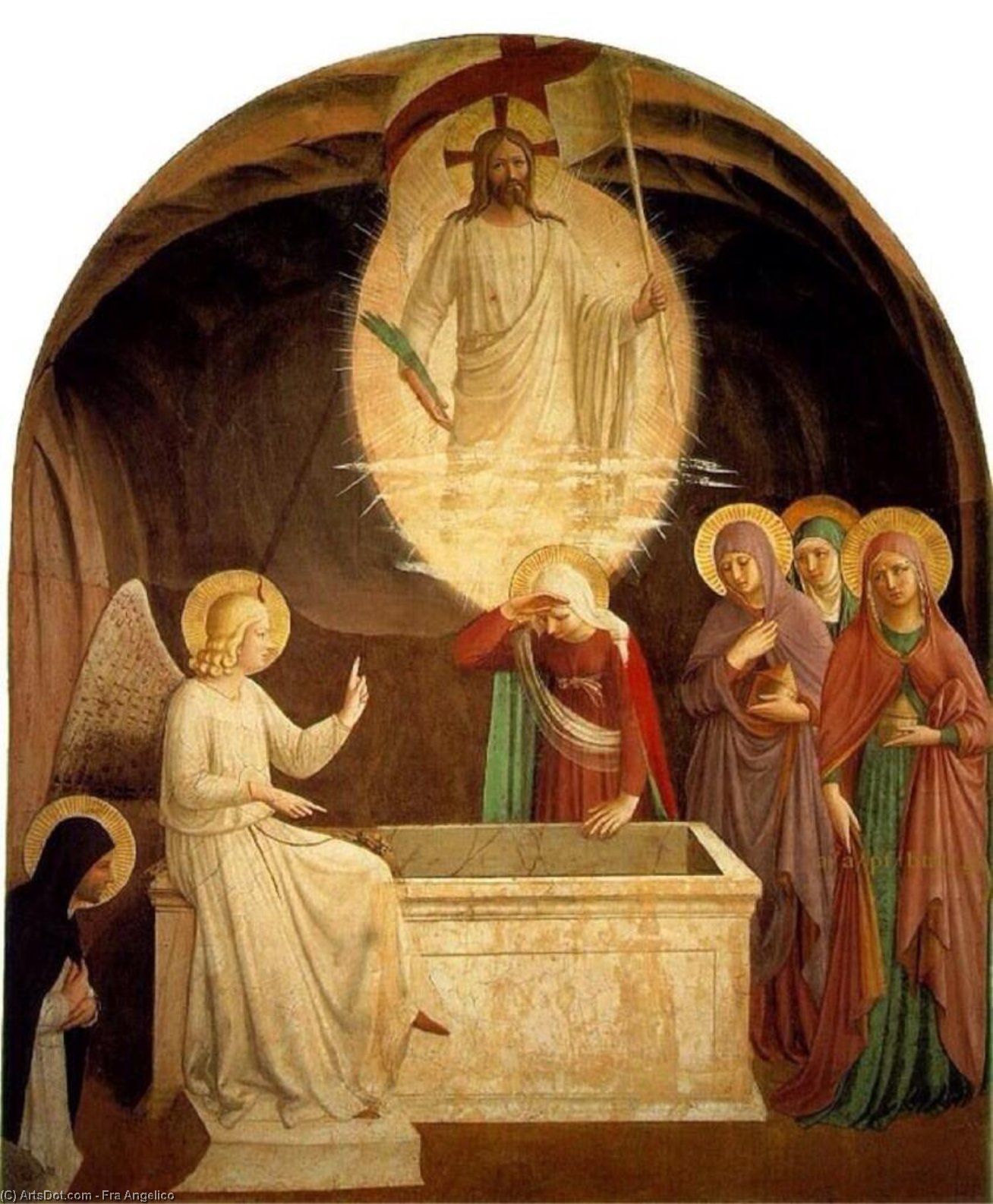
Fra Angelico’s “Christ Resurrected and the Maries” is more than just a depiction of a biblical scene; it's an immersion into a realm of profound spiritual devotion, meticulously rendered in the luminous palette of Early Renaissance Florence. Created between 1439 and 1443 for the Basilica di San Marco, this fresco transcends its physical setting to become a testament to faith, grief, and the transformative power of resurrection. The scene unfolds within a carefully constructed architectural space – a receding tomb bathed in an ethereal light that draws the eye towards Christ’s radiant form. The artist masterfully employs perspective, creating a sense of depth that anchors the viewer within this intimate moment of revelation. It's a painting designed not merely to be observed, but felt; a visual prayer brimming with emotion and theological significance.
The composition itself is remarkably dynamic. Christ, emerging from the tomb, isn’t presented as a triumphant warrior, but rather as a figure of serene grace and vulnerability. His wounds are visible, yet his expression conveys not pain, but an overwhelming sense of peace and victory over death. Around him cluster Mary Magdalene and other women – the Maries – their faces etched with grief and awe. These figures aren’t simply witnesses; they are conduits for the viewer's own contemplation on loss, redemption, and the promise of eternal life. The inclusion of angels and archangels further elevates the scene, signifying divine intervention and the sacredness of this pivotal event.
Influences and Artistic Techniques
To fully appreciate “Christ Resurrected and the Maries,” it’s crucial to understand Fra Angelico's artistic lineage. He was deeply influenced by Lorenzo Ghiberti, particularly in his use of decorative patterns and elegant lines – a hallmark of Florentine art at the time. However, Angelico’s work transcends mere imitation; he infused these influences with a uniquely devotional spirit. His training as an illuminator instilled within him a meticulous attention to detail and a mastery of color that shines through every brushstroke. The fresco's vibrant hues – rich reds, deep blues, and luminous golds – are applied with remarkable precision, creating a sense of tactile realism.
The artist’s technique is characterized by a smooth, almost glazed surface, achieved through the careful layering of thin washes of paint. This creates an illusion of depth and luminosity, particularly evident in the folds of the drapery and the subtle gradations of light and shadow. Notice how Angelico uses *chiaroscuro* – the contrast between light and dark – to sculpt the figures and draw attention to Christ’s face, a focal point of profound serenity. The meticulous rendering of textures—the rough stone of the tomb, the flowing garments—adds another layer of realism and invites the viewer to engage with the scene on a sensory level.
Symbolism and Spiritual Resonance
Beyond its visual beauty, “Christ Resurrected and the Maries” is laden with symbolism. The tomb itself represents death and mortality, while Christ’s resurrection signifies victory over sin and eternal life. The weeping women – the Maries – embody human grief and vulnerability, highlighting the emotional impact of Christ's sacrifice. The presence of angels underscores the divine nature of the event and the promise of salvation. The circular halo above the tomb is a traditional symbol of divinity and Christ’s resurrection.
Furthermore, this painting exists within the context of the “Poor Man’s Bible,” a series of artworks designed to illustrate biblical narratives for an illiterate population. Angelico's work served as a powerful means of conveying religious teachings and fostering spiritual understanding among those who could not read. The scene resonates with themes of hope, forgiveness, and the enduring power of faith – timeless concepts that continue to inspire viewers centuries later. It’s a poignant reminder of the transformative potential of art to connect us to something greater than ourselves.
A Legacy of Devotion
“Christ Resurrected and the Maries” stands as a cornerstone of Early Renaissance art, showcasing Fra Angelico's exceptional talent and profound spiritual vision. Its influence can be seen in subsequent works by artists such as Noli me tangere and Crucifixion with the Virgin, John the Evangelist, and Mary Magdalene. Today, this masterpiece continues to captivate audiences worldwide, offering a glimpse into the heart of Renaissance faith and the enduring power of art to evoke emotion and inspire contemplation. Reproductions of this iconic fresco allow us to experience its beauty and spiritual depth in our own homes, bringing a touch of timeless devotion into our lives.