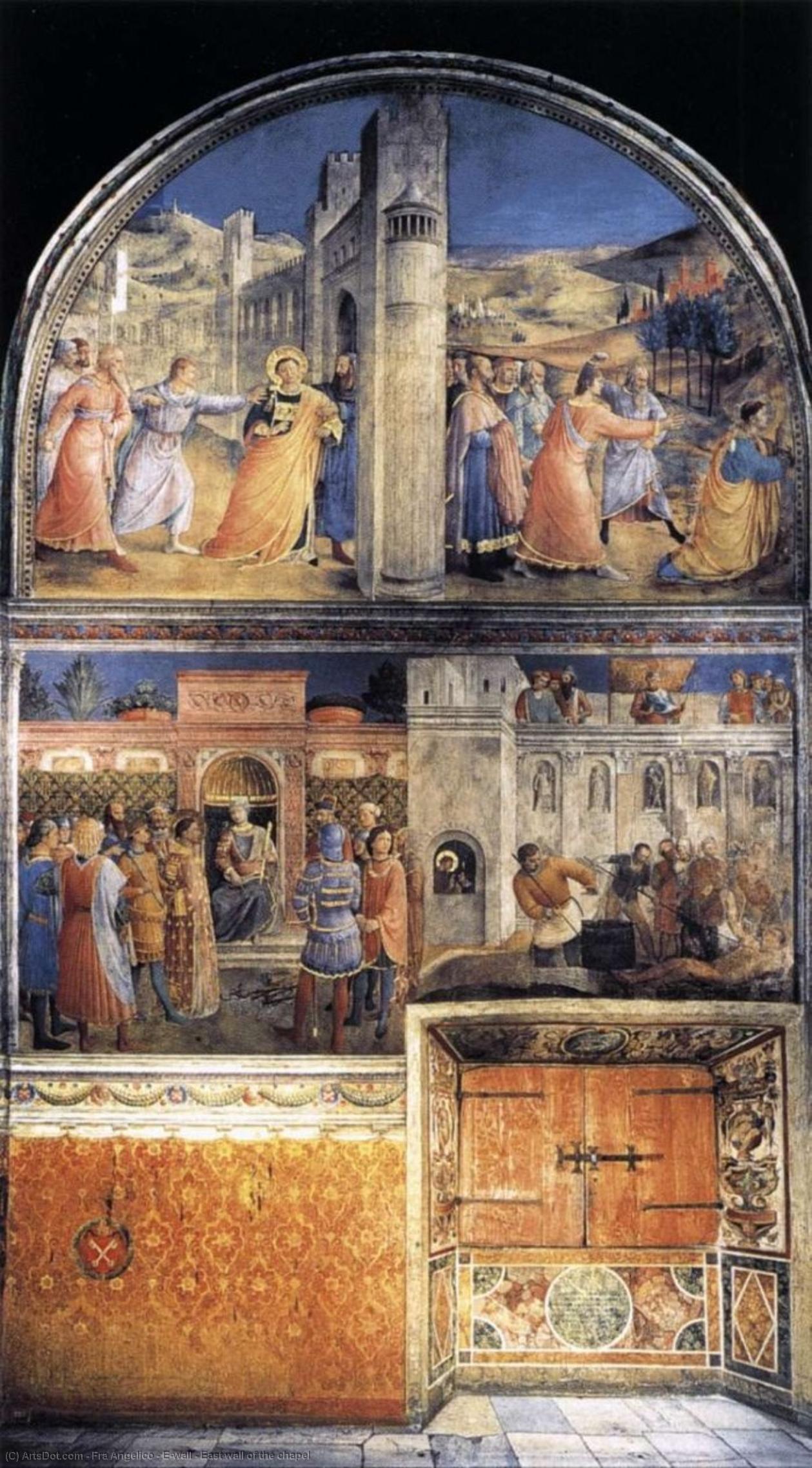
Fra Angelico's 'E,wall - East wall of the chapel' showcases a dramatic crucifixion mural with intricate detail and figures surrounding Jesus Christ, reflecting the artist’s devotional style from the 15th century – discover this masterpiece.
A Vision of Suffering and Divine Grace: Fra Angelico’s “E,wall – East Wall of the Chapel”
Fra Angelico's "E,wall – East wall of the Chapel," a monumental mural depicting the crucifixion of Christ, stands as a testament to the profound spiritual devotion that permeated Renaissance Italy. Executed around 1436-1440, likely for the San Marco Monastery in Florence, this work transcends mere representation; it’s an immersive experience of sorrow, faith, and ultimately, redemption. The painting's power resides not just in its technical brilliance but also in its deeply felt emotional resonance, a quality that continues to captivate viewers centuries later.
- Subject Matter: The central focus is undeniably the crucifixion – a scene universally recognized as one of the most poignant narratives in Western art. Fra Angelico meticulously portrays Jesus Christ’s agony and sacrifice, surrounded by figures who embody both grief and reverence.
- Composition & Detail: The artist's mastery is evident in the intricate details—the expressions of anguish on the faces of the onlookers, the folds of their garments, and the architectural elements of the castle-like structure that anchors the scene. This level of detail wasn’t merely decorative; it served to heighten the sense of realism and immerse the viewer within the narrative.
Technique & Materials: The Angelico Touch
Fra Angelico was renowned for his innovative use of color and technique, particularly his mastery of tempera paint on plaster. This method, favored by artists like Giotto before him, allowed for vibrant hues and a luminous quality that is characteristic of his work. He employed a layering technique – *gioco di colori* – where thin glazes of pigment were applied over dry underlayers, creating an astonishing depth and richness of color. The subtle gradations in tone, particularly in the depiction of light illuminating Christ’s body, contribute significantly to the painting's ethereal beauty. The use of gold leaf, a hallmark of Florentine art at the time, further elevates the scene, symbolizing divinity and spiritual significance.
- Tempera on Plaster: The primary medium was tempera paint, mixed with egg yolk, applied to freshly plastered walls.
- Gioco di Colori: The layering technique created luminous effects.
- Gold Leaf: Used extensively for symbolic and decorative purposes.
Symbolism & Context
“E,wall – East wall of the Chapel” is deeply rooted in the theological and artistic conventions of its time. The presence of figures wearing crowns suggests their status as rulers or witnesses to Christ’s sacrifice—a common motif in medieval and Renaissance art. The castle-like structure in the background may represent Jerusalem, further emphasizing the biblical context. The overall composition reflects the prevailing devotional practices of the Dominican Order, which emphasized personal piety and contemplation. This mural served not just as a visual representation of faith but also as a focal point for prayer and reflection within the monastery’s chapel.
- Crowns: Symbolized authority and witness to Christ's sacrifice.
- Castle Structure: Likely represents Jerusalem, reinforcing the biblical narrative.
- Monastic Context: Reflects the Dominican Order’s emphasis on personal devotion.
Emotional Impact & Legacy
Fra Angelico's “E,wall – East wall of the Chapel” continues to evoke a powerful emotional response in viewers. The raw depiction of suffering combined with the serene beauty of the artwork creates a profound sense of awe and contemplation. It’s a work that speaks directly to the human condition—to our capacity for both pain and compassion, doubt and faith. This masterpiece remains a cornerstone of Renaissance art, influencing generations of artists and inspiring viewers with its timeless message of hope and redemption. Its enduring appeal makes it a highly sought-after reproduction for discerning collectors and interior designers seeking to infuse their spaces with beauty and spiritual significance.