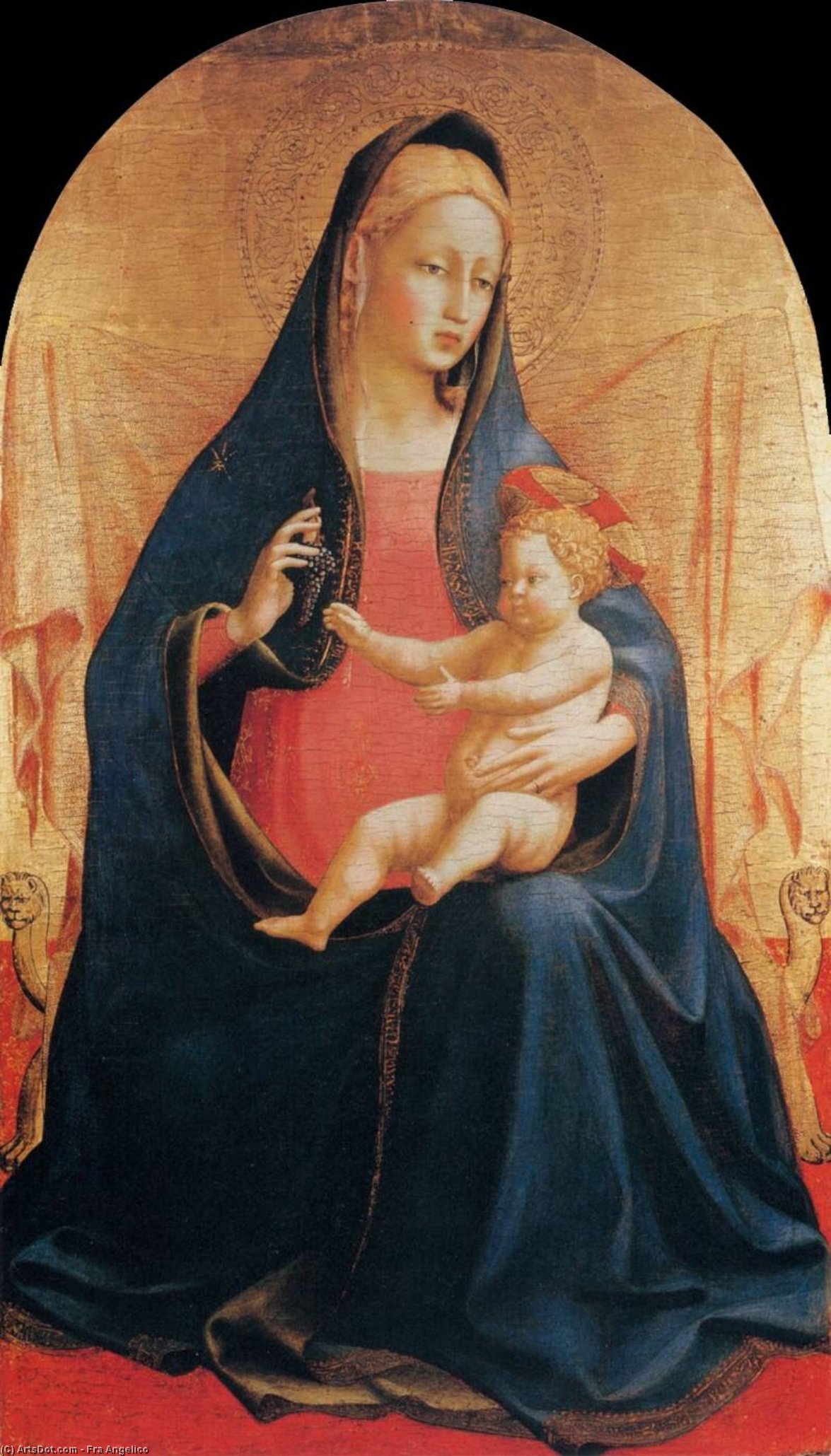
A Moment of Serene Grace: Fra Angelico’s “Madonna and Child of the Grapes”
Fra Angelico's "Madonna and Child of the Grapes," painted in 1425, is more than just a depiction of the Virgin Mary and her infant son; it’s an immersion into a world of profound spirituality and delicate beauty. This tempera on panel artwork, currently residing at the Barbara Piasecka Johnson Foundation in Princeton, offers a glimpse into the heart of the Early Renaissance, revealing the artist's mastery of color, texture, and emotional resonance. The painting immediately draws the viewer in with its luminous quality – a hallmark of Fra Angelico’s technique, achieved through the careful layering of thin, translucent glazes of tempera paint. These layers create an almost ethereal glow, particularly noticeable around Mary’s face and the folds of her gown, lending the scene a heavenly light.
Composition and Setting: A Symphony of Color and Form
The composition is remarkably balanced, centered on the tender embrace between the Virgin and Child. Mary, dressed in a rich red robe accented by a serene blue veil, cradles Jesus with an expression of profound love and protection. The baby’s pose – seemingly lost in peaceful slumber – speaks volumes about innocence and divine grace. Beyond the central figures, subtle details enrich the scene: two attendants, rendered with a quiet dignity, flank the composition on either side, while a single, crimson cloth serves as a grounding element, anchoring the entire image within its devotional context. The grapes themselves, scattered beneath Mary’s hand, are not merely decorative; they symbolize Christ's sacrifice and the promise of eternal life – a potent visual metaphor woven into the fabric of the painting.
The Artistry of Tempera: Light, Texture, and Detail
Fra Angelico’s choice of tempera paint was crucial to achieving the work's distinctive character. Unlike oil paints, which dry slowly, tempera dries rapidly, allowing for meticulous layering and blending. This technique enabled Fra Angelico to build up incredible detail – from the delicate folds of Mary’s clothing to the subtle expressions on her face – while maintaining a remarkable luminosity. The artist’s attention to texture is equally impressive; he skillfully renders the softness of the baby's skin, the richness of the velvet drapery, and the smooth surface of the grapes with astonishing precision. The panel support itself contributes to the painting’s visual impact, providing a stable foundation for his intricate designs.
A Window into Renaissance Spirituality
“Madonna and Child of the Grapes” is deeply rooted in the spiritual fervor of the Early Renaissance. Fra Angelico's work reflects the renewed interest in classical ideals combined with a profound devotion to Christian themes. His paintings were often created for monastic churches and private chapels, intended to inspire contemplation and uplift the soul. The painting’s serene atmosphere and idealized figures embody the era’s aspiration for harmony and spiritual perfection. It is a testament to Fra Angelico's ability to translate complex theological concepts into visually accessible and emotionally resonant imagery. The work stands as a powerful reminder of the enduring appeal of religious art and its capacity to connect us with something larger than ourselves.
- Artist: Fra Angelico (Giovanni da Fiesole)
- Date: 1425
- Medium: Tempera on Panel
- Location: Barbara Piasecka Johnson Foundation, Princeton, United States
For those seeking a stunning reproduction of this iconic masterpiece, ArtsDot.com offers meticulously crafted hand-painted reproductions that capture the essence and beauty of Fra Angelico’s original work. Explore our collection to bring this timeless treasure into your home or office.