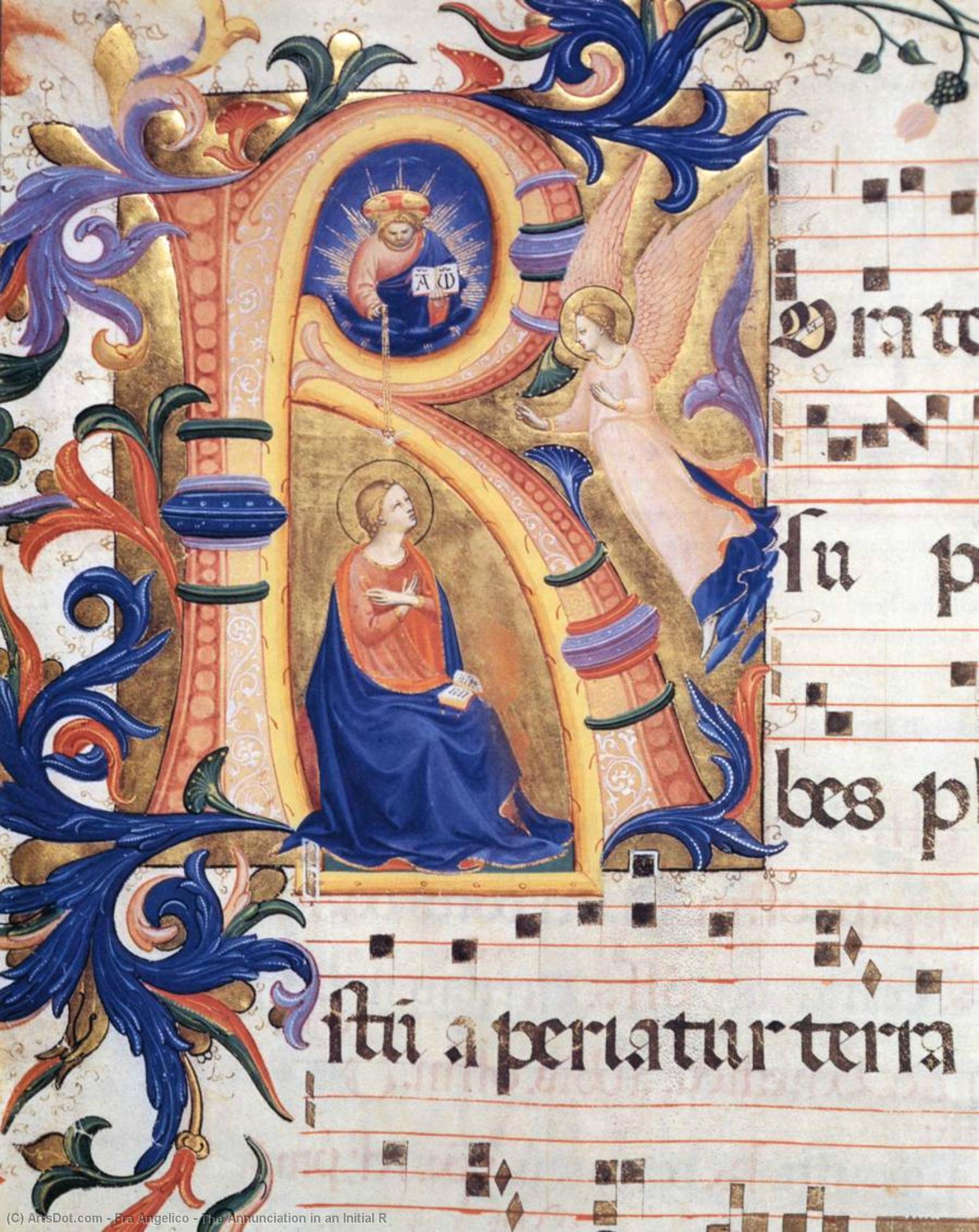
The Annunciation in an Initial R: A Glimpse of Divine Grace
Within the serene confines of the Museo di San Marco in Florence resides a masterpiece that transcends mere painting—it’s a portal into the heart of the Early Renaissance, a testament to Fra Angelico's profound spirituality and unparalleled artistic skill. “The Annunciation in an Initial R,” created around 1430, is not simply a depiction of a biblical moment; it’s an immersive experience, a carefully orchestrated symphony of color, light, and symbolism designed to elevate the viewer towards contemplation and faith. This tempera on panel miniature, originally part of a larger illuminated manuscript, captures the pivotal encounter between the Virgin Mary and the Archangel Gabriel—an event that marks the beginning of God's plan for salvation.
Fra Angelico’s genius lies not just in his technical mastery but also in his ability to infuse religious subjects with an intensely human quality. The composition itself is remarkably innovative for its time, moving away from the traditional, static depictions prevalent in Gothic art. Instead of a flat, two-dimensional scene, Fra Angelico creates a sense of spatial depth and atmospheric perspective within the confines of the initial r. The setting—a cloister with open sides—is subtly rendered, drawing the eye towards the central figures while hinting at an external world beyond. The architectural elements, particularly the classical columns supporting the loggia, are not merely decorative; they provide a framework for the divine narrative, grounding it in a recognizable earthly space.
The Figures: A Dance of Grace and Humility
At the heart of the composition stand Mary and Gabriel. Mary, seated on a simple chair, embodies an exquisite blend of innocence and acceptance. Her hands are folded in a gesture of humility and submission—a visual representation of her willingness to embrace God’s will. Fra Angelico masterfully captures her youthful beauty and serene expression, conveying a sense of profound peace and trust. Gabriel, depicted as a radiant figure clad in pink and gold, approaches Mary with an air of solemnity and reverence. His wings, rendered with delicate detail, suggest his celestial origins, while his outstretched hand signifies the offering of divine grace. The subtle tilt of his head and the downward gaze communicate both respect and urgency—he is delivering a momentous message.
Notice the careful attention to detail in their drapery. The flowing robes are rendered with an almost tactile quality, suggesting the weight and texture of fabric. The use of color is equally deliberate; Mary’s blue garments symbolize her royal status as the Queen of Heaven, while Gabriel's vibrant hues reflect his divine nature. Even the smallest details—the folds in their clothing, the expressions on their faces—contribute to the overall sense of realism and emotional depth.
Symbolism and Spiritual Resonance
Beyond its visual beauty, “The Annunciation” is rich in symbolic meaning. The presence of the “hortus conclusus,” or closed garden, behind Mary’s window is a powerful metaphor for her virginity—a testament to God's grace working through an untouched vessel. The cross and book within the cloister further reinforce the religious context of the scene, reminding the viewer of Christ’s sacrifice and the importance of faith. The overall composition evokes a sense of harmony and balance, reflecting the theological concept of *perfection*—the idea that God's plan is ultimately perfect and beautiful.
The inscription running across the bottom of the fresco – “Virginis Intacte Cvm Veneris Ante Figvram Preterevndo Cave Ne Sileatvr Ave” – serves as a constant reminder to pray. It’s a call to action, urging viewers to acknowledge God's grace and offer their own devotion.
A Legacy of Divine Art
“The Annunciation in an Initial R” stands as a pivotal work in the history of Renaissance art—a bridge between the Gothic past and the burgeoning realism of the era. Fra Angelico’s innovative composition, his masterful use of color and light, and his profound understanding of religious symbolism combine to create a truly transcendent experience. The painting's influence can be seen in countless subsequent works of art, solidifying its place as one of the most beloved and enduring images of the Annunciation. Today, it continues to inspire awe and wonder, inviting viewers to contemplate the mysteries of faith and the beauty of divine grace.
For those seeking a high-quality reproduction of this iconic artwork, consider exploring options from ArtsDot.com – where you can experience the brilliance of Fra Angelico’s vision in stunning detail.