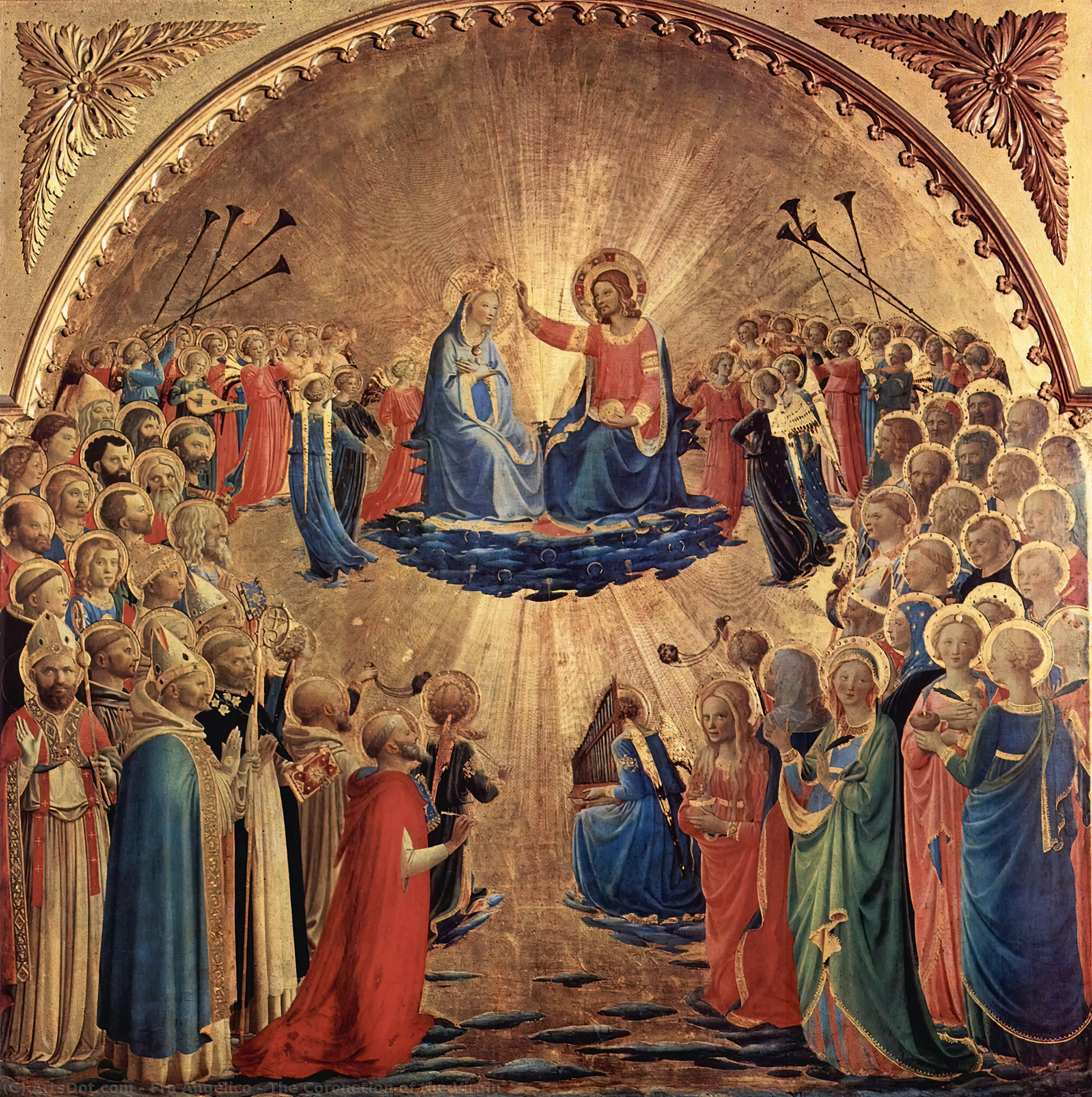
Explore Fra Angelico’s ‘Coronation of the Virgin’! A stunning Renaissance masterpiece featuring gold, divine light & intricate detail. Admire its beauty at the Uffizi Gallery.
Explore Fra Angelico's (c. 1395-1455) serene Renaissance art: devout frescoes, vibrant colors & spiritual depth. Discover the 'Angelic Painter' & his legacy!
Step into the Renaissance heart of Florence at the Uffizi Gallery! Explore masterpieces by Botticelli, Leonardo da Vinci & Michelangelo – an unforgettable art experience.
A Celestial Coronation: Fra Angelico’s Vision of Divine Majesty
Fra Angelico's *The Coronation of the Virgin*, painted around 1432 and now residing in Florence’s Uffizi Gallery, is a breathtaking example of Early Renaissance artistry. This masterpiece isn’t merely a depiction of a religious event; it’s an invitation into a realm of spiritual transcendence, meticulously crafted with both devotional fervor and burgeoning artistic innovation.
Subject & Narrative
The painting portrays the iconic moment when Christ crowns Mary as Queen of Heaven. Surrounded by a radiant host of saints, angels, and blessed figures, the Virgin receives her rightful crown, signifying her role as intercessor and mother of God. On the left foreground stands St. Egidius, patron saint of the church for which this altarpiece was originally created, alongside other prominent Florentine saints like Zenobius, Francis, and Dominic. The right side features a gathering of female saints, including Mary Magdalene kneeling in adoration. Musician angels fill the background, their celestial music seemingly echoing through the sacred space.
Style & Technique: Bridging Worlds
Angelico’s style is a beautiful synthesis of Gothic elegance and emerging Renaissance naturalism. The composition adheres to a hierarchical structure – typical of medieval art – with Christ and Mary dominating the scene, while the figures diminish in size according to their spiritual importance. However, unlike strictly Byzantine or Gothic works, Angelico introduces a sense of depth and volume through subtle modeling and carefully observed drapery. He masterfully employs egg tempera on wood panel, building up layers of luminous color with painstaking detail. The extensive use of gold leaf creates a shimmering backdrop that evokes the divine realm, while also referencing traditional Byzantine iconography.
Historical Context & Artistic Lineage
Commissioned for the church of Sant’Egidio in Florence, this *Coronation* reflects the growing devotion to the Virgin Mary during the 15th century. Fra Angelico, a Dominican friar himself, approached his work with profound religious conviction. His artistic development was significantly influenced by Lorenzo Monaco, whose use of color and elegant forms are clearly visible here. Vasari noted this influence, recognizing Angelico’s ability to build upon existing traditions while imbuing them with his own unique spiritual vision.
Symbolism & Iconography
Every element within the painting carries symbolic weight. The gold background represents divine light and eternity. The rays emanating from Christ and Mary symbolize grace and holiness. The inclusion of specific saints connects the work to local Florentine patronage and devotion. Even the architectural setting, though stylized, suggests a sacred space – a heavenly Jerusalem where this coronation takes place. The predella panels (now in the San Marco Museum) depicting the *Marriage* and *Funeral of the Virgin* complete the narrative cycle of Mary’s life, from earthly beginnings to celestial glory.
Emotional Impact & Lasting Legacy
*The Coronation of the Virgin* is not simply a visually stunning work; it's an emotionally resonant one. The serene expressions on the faces of Christ and Mary convey a sense of peace and divine love. The vibrant colors and intricate details draw the viewer into the scene, fostering a feeling of reverence and awe. Angelico’s ability to blend technical skill with spiritual depth cemented his reputation as one of the most important painters of the Early Renaissance – a pivotal figure in the transition from medieval art to the humanist ideals that would define the High Renaissance. This painting continues to inspire contemplation and devotion centuries after its creation. Its enduring beauty makes it an ideal subject for high-quality reproductions, bringing a touch of celestial grace into any home or interior space.