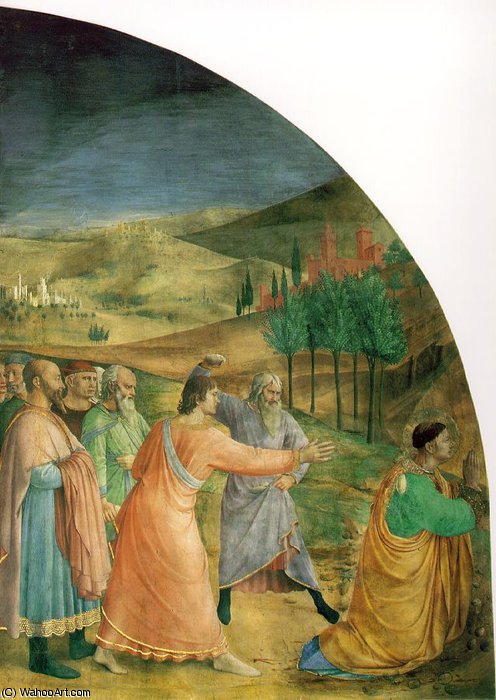
A Scene of Brutal Faith: Fra Angelico’s “The Stoning of Stephen” (c. 1450)
Fra Angelico, born Guido di Pietro, was a master of the Early Renaissance, and his devout faith permeated every brushstroke. This fresco, “The Stoning of Stephen,” powerfully depicts a harrowing moment from the Acts of the Apostles – the martyrdom of Saint Stephen, considered the first Christian martyr. Painted around 1450, it’s a work that blends artistic skill with profound spiritual resonance.
Biblical Narrative and Historical Context
The scene portrays the climax of Stephen's defense before the Sanhedrin (the Jewish high court). Accused of blasphemy, he is condemned and subjected to stoning. This event, as recounted in the Bible, marks a pivotal moment in the early Church’s history – a demonstration of unwavering faith in the face of persecution. Understanding this historical context—a time when Christians faced significant hostility within the Roman Empire—deepens our appreciation for Angelico's depiction. The
Persecution of Christians in the Roman Empire, as documented by historians like Tacitus, provides crucial background to the scene’s gravity and emotional weight.
Artistic Style & Technique: A Renaissance Master at Work
“The Stoning of Stephen” exemplifies Angelico's signature style – a harmonious blend of realism and spiritual idealism. The fresco technique itself—applying pigment to wet plaster—demands precision and speed, contributing to the work’s distinctive texture. While influenced by earlier masters like
Masaccio and
Fra Angelico, his approach is uniquely characterized by:
- Linear Perspective: Though somewhat flattened compared to later Renaissance works, a sense of depth is achieved through layering and atmospheric perspective.
- Earthy Palette: Dominated by browns, ochres, greens, and blues, the color scheme evokes a somber mood appropriate for the subject matter.
- Detailed Composition: The arrangement of figures in a diagonal line draws the viewer’s eye across the scene, emphasizing the dynamic action.
The work is often found within the context of his broader oeuvre at the
Convento di San Marco in Florence, where he created a series of frescoes that transformed monastic cells into spaces for contemplation.
Symbolism and Emotional Impact
Beyond its literal depiction, “The Stoning of Stephen” is rich in symbolism. The figures surrounding Stephen—some actively participating in the stoning, others observing with varying degrees of emotion—represent different responses to faith and persecution. The expressions on their faces – from righteous anger to horrified disbelief – convey a complex range of human emotions.
- Stephen’s Serenity: Despite facing imminent death, Stephen is often depicted with an expression of peace, symbolizing his unwavering belief.
- The Crowd's Fury: The aggressive postures and contorted faces of the stoners highlight the brutality of the act and the power of religious zealotry.
The overall emotional impact is one of profound sorrow mingled with a sense of spiritual fortitude. Angelico doesn’t shy away from the violence, but he imbues it with a dignity that elevates the scene beyond mere spectacle.
For Collectors & Interior Design
A high-quality reproduction of “The Stoning of Stephen” can serve as a powerful focal point in any space. Its muted color palette and dignified composition lend themselves well to both traditional and contemporary interiors. The artwork’s themes of faith, courage, and sacrifice resonate universally, making it a thought-provoking addition to homes, offices, or contemplative spaces. Consider pairing it with complementary Renaissance-era furnishings or using it as inspiration for a calming, spiritually-focused room design. The work's historical significance also makes it an excellent choice for collectors interested in Early Renaissance art and religious iconography.