Transfiguration of Christ
Fra Angelico’s
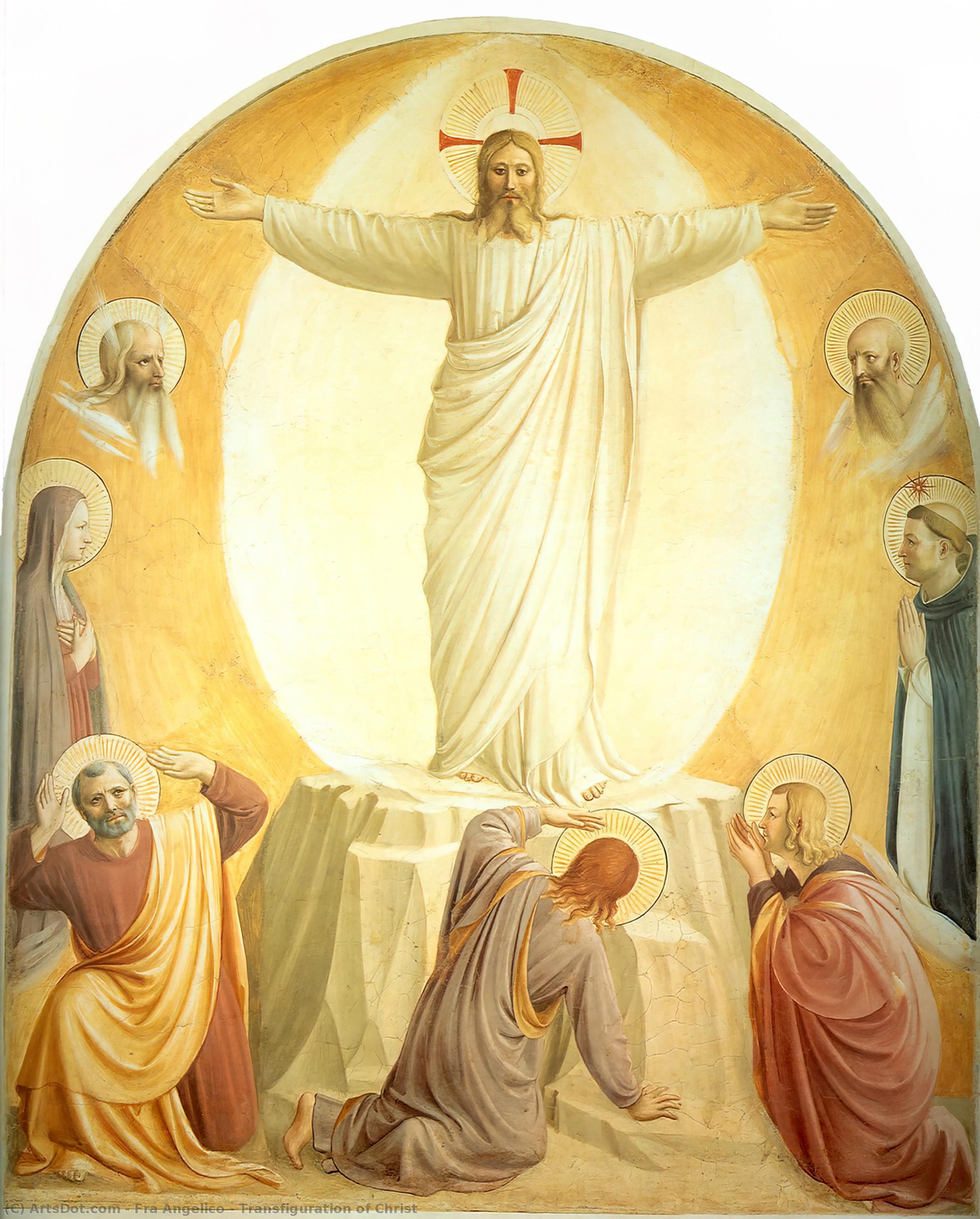
Transfiguration of Christ, created between 1440 and 1442, is a remarkable fresco that adorns the wall of Cell 6 in the Convento di San Marco in Florence. This Early Renaissance masterpiece showcases the artist’s skillful blend of spirituality and artistic innovation—a testament to his dedication to conveying profound religious emotion through visual form.
The Composition
In this fresco, Christ stands on a rock, symbolizing his ascension from the tomb. His outstretched arms foreshadow his crucifixion, while he is clad in a voluminous white robe surrounded by a radiant mandorla – an almond-shaped aureole of light that signifies divine glory and holiness. The three Apostles at the base of the rock are depicted in awed positions, maintaining a contemplative detachment characteristic of this fresco cycle; their gaze fixed upward, mirroring Christ’s elevated stance. This deliberate arrangement wasn't merely decorative; it was carefully considered to inspire contemplation and reverence within those who beheld it.
Artistic Significance
Fra Angelico’s work is notable for its masterful use of light and color. The glowing white robe and the mandorla create a sense of divine radiance, drawing the viewer’s attention to Christ—a technique that was innovative for its time and contributed significantly to the development of Early Renaissance art. He achieved this luminosity through meticulous layering of pigments, utilizing glazing techniques – applying thin washes of translucent color over underlying layers – to build up depth and vibrancy. This painstaking process ensured that every nuance of light and shade conveyed a palpable spiritual atmosphere.
Context within Fra Angelico's Oeuvre
Fra Angelico, an Italian painter and Dominican friar, is renowned for his religious paintings—particularly his frescoes at the San Marco Friary in Florence. These works represent a cornerstone of Early Renaissance artistic expression, reflecting the humanist ideals of the period while retaining unwavering devotion to Christian faith.
Transfiguration of Christ is part of a series of frescoes that adorn the cells of the convent, each depicting significant events from Christian history—a deliberate effort to educate and inspire piety amongst the monastic community. The artist’s aim was not simply to depict an event but to communicate its spiritual essence.
Relevance to Art History
Fra Angelico's work had a profound impact on subsequent artists. His use of light and his ability to convey deep spirituality through art influenced many masters who followed him, establishing a precedent for portraying religious subjects with luminous color palettes and emotionally resonant compositions. The Museo della Collegiata in Empoli, Italy, houses an impressive collection of Early Renaissance art—including works by Fra Angelico—providing invaluable insight into the artistic currents of the era. His influence can be seen in artists like Raphael and Piero della Francesca who adopted similar stylistic approaches.
ArtsDot.com offers high-quality, handmade oil painting reproductions of Fra Angelico's works, including
Transfiguration of Christ. These reproductions are crafted with meticulous attention to detail and color accuracy, ensuring that the essence of the original artwork is preserved—a beautiful way to honor a masterpiece of Renaissance art.
Photo Description: The painting depicts Jesus Christ ascending into heaven accompanied by Saint Peter, Saint James, and Saint John. Christ stands atop a rocky outcrop bathed in radiant light emanating from his mandorla – a luminous almond-shaped halo symbolizing divine grace. His outstretched arms gesture towards the heavens, conveying ascension and triumph. Below him are three apostles kneeling in reverence, their faces turned upwards toward Christ’s figure. The composition is deliberately sparse, emphasizing the spiritual significance of the scene through its restrained palette and masterful use of light—a hallmark of Fra Angelico's artistic vision.
Size: Unknown
Date: Unknown