A Renaissance Window into the Natural World
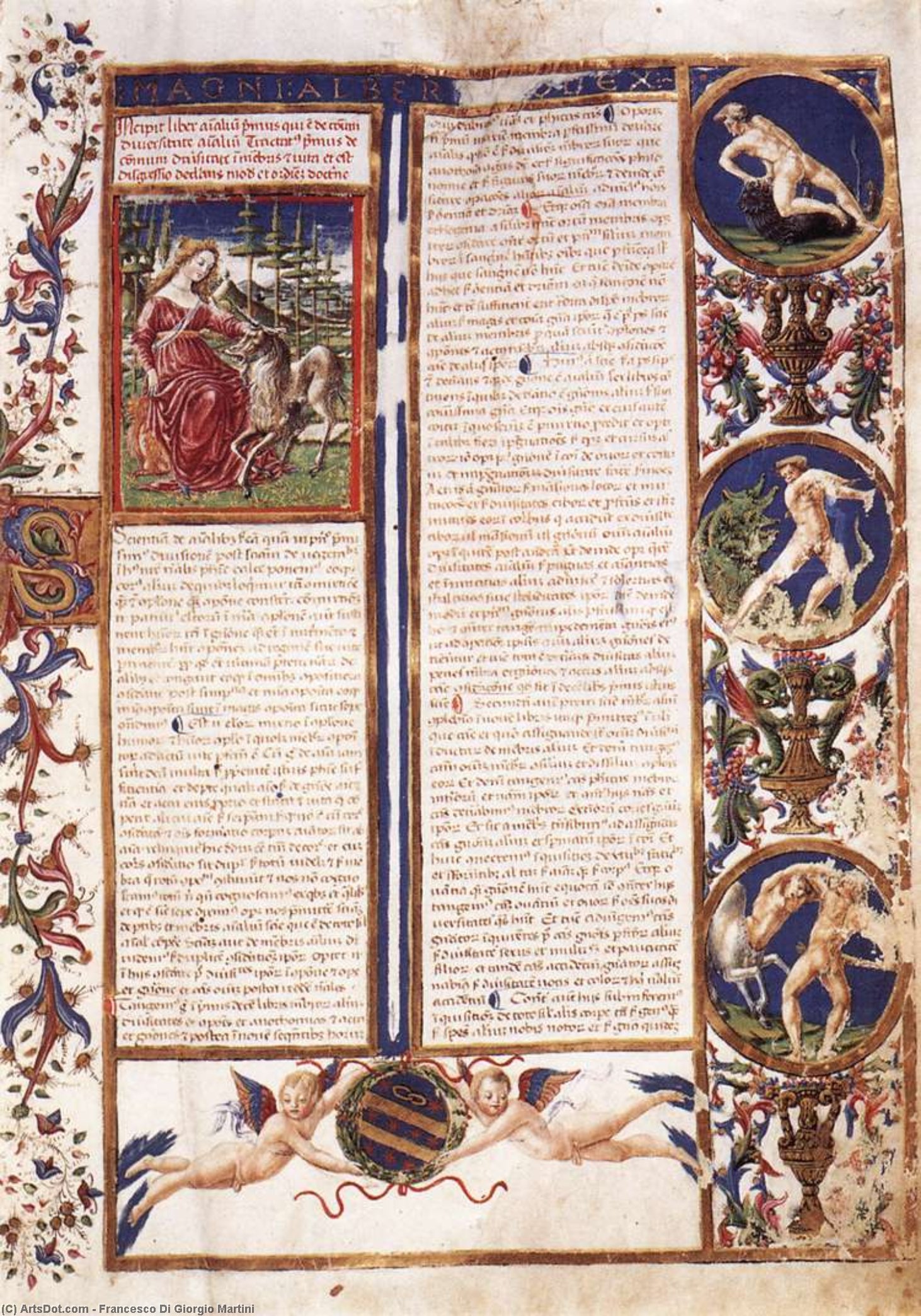
In the delicate, intricate lines of the First page of the Codex De Animalibus, we find ourselves transported back to the year 1463, standing at the threshold of a profound intellectual awakening. Created by the Sienese master Francesco di Giorgio Martini, this work is far more than a mere illustration; it is a vibrant tapestry of life, science, and human connection. At first glance, the eye is drawn to the tender central scene: a woman seated with grace upon a chair, cradling an infant in her lap. This intimate moment of maternal care serves as the emotional anchor for a composition that breathes with the vitality of the natural world. Surrounding this quiet domesticity is a bustling microcosm of existence, where birds take flight and fish glide through imagined waters, all rendered with a meticulousness that speaks to the Renaissance obsession with observing the divine order within nature.
The artistry of Martini, a true homers universalis, shines through in the rhythmic complexity of the page. The style is a masterful blend of Sienese tradition and the burgeoning humanist spirit of the era. Every stroke of the brush contributes to an intricate dance of patterns and designs that adorn the parchment, creating a visual richness that feels both structured and organic. For the discerning collector or interior designer, this piece offers a sophisticated interplay of detail and movement. The colors, though aged by time, retain a certain luminous quality—rich, vibrant tones that command attention without overwhelming the space they inhabit. It is a work that invites the viewer to lean in closer, discovering new layers of biological curiosity and artistic flourish with every glance.
Symbolism and the Harmony of Life
Beyond its aesthetic splendor, the Codex serves as a profound symbolic meditation on the interconnectedness of all living things. The presence of the mother and child represents the cycle of life and the continuity of the human spirit, while the surrounding fauna—the birds, the fish, and the various creatures scattered throughout the composition—act as symbols of the diverse biological tapestry that sustains our world. Martini uses these elements to bridge the gap between the human experience and the wild, untamed beauty of the animal kingdom. There is a palpable sense of harmony here; the chaos of nature is organized into a beautiful, legible hierarchy, reflecting the Renaissance belief that through art and science, humanity could decode the very language of creation.
For those seeking to incorporate a piece of history into a contemporary setting, this reproduction offers an unparalleled emotional depth. It evokes a sense of wonder, nostalgia, and intellectual curiosity. Whether placed in a sunlit library, a refined study, or as a focal point in a curated gallery space, the First page of the Codex De Animalibus acts as a conversation starter—a window into a time when art, anatomy, and architecture were seen as a single, unified pursuit of truth. It is an investment in beauty that transcends mere decoration, offering instead a timeless connection to the enduring legacy of the Italian Renaissance.