Francesco di Giorgio Martini
Illustrations from the Trattato di architettura
Siena
Italy
1439
1502
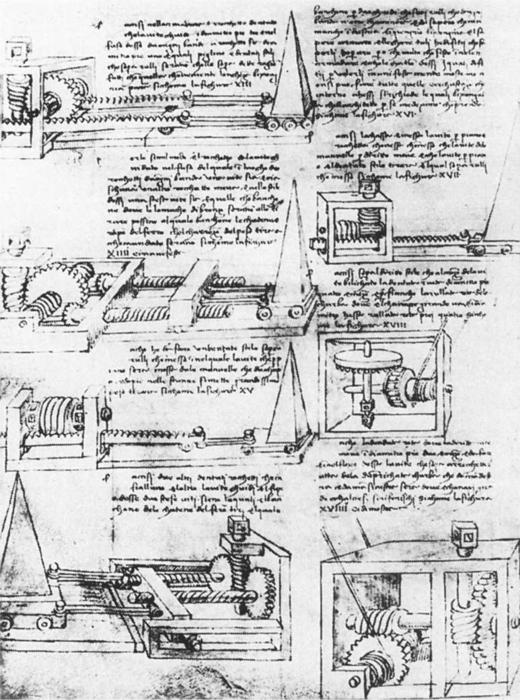
This artwork presents a detailed illustration from Francesco di Giorgio Martini's 'Trattato di architettura,' showcasing architectural and mechanical designs. It appears to be a page from an illuminated manuscript or early printed book, given the style of drawing and text.
The composition is d
Illustrations from the Trattato di architettura by Francesco di Giorgio Martini
Francesco di Giorgio Martini’s ‘Illustrations from the Trattato di Architettura,’ created in 1470, stands as a testament to the burgeoning spirit of Renaissance architectural thought and meticulous artistic execution. More than just a depiction of buildings—it's a window into the intellectual fervor of its time, reflecting the humanist obsession with understanding and documenting the natural world through precise observation and detailed representation.
- Subject Matter: The artwork centers on architectural designs and mechanical inventions, conceived as instruments for instructing future generations in engineering principles. Detailed drawings showcase fortifications, structures intended to defend cities, and complex machines designed for practical applications—a reflection of the era’s preoccupation with defense and innovation.
- Style & Technique: Martini's style embodies the hallmark characteristics of Renaissance architectural illustration: clarity, accuracy, and a deliberate rejection of illusionistic perspective in favor of orthographic projection. The technique relies on painstaking hand drawing with fine lines—a testament to the dedication required for capturing intricate geometric forms and conveying precise spatial relationships within each diagram.
- Medium & Materials: Executed in ink on parchment, the artwork utilizes a limited palette dominated by shades of brown and off-white. This restrained color scheme underscores the importance of form over ornamentation, aligning with the humanist ethos that championed rational thought and empirical observation.
The illustrations themselves are remarkable for their geometric precision—circles, squares, rectangles, and polygons meticulously rendered to represent gears, pulleys, and other architectural components. These diagrams prioritize accurate representation over artistic embellishment, mirroring Martini’s commitment to documenting knowledge with unwavering fidelity.
Beyond its technical merits, ‘Illustrations from the Trattato di Architettura’ resonates with a deeper symbolic significance. The formal script employed conveys reverence for erudition and tradition—a cornerstone of Renaissance culture. Furthermore, the meticulous detail of the drawings speaks to an underlying curiosity about harnessing natural laws to achieve ambitious goals. It's a visual embodiment of human ingenuity and intellectual aspiration.
This artwork offers more than just aesthetic pleasure; it provides insight into the formative years of architectural design and engineering during the Renaissance. Its enduring appeal lies in its ability to inspire contemplation on the pursuit of knowledge and the transformative power of observation—qualities that continue to define artistic excellence today.