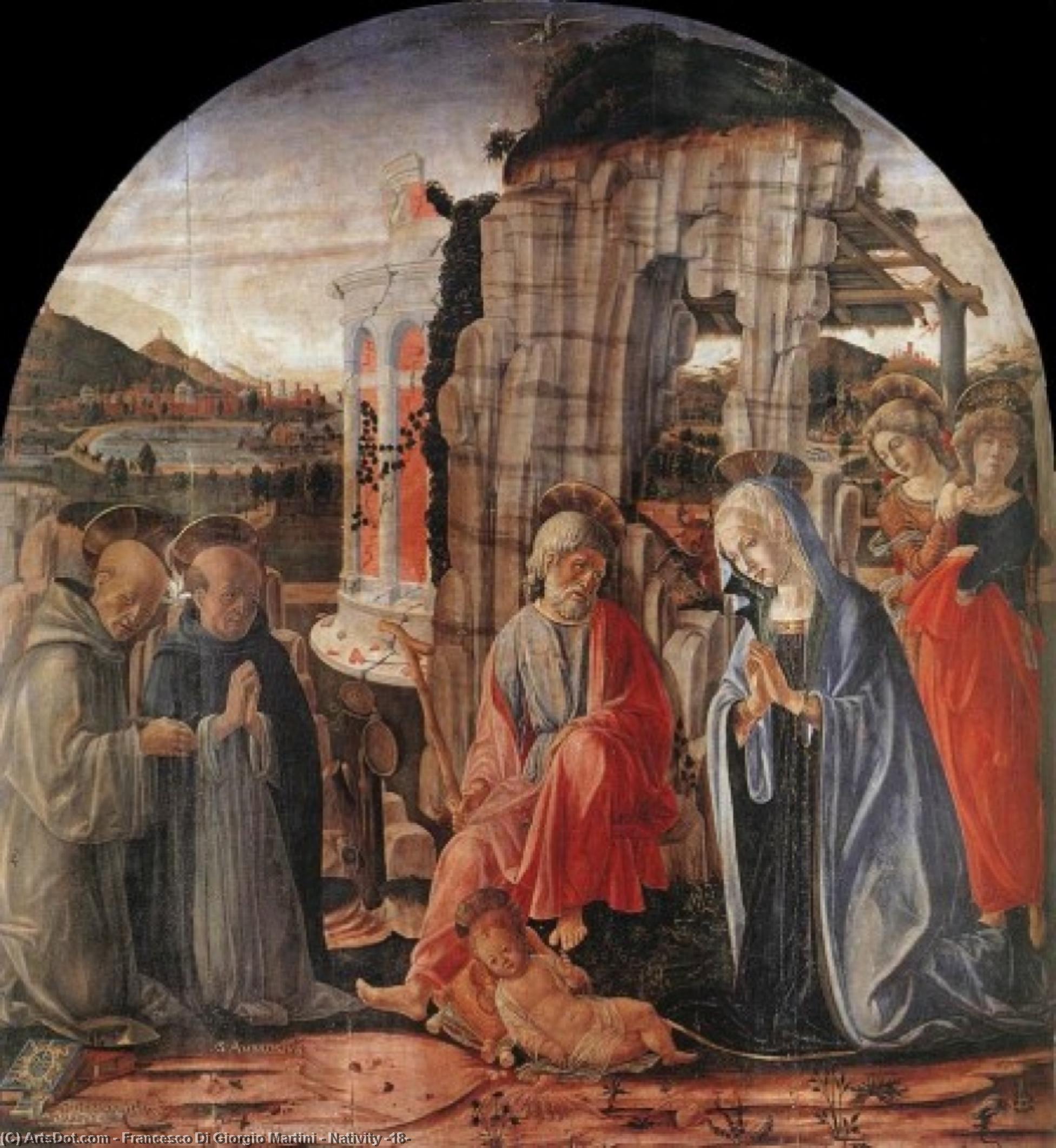
Experience the serene beauty of Francesco di Giorgio Martini’s 1475 Nativity, a detailed Renaissance painting depicting the birth of Christ with Mary, Joseph, and angels in a rocky outdoor setting – a timeless masterpiece to cherish and own.
Francesco di Giorgio Martini (1439-1502) was a pivotal Italian Renaissance painter, sculptor & architect of the Sienese School. Known for his innovative architectural theories, ideal city designs, and religious works like 'The Coronation of the Virgi
Explore Sienese art's golden age at the Pinacoteca Nazionale! Discover masterpieces by Duccio & Simone Martini within historic palaces – a journey through faith, beauty, and regional artistry.
A Testament to Faith: Francesco di Giorgio Martini’s Nativity (18)
This meticulously rendered depiction of the Nativity, dating back to 1475 and attributed to the remarkable polymath Francesco di Giorgio Martini, offers a profound meditation on faith, family, and the birth of Christ. Measuring 198 x 104 cm, the painting transcends mere religious illustration; it’s a testament to Martini's ambitious vision and his mastery of both artistic and technical disciplines. The scene unfolds within a rugged, outdoor setting – a rocky landscape punctuated by a weathered stone wall – immediately grounding the divine narrative in a tangible, earthly realm. This deliberate choice speaks to the humanist ideals that shaped Martini’s work, emphasizing the importance of human experience alongside spiritual devotion.
The Artist and His Context: A Renaissance Polymath
- Francesco di Giorgio Martini (1439-1502) was a pivotal figure in the Florentine and Sienese Renaissances, renowned not only for his artistic talent but also for his expertise in architecture, military engineering, and theoretical design.
- Born in Siena, he received early training from Vecchietta, known for his joyous wedding processions, though Martini swiftly moved beyond this style, embracing a more ambitious aesthetic driven by humanist principles.
- His diverse skillset reflects the ‘*homo universalis*’ ideal – a concept central to Renaissance thought, valuing mastery across multiple disciplines. This painting exemplifies his ability to synthesize artistic vision with practical knowledge.
Symbolism and Narrative Detail
The composition of the Nativity is rich in symbolic detail. Mary, presented with a serene dignity, kneels before the infant Jesus, her gesture conveying reverence and protection. Joseph stands steadfastly beside her, embodying earthly responsibility and guardianship. The angels, depicted with graceful wings and expressions of joyous announcement, underscore the divine intervention at the heart of the story. Note the inclusion of several additional figures – one on the left, two on the right, and another near the center – likely representing witnesses to this momentous event, further emphasizing the universality of the Nativity’s significance. The presence of birds adds a layer of naturalism and perhaps symbolizes hope or divine messengers.
Technique and Artistic Merit
Martini's technique is characterized by a meticulous attention to detail and a skillful use of color. The painting demonstrates a mastery of oil paint, allowing for subtle gradations in tone and texture that bring the figures and landscape to life. The rocky terrain is rendered with remarkable realism, while the drapery flows naturally around the human forms. The artist’s ability to capture both the spiritual essence of the scene and the physical details of the setting speaks to his profound understanding of art as a means of conveying complex ideas and emotions. This reproduction faithfully recreates the original's nuanced beauty, offering an exceptional piece for any collection or interior space.