A Vision of the Sacred – Francesco di Giorgio’s ‘The Nativity’
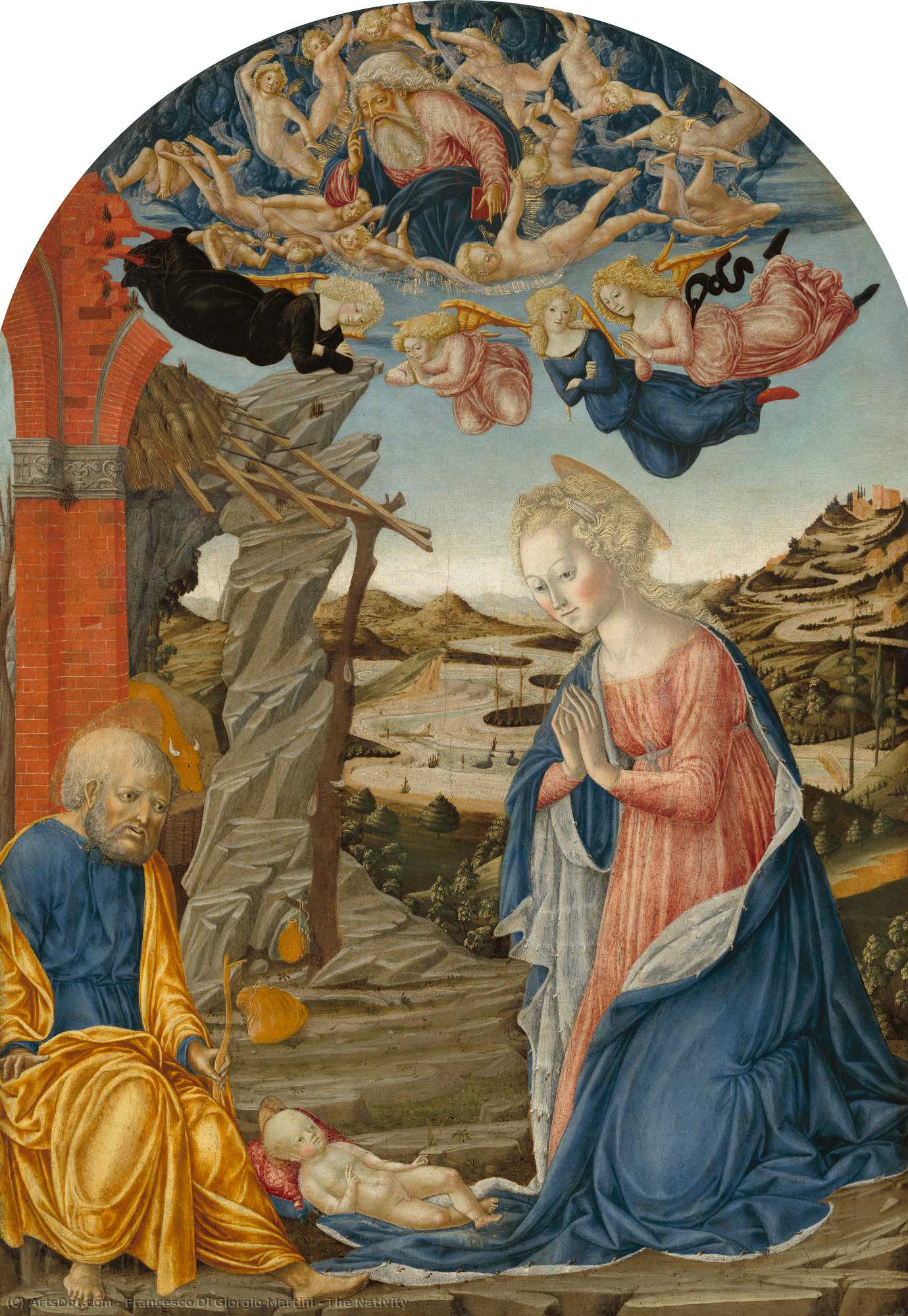
Francesco di Giorgio Martini's “The Nativity,” a captivating panel painting from around 1475-1480, transcends mere religious depiction; it’s an immersive experience of Renaissance idealism and architectural vision. Born in Siena during a period of burgeoning artistic innovation, Di Giorgio wasn’t simply a painter; he was a polymath—an architect, engineer, theorist, and sculptor all rolled into one remarkably inventive mind. This particular work embodies his unique approach, seamlessly blending elements of Sienese tradition with the emerging principles of perspective and humanist thought. The painting isn't merely a scene from the biblical narrative; it’s a carefully constructed space, imbued with a sense of serene contemplation and profound spiritual depth.

The composition immediately draws the eye to the central figures: Mary, Joseph, and the infant Jesus, nestled within a simple manger. Di Giorgio masterfully employs a flattened perspective, characteristic of his architectural studies, creating an illusion of depth that’s both elegant and subtly unconventional. The Virgin's pose is particularly striking – a kneeling figure radiating grace and humility, while the baby Jesus rests peacefully on her lap. Joseph stands behind them, a guardian figure rendered with quiet dignity. However, it’s not just the figures themselves that command attention; the background landscape—a distant vista of rolling hills and a rudimentary structure—is equally significant, hinting at Di Giorgio's architectural inclinations.
Architectural Echoes and Northern Influences
What truly distinguishes “The Nativity” is its unusual synthesis of influences. Di Giorgio’s upper register, particularly the arrangement of the angels, clearly echoes the sculptural reliefs of Donatello, a master of dynamic form and expressive emotion. These figures are not static; they seem to be caught in moments of contemplation or perhaps even divine inspiration. Conversely, the lower portion of the painting—the manger scene itself—demonstrates a clear admiration for Girolamo da Cremona’s work on choirbooks from Siena. This juxtaposition of styles – the monumental grandeur of Donatello and the intricate detail of Cremona – creates a fascinating tension within the composition, reflecting Di Giorgio's own intellectual curiosity and his desire to synthesize diverse artistic traditions.
Symbolism and Spiritual Resonance
Beyond its formal qualities, “The Nativity” is rich in symbolic meaning. The muted color palette—primarily earth tones and subtle blues—contributes to the painting’s atmosphere of serenity and reverence. The two birds present – one near the top left corner and another towards the bottom right side – are often interpreted as symbols of hope and divine guidance, further enhancing the painting's spiritual resonance. The carefully chosen placement of these elements suggests a deeper meditation on faith, humility, and the promise of salvation. It’s not simply a depiction of a biblical event; it’s an invitation to contemplate the mysteries of the human condition.
A Legacy of Innovation
“The Nativity” stands as a testament to Francesco di Giorgio Martini's extraordinary talent and his pioneering spirit. His architectural theories, documented in his treatise *Trattato di architettura, ingegneria e arte militare*, were remarkably advanced for their time, anticipating many of the innovations that would characterize Renaissance architecture. The painting itself represents a pivotal moment in Di Giorgio’s artistic development—a transition from the more conventional styles of his early career to a more personal and visionary approach. Reproductions of this remarkable work offer a glimpse into the mind of a true Renaissance polymath, a man who sought to unite art, science, and architecture in a single, harmonious expression.