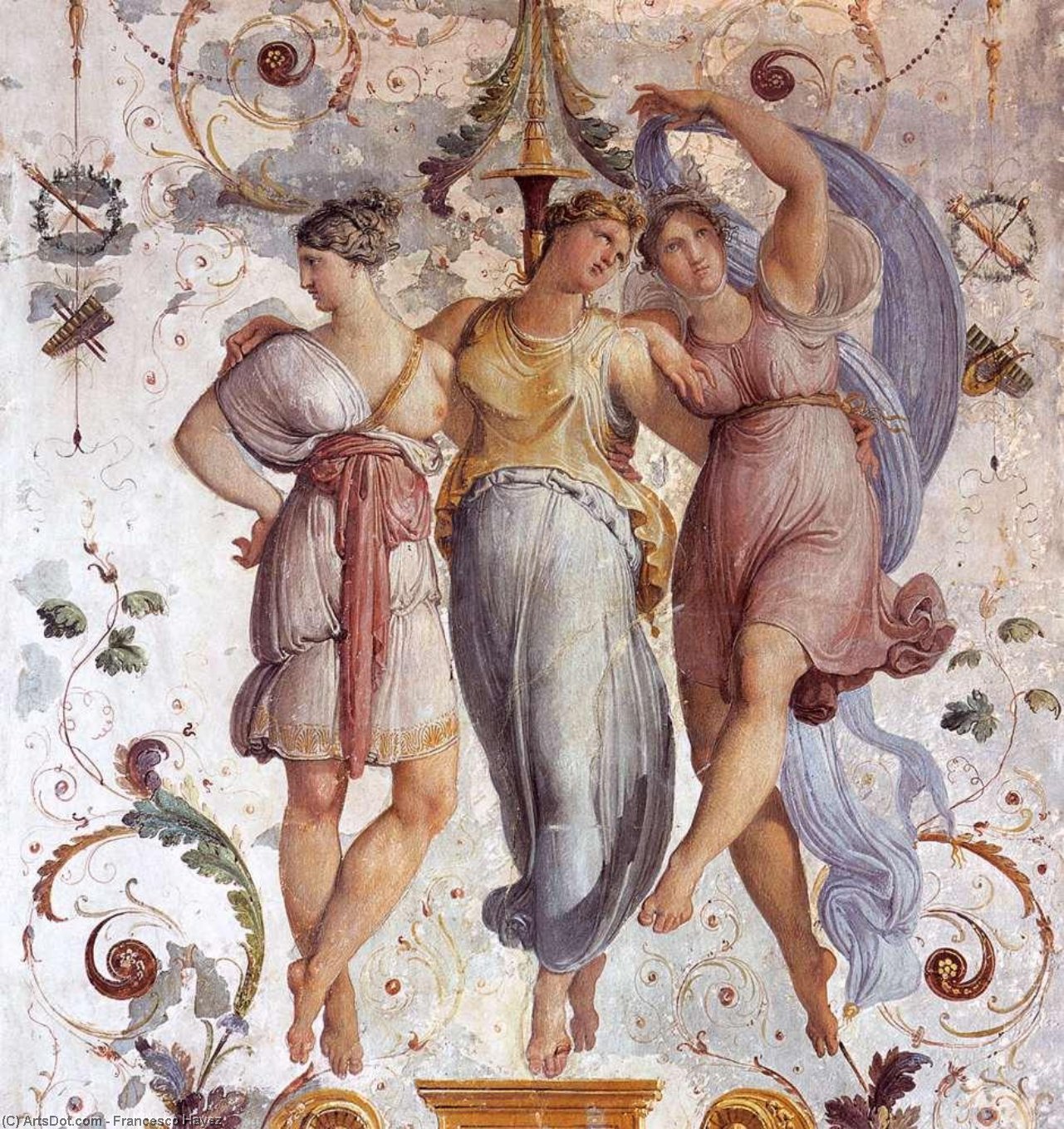
Wall Decoration (detail): A Venetian Masterpiece of Mystery and Grace
Francesco Hayez’s “Wall Decoration (detail),” painted in 1817, is more than just a depiction of three women; it's an invitation into a world of veiled secrets, subtle power dynamics, and the quiet elegance characteristic of Italian Romanticism. Housed within the Museo Correr in Venice, this tempera painting on panel immediately captivates with its masterful use of light, color, and composition – elements that speak volumes about Hayez’s artistic vision and the cultural currents of his time.
The scene unfolds against a backdrop of muted earth tones—ochre, umber, and hints of gold—creating an atmosphere of understated luxury. Three women stand before a wall, their postures and gestures hinting at unspoken narratives. One, adorned with a striking gold necklace, holds a sword – a symbol of authority and perhaps even veiled threat. Another clutches a small object, its purpose ambiguous, while the third’s hairstyle suggests a particular social standing. Hayez deliberately avoids clear identification, allowing each figure to become a vessel for interpretation, inviting viewers to project their own narratives onto the scene.
The Romantic Spirit: Intrigue and Symbolism
Painted during a period of significant political and social upheaval in Italy – the Risorgimento’s nascent struggle for unification – “Wall Decoration (detail)” reflects the era's fascination with both historical drama and emotional intensity. Hayez, deeply influenced by the Neoclassical tradition yet embracing the burgeoning Romantic movement, skillfully blends these influences. The painting isn’t a straightforward narrative; instead, it evokes a sense of mystery and intrigue, mirroring the clandestine activities and political maneuvering that characterized the time.
The sword, for instance, doesn't simply represent military prowess but also hints at potential conflict and the precarious balance of power. The small object held by one woman could symbolize secrets, alliances, or even a hidden desire. Hayez’s use of symbolism is layered and deliberately ambiguous, encouraging viewers to engage actively with the artwork and construct their own interpretations.
Technique and Artistic Influence
Hayez's mastery of tempera paint is evident in the painting’s remarkable detail and luminous quality. Tempera, a slow-drying medium, allows for meticulous layering and blending, resulting in rich colors and subtle gradations of light. This technique was particularly favored by artists during Hayez’s time, offering a level of control and precision that enabled them to achieve breathtaking realism.
The influence of Venetian Renaissance masters is palpable, particularly in the careful rendering of drapery and the use of atmospheric perspective. However, Hayez departs from strict Neoclassicism by injecting a strong dose of Romantic emotion into his work. He draws inspiration from artists like Canova, whose sculptures emphasized dramatic gestures and emotional expression – principles that Hayez skillfully translates to the canvas.
A Timeless Appeal: Beauty, Mystery, and Enduring Resonance
“Wall Decoration (detail)” transcends its historical context to offer a timeless exploration of human relationships, power dynamics, and the allure of the unknown. The painting’s enduring appeal lies in its ability to evoke a sense of quiet drama and invite viewers into a world of subtle secrets. It's a testament to Hayez’s artistic genius – a masterpiece that continues to captivate and intrigue audiences centuries after its creation.
Further Information:
- Artist: Francesco Hayez
- Date: 1817
- Medium: Tempera on panel
- Location: Museo Correr, Venice, Italy
Useful Links: