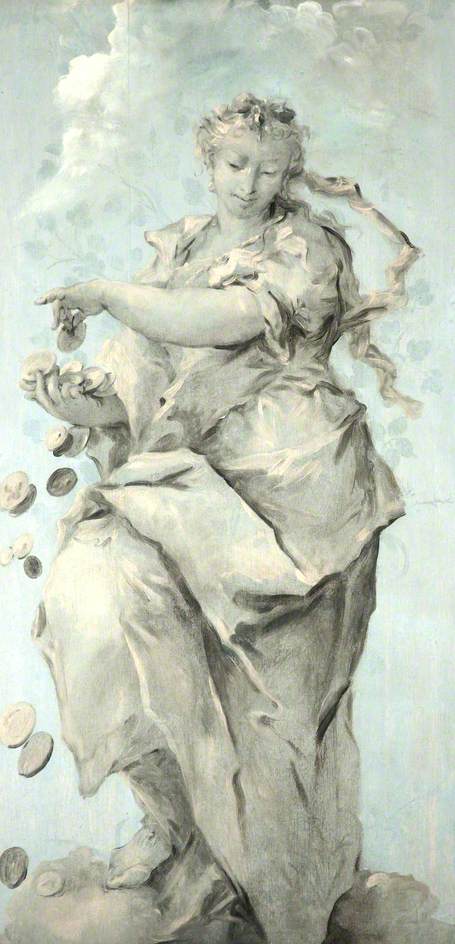
Experience Francesco Guardi’s ‘Abundance,’ a Venetian Twilight masterpiece capturing atmospheric light and a woman holding coins amidst canals. This 1750 landscape exemplifies the artist's unique style, perfect for art lovers seeking timeless beauty.
Discover Francesco Guardi (1712-1793), Venetian master of 'veduta' paintings! Explore his atmospheric cityscapes, unique brushwork & influence on Impressionism. View artworks now!
Home to one of the world's finest Pre-Raphaelite collections, Liverpool's Walker Art Gallery offers an unmissable journey through Renaissance masters and British modernism that invites you to explore its timeless beauty.
Francesco Guardi’s Venetian Twilight: Capturing Atmosphere in ‘Abundance’
Francesco Lazzaro Guardi (1712-1793), born into a family steeped in artistic tradition on October 5, 1712, stands as a poignant figure at the close of the illustrious Venetian School. His life mirrored the fading grandeur of Venice itself—a city once a vibrant hub of commerce and culture, slowly yielding to political decline and economic hardship. Guardi wasn’t merely a painter; he was a chronicler of this twilight era, capturing its atmospheric beauty and underlying melancholy with a unique sensitivity that would later resonate profoundly with the Impressionists. The Guardi family workshop, established by his father Domenico, was a bustling center of artistic production, where Francesco initially collaborated with his elder brother Gian Antonio on religious paintings. This early partnership provided a solid foundation in technique, but it was after Gian Antonio’s death in 1760 that Francesco truly found his voice, turning his attention to landscapes and cityscapes—a deliberate departure from the ornate interiors favored by earlier Venetian masters.
Guardi's artistic vision centered on ‘veduta,’ or panoramic views of Venice, a genre he perfected with unparalleled skill. Unlike many artists of his time who sought to depict scenes in meticulous detail, Guardi prioritized capturing the essence of a place—its light, its air, its mood—rather than striving for photographic accuracy. This approach aligns perfectly with the burgeoning Impressionist movement, which championed fleeting moments and subjective perception. ‘Abundance,’ painted around 1750, exemplifies this stylistic ethos beautifully. The artwork portrays a woman holding coins in her hand, dressed in elegant attire against a backdrop of Venetian canals and buildings bathed in soft, diffused light. Two additional figures appear subtly in the background, adding depth to the composition without distracting from the central subject’s expressive gaze.
Style and Technique: Baroque Influence Meets Atmospheric Impressionism
Guardi's technique is characterized by loose brushstrokes—a hallmark of Venetian painting—that blend seamlessly together to create an illusion of shimmering light and air. He employed a layering process, applying thin washes of color over thicker impasto strokes, resulting in textured surfaces that convey the palpable atmosphere of Venice. The artist’s masterful use of chiaroscuro – dramatic contrasts between light and dark – enhances the emotional impact of the scene, emphasizing the woman's posture and drawing the viewer’s eye into the intricate details of the cityscape. While firmly rooted in Baroque tradition—evident in the grandeur of the architectural elements—Guardi subtly incorporates Impressionist principles, prioritizing tonal harmony and capturing the ephemeral qualities of Venetian daylight.
Historical Context: Venice Under Pressure
Venice during Guardi's lifetime was facing increasing challenges from rival European powers, particularly Britain and Austria. The city’s economic dominance had begun to erode as trade routes shifted away from the Mediterranean Sea, and political instability plagued its ruling Doges. Despite these difficulties, Venetian art continued to flourish, fueled by patronage from wealthy merchants and aristocrats who recognized the power of visual representation to convey prestige and sophistication. Guardi's landscapes served not only as aesthetic expressions but also as subtle commentaries on Venice’s predicament—a celebration of beauty amidst decline—reflecting a broader cultural preoccupation with preserving artistic heritage in the face of adversity.
Symbolism: Wealth, Prosperity, and Reflection
The woman holding coins symbolizes wealth and prosperity – emblems of Venetian mercantile success. However, her contemplative gaze suggests more than mere material gain; it embodies a deeper reflection on the passage of time and the enduring spirit of Venice. The scattered coins around her represent not just currency but also fragments of history—the legacy of centuries of artistic innovation and cultural grandeur. Guardi’s careful composition invites contemplation, prompting viewers to consider the interplay between beauty and melancholy – themes central to Venetian art and profoundly influential on subsequent artistic movements.
Emotional Impact: A Moment Frozen in Time
‘Abundance’ evokes a feeling of serene stillness—a snapshot of Venice at its most luminous. The soft light illuminates the woman's face, conveying both dignity and vulnerability. The artist’s masterful rendering of Venetian architecture captures the city’s architectural splendor while simultaneously hinting at its inevitable decay. Ultimately, Guardi succeeds in transporting the viewer to a specific place and time—a testament to his artistic genius and an enduring symbol of Venetian culture.