The
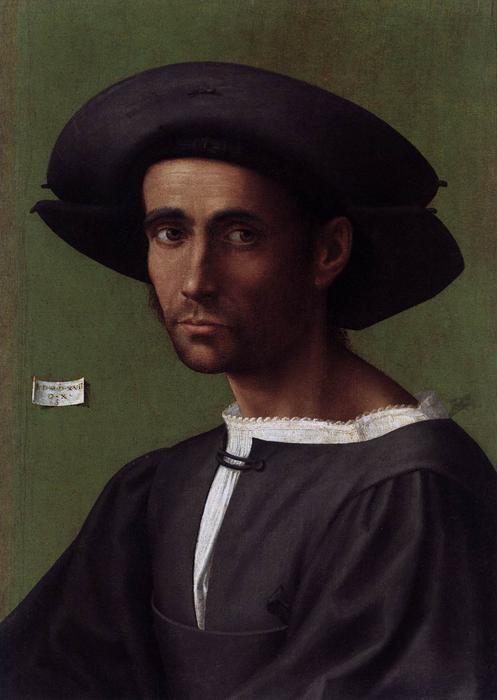
Portrait of a Man by Franciabigio is a captivating oil on canvas painting that exemplifies the artistic mastery of the Renaissance period. Created in 1517, this portrait is a testament to the artist's skillful use of color, composition, and technique. The painting measures 55 x 40 cm and is currently housed at the
Liechtenstein Museum in Vienna, Austria.
Artistic Style and Technique
The painting showcases Franciabigio's unique style, which blends elements of realism and humanism. The subject's face is rendered with remarkable detail, capturing the subtleties of expression and emotion. The use of chiaroscuro, a technique that utilizes strong contrasts between light and dark, adds depth and dimension to the portrait. This artistic approach was characteristic of the Renaissance period, as seen in the works of other notable artists such as
El Greco (Doménikos Theotokopoulos) and
Vannucci Pietro (Le Perugin).
Key Features of the painting include:
- The subject's attire, which suggests a sense of wealth and social standing
- The minimalistic background, which focuses attention on the subject
- The masterful use of color and light, which creates a sense of depth and dimension
For more information on Renaissance art and artists, visit
Renaissance Art at ArtsDot.com. To explore the works of Franciabigio and other notable artists, see
Franciabigio: Portrait of a Man.
The
Portrait of a Man by Franciabigio is a remarkable example of Renaissance art, showcasing the artist's technical skill and artistic vision. As a masterpiece of oil on canvas, it continues to inspire and captivate audiences today. For handmade oil painting reproductions of this and other notable works, visit ArtsDot.com.