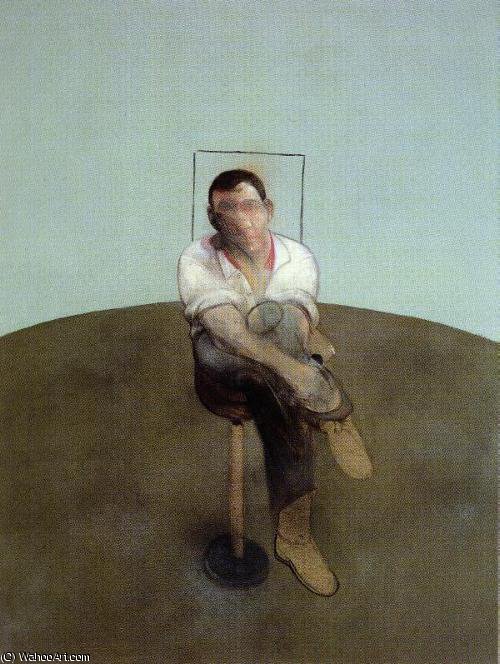
A Study in Isolation: Unveiling Francis Bacon’s ‘3 Studies for a Portrait of John Edwards, center’
Francis Bacon's 1984 oil painting, *3 Studies for a Portrait of John Edwards, center*, is a haunting and deeply introspective work that exemplifies the artist’s signature exploration of the human condition. This piece, part of a triptych, doesn’t offer a traditional portrait; instead, it presents a fragmented and emotionally charged depiction of its subject, shrouded in ambiguity and psychological tension.
Subject & Composition
The artwork features a solitary figure seated upon a simple circular platform, partially obscured within a rectangular frame. The composition is starkly minimalist, focusing almost entirely on the central form. Bacon deliberately avoids detailed representation; the face is blurred, the body contorted, and the overall impression is one of vulnerability and confinement. This deliberate ambiguity invites viewers to project their own interpretations onto the figure, fostering a deeply personal connection with the work. The surrounding space is rendered as a dark, undefined void, intensifying the sense of isolation.
Style & Technique
Bacon’s style is immediately recognizable – a potent blend of Expressionism and figurative painting. He masterfully manipulates oil paint with loose, expressive brushstrokes, creating a textured surface that conveys raw emotion. The application of paint isn't about precise rendering but rather about capturing the *feeling* of being human—the anxiety, the fragility, and the inherent loneliness.
The visible brushwork contributes to an almost palpable sense of unease. His technique often involved layering colors and scraping away at the surface, resulting in a dynamic and unsettling visual effect.
Historical Context & Influences
Created in 1984, this work reflects Bacon’s ongoing fascination with portraiture as a means of exploring existential themes. He was deeply influenced by artists like Velázquez (particularly his *Portrait of Pope Innocent X*), and the photographic works of Eadweard Muybridge, whose studies of motion informed Bacon's distorted figures. The post-war era, marked by trauma and uncertainty, profoundly impacted Bacon’s artistic vision, leading him to create images that grapple with themes of alienation, violence, and mortality.
Symbolism & Interpretation
The rectangular frame surrounding the figure is a crucial symbolic element. It can be interpreted as a cage, representing societal constraints or psychological barriers.
It suggests a sense of being trapped, observed, or dissected. The darkness enveloping the figure reinforces this feeling of confinement and isolation. John Edwards, the subject, was Bacon’s lover at the time; however, the painting transcends a simple depiction of a personal relationship, becoming a universal exploration of human vulnerability and the complexities of intimacy.
Emotional Impact & Aesthetic Appeal
*3 Studies for a Portrait of John Edwards, center* is not an easy work to view. It evokes feelings of discomfort, anxiety, and melancholy. However, it’s precisely this emotional intensity that makes it so compelling. The painting's muted color palette – predominantly earthy tones – further enhances its somber mood.
For collectors and interior designers, this piece offers a powerful statement, adding depth and intellectual weight to any space. Its abstract qualities allow it to complement a variety of design styles, from minimalist modern to eclectic contemporary. It’s a work that demands attention and invites contemplation, making it a truly unforgettable addition to any art collection.
Key Characteristics
- Artist: Francis Bacon
- Year: 1984
- Medium: Oil on canvas
- Style: Expressionism, Figurative Painting
- Themes: Isolation, Vulnerability, Existentialism, Confinement