A Descent into the Waste Land: Francis Bacon's "A Piece of Waste Land"
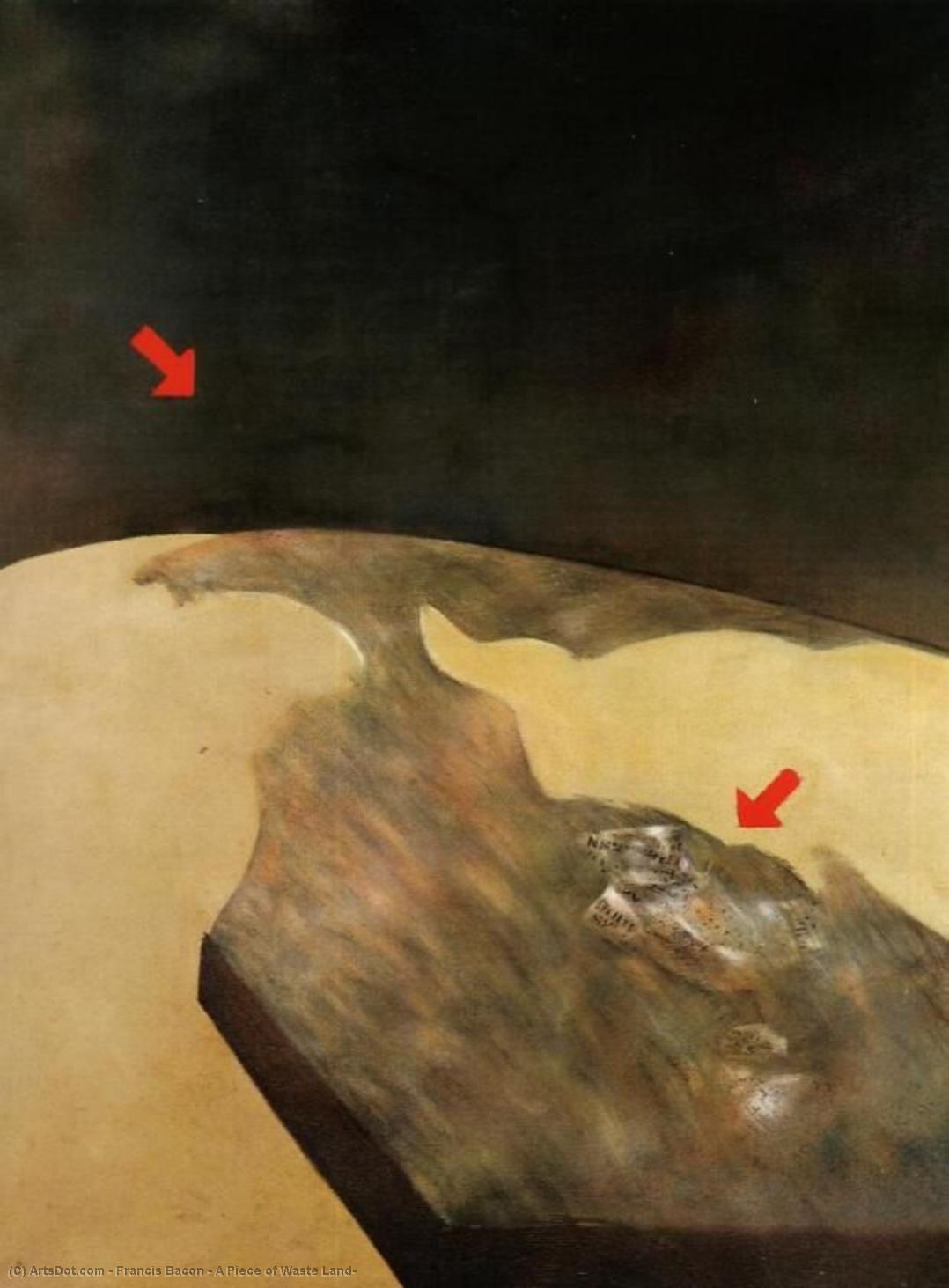
Francis Bacon’s “A Piece of Waste Land,” painted in 1982, is not merely a depiction of a beach; it’s an excavation of existential dread rendered with the brutal honesty that defined his mature style. The canvas presents a desolate seascape – a body of water stretching into a murky distance, punctuated by the unsettling presence of two crimson arrows aggressively directed towards a turbulent sky. This isn't a picturesque coastal scene inviting tranquility; it’s a visceral confrontation with isolation, decay, and the profound anxieties of the modern condition. Bacon, deeply influenced by the psychological turmoil of his era – the shadow of World War II and the burgeoning sense of societal fragmentation – translates these concerns directly onto the canvas through a technique characterized by raw physicality and emotional intensity.
The Language of Discomfort: Technique and Style
- Figure Painting at its Most Intense: Bacon’s approach to figure painting, honed over decades, is evident here. He employs a layered technique, building up the image with thick impasto strokes of oil paint, creating a surface that feels almost sculptural in its texture. The colors are predominantly dark – bruised blues, sickly greens, and the dominant, jarring red – contributing to the overall sense of unease.
- Distorted Forms: The human-like forms within the composition are deliberately distorted, elongated, and fragmented. This distortion isn’t simply stylistic; it reflects Bacon's belief that traditional representation fails to capture the true nature of experience, particularly the overwhelming power of emotion.
- Arrow Motif: The repeated use of arrows is a key element in understanding Bacon’s work. They represent a forceful, almost violent, direction – a desperate attempt to find meaning or escape from the suffocating atmosphere of the painting. Their placement draws the viewer's eye into the depths of the scene, intensifying the feeling of disorientation.
Echoes of History and Symbolism
Painted in 1982, “A Piece of Waste Land” resonates powerfully with the historical context of its creation. The title itself alludes to T.S. Eliot’s seminal poem, a work grappling with similar themes of spiritual emptiness and societal breakdown following the devastation of World War I. Bacon, like Eliot, was exploring the psychological impact of trauma and loss on the individual psyche. The beach setting, often associated with relaxation and escape, is here transformed into a site of profound discomfort – a place where the boundaries between reality and nightmare blur. The water itself can be interpreted as representing the unconscious mind, turbulent and unpredictable.
Emotional Resonance and Artistic Legacy
Bacon’s work transcends mere representation; it evokes a deeply felt emotional response in the viewer. “A Piece of Waste Land” is not an easy painting to confront – its unsettling imagery and bleak atmosphere demand attention. Yet, it's precisely this challenging quality that makes it so compelling. It speaks to our own anxieties about mortality, isolation, and the search for meaning in a seemingly meaningless world. As with much of Bacon’s oeuvre, the painting invites contemplation on the darker aspects of human existence, solidifying his place as one of the most significant and influential artists of the 20th century. This hand-painted reproduction captures not just an image, but the very essence of Bacon's tormented genius.