A Raw Expression of Post-War Anxiety
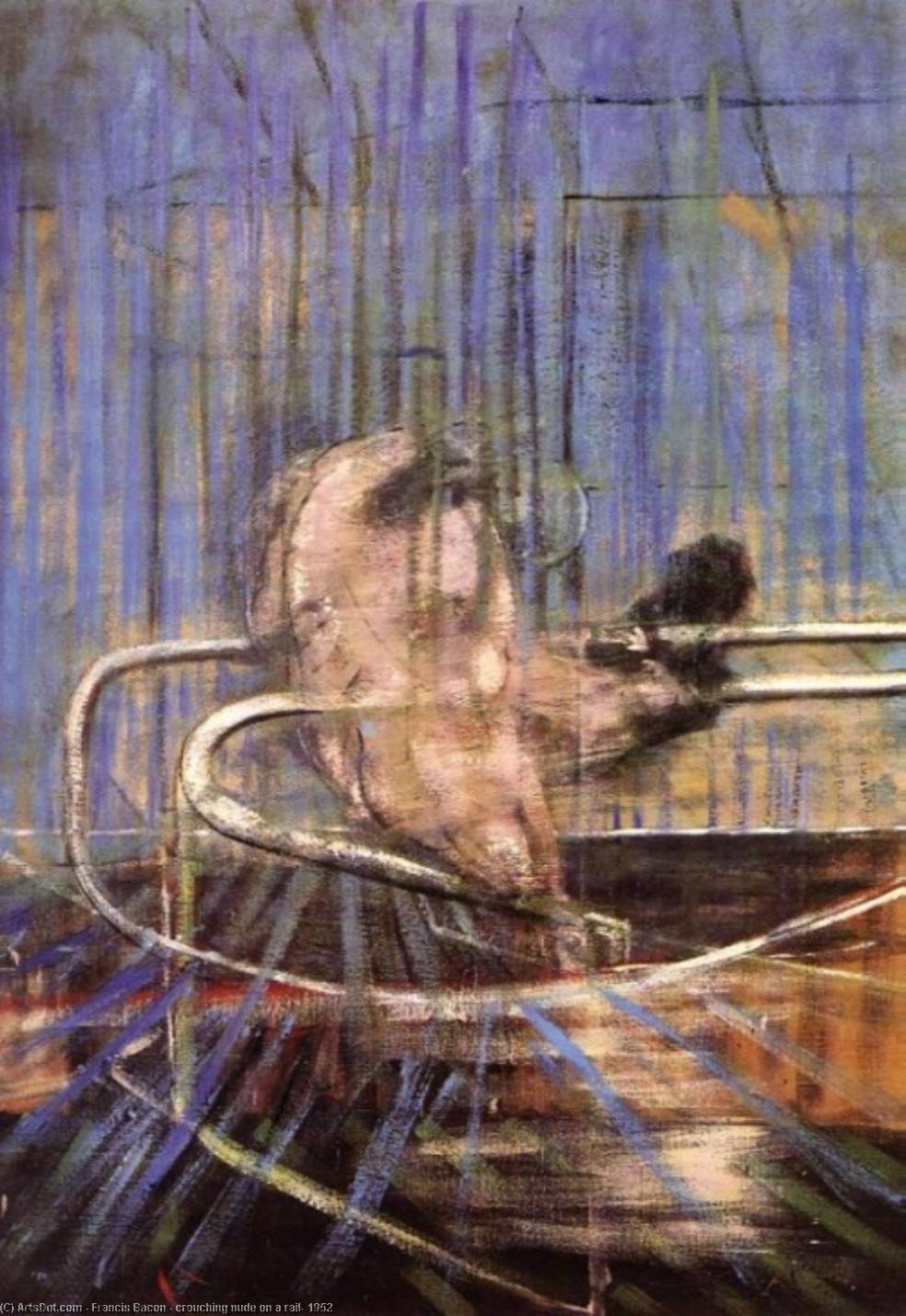
Francis Bacon’s 1952 *Crouching Nude on a Rail* is a visceral and profoundly unsettling work that encapsulates the existential dread prevalent in post-World War II Europe. It isn't simply a painting of a body; it’s an evocation of the human condition stripped bare, both physically and emotionally – a scream rendered in oil paint. The figure, contorted and seemingly trapped, embodies a sense of vulnerability and isolation that resonates deeply with viewers even today.
Style & Technique: Deformed Figuration and Visceral Impasto
Bacon stands as a pivotal figure in 20th-century Expressionism, though his style defies easy categorization. He deliberately rejected pure abstraction, instead choosing to *deform* the human form to convey intense psychological states. This piece is a prime example. The application of paint is crucial – thick
impasto, visible and textured brushstrokes aren’t merely descriptive; they *are* the distress, lending a palpable sense of chaos and unease. Lines are not used for precise definition but as dynamic forces swirling around the central form, amplifying instability and torment. He masterfully manipulates oil paint to create a surface that feels almost violently applied, mirroring the inner turmoil of his subject.
Historical Context: The Shadow of War
Created in the aftermath of WWII, this work reflects a widespread disillusionment with traditional beliefs about humanity and progress. The horrors witnessed during the war shattered faith in reason and left a lingering sense of anxiety. Bacon doesn’t directly depict wartime trauma; rather, he taps into a deeper, more universal feeling of alienation and dread that defined the era. It's a response to a world irrevocably changed, grappling with the fragility of existence.
Symbolism & Interpretation: Cage, Flesh, and the Human Predicament
The “rail” or cage-like structure is central to understanding the painting’s symbolism. It represents not just physical confinement but also psychological entrapment – the limitations imposed by our own bodies, minds, and societal structures. The figure's partial obscuration further emphasizes vulnerability and a loss of identity. Bacon frequently blurred gender distinctions in his work, adding to this ambiguity.
The contrasting color palette—cool blues and purples against warmer flesh tones—heightens the tension. The cool colors evoke feelings of coldness, isolation, and despair, while the warmer hues remind us of the figure’s fragile humanity. This interplay suggests a struggle between the individual and an indifferent, even hostile, world.
The structure itself can be interpreted as a metaphor for the constraints of modern life or the inescapable nature of mortality.
Emotional Impact & Legacy
This painting is profoundly unsettling; it doesn’t offer comfort or resolution but forces viewers to confront uncomfortable truths about human existence. Bacon's work isn’t meant to be *liked*; it’s meant to be *felt*. Its enduring power lies in its ability to tap into primal emotions – fear, vulnerability, and the awareness of our own mortality.
As a cornerstone of Bacon’s prolific career, this piece continues to influence contemporary artists exploring themes of alienation, identity, and the darker aspects of the human psyche. It remains a potent symbol of existential angst and a testament to Bacon’s unflinching vision.
- A powerful statement piece for collectors seeking emotionally resonant art.
- Ideal for interior spaces aiming for a sophisticated, thought-provoking atmosphere.
- A compelling focal point that sparks conversation and introspection.