A Vision of Confinement: Exploring Francis Bacon’s “Crouching Nude”
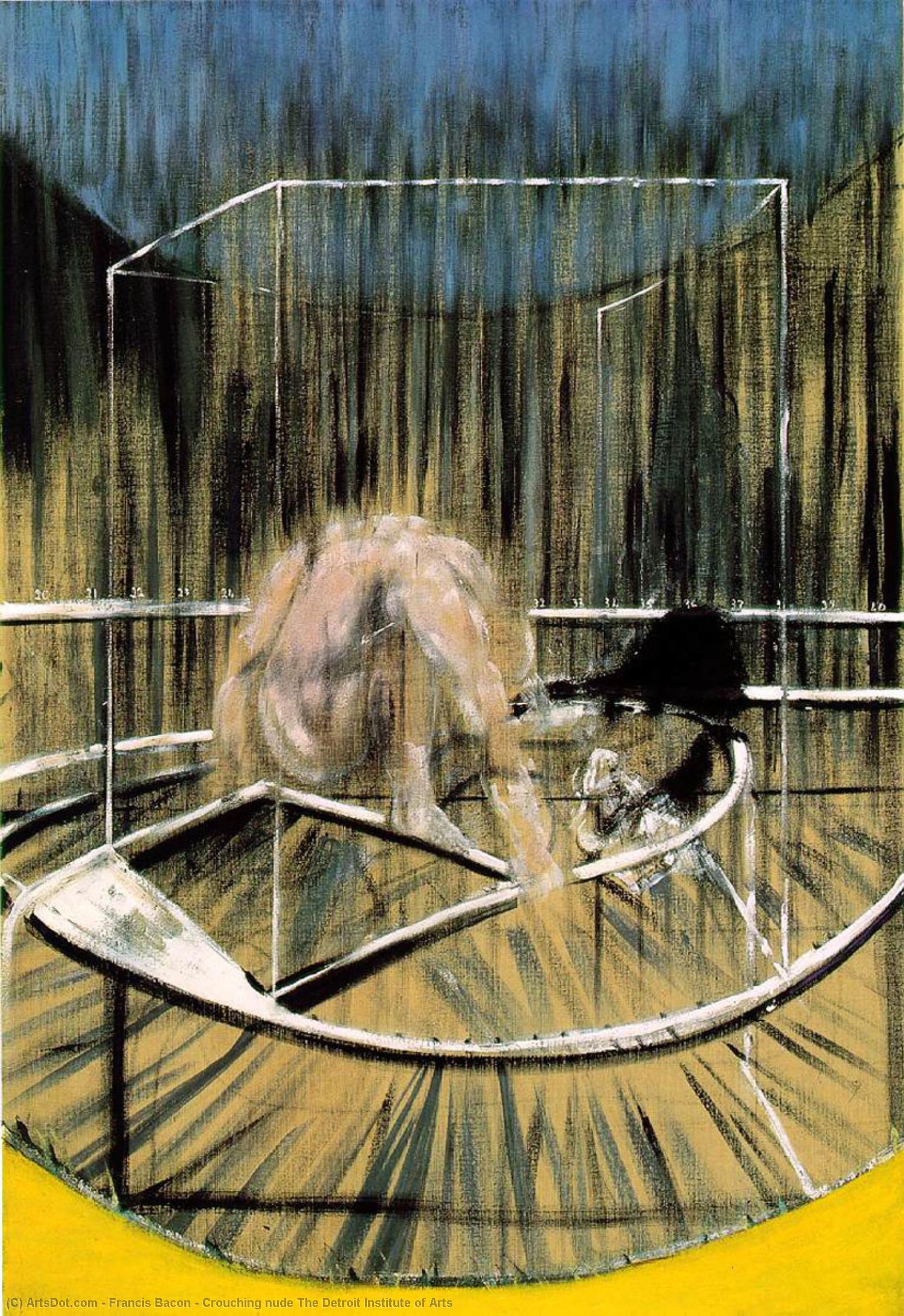
Francis Bacon's 1952 painting, *Crouching Nude*, is a profoundly unsettling and emotionally charged work that exemplifies the artist’s distinctive contribution to Expressionism. Housed at the Detroit Institute of Arts, this piece isn’t merely a depiction of the human form; it’s an exploration of vulnerability, isolation, and the psychological torment inherent in the mid-20th century experience.
Subject & Composition: Trapped Within Geometry
The artwork presents a nude male figure, contorted and seemingly trapped within a stark, angular glass structure. This enclosure isn’t protective; it's constricting, emphasizing the subject’s powerlessness. The composition is dominated by this geometric cage, which aggressively defines space and denies the figure any sense of freedom or natural environment. The floor plane appears flat and unforgiving, further isolating the body. Bacon frequently employed such architectural elements – cages, rooms, boxes – to symbolize the limitations imposed upon human existence.
Style & Technique: Raw Emotion on Canvas
Bacon’s style is immediately recognizable for its raw intensity and distorted forms. *Crouching Nude* showcases his signature loose brushwork and visible layering of paint, creating a textured surface that feels almost visceral. The thick, expressive lines convey a sense of urgency and emotional turmoil. He wasn't aiming for realistic representation; instead, he sought to capture the *feeling* of being human – the anxiety, fear, and existential dread.
Oil paints on canvas were his preferred medium, allowing him to build up layers of color and texture that contribute to the painting’s haunting atmosphere.
Color & Light: A Palette of Despair
The color palette is deliberately muted and somber, dominated by browns, yellows, blues, and blacks. These tones reinforce the overall sense of melancholy and despair. Lighting appears to originate from a single source above, casting dramatic shadows that accentuate the contours of both the body and the confining structure. This stark contrast between light and shadow heightens the feeling of unease and claustrophobia.
The use of color isn’t descriptive; it's emotive, serving to amplify the psychological impact of the scene.
Historical Context & Symbolism: Post-War Anxiety
Created in 1952, *Crouching Nude* reflects the anxieties and disillusionment prevalent in the aftermath of World War II. The horrors of the conflict had shattered traditional beliefs and left a profound sense of existential uncertainty. Bacon’s work can be seen as a visual manifestation of this post-war trauma. The figure's vulnerability may also allude to the dehumanizing effects of modern society and the individual’s struggle for identity in an increasingly impersonal world. Some scholars suggest influences from Eadweard Muybridge’s photographic studies of movement, particularly his images of figures in motion, which Bacon used as source material.
Emotional Impact & Legacy: A Disturbing Masterpiece
*Crouching Nude* is not a comfortable painting to view. It evokes feelings of sadness, loneliness, and the desperate yearning for freedom. However, it’s precisely this unsettling quality that makes it so compelling. Bacon's ability to tap into primal emotions and expose the darker aspects of the human condition has cemented his place as one of the most important artists of the 20th century.
- The painting serves as a powerful reminder of our shared vulnerability.
- It challenges viewers to confront uncomfortable truths about existence.
- Its enduring appeal lies in its ability to resonate with universal themes of isolation and despair.
For collectors and interior designers, *Crouching Nude* – or a high-quality reproduction – offers a bold statement piece. Its dramatic composition and somber palette can add depth and intrigue to any space, sparking conversation and contemplation. It’s a work that demands attention and leaves a lasting impression.