A Descent Into Darkness: Analyzing Francis Bacon’s Crucifixion
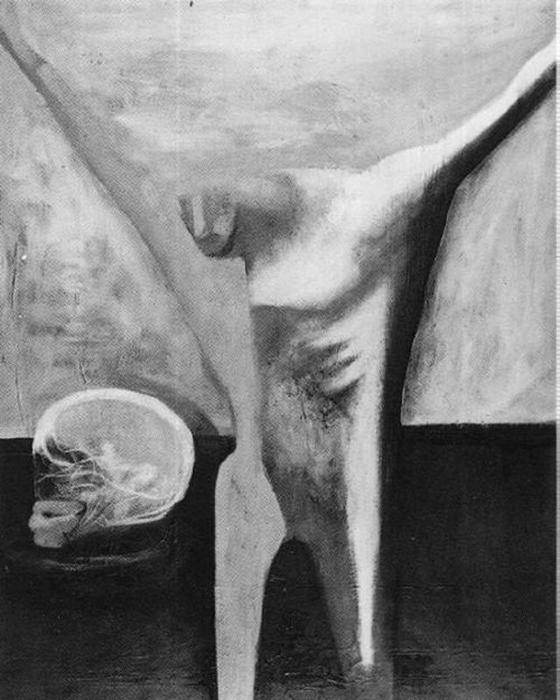
Francis Bacon's *Crucifixion* (1933) isn’t merely a depiction of religious iconography; it’s an unflinching confrontation with primal fear and the inescapable reality of suffering. Executed during Bacon’s formative years, this monochrome canvas embodies his signature Expressionist style—a deliberate rejection of academic precision in favor of visceral emotion and psychological torment. The artwork immediately arrests the viewer's gaze with its unsettling asymmetry and the jarring presence of a skull positioned at the lower left corner, instantly establishing an atmosphere of morbidity and impending doom.
- Composition & Perspective: Bacon abandons traditional perspective, opting for a diagonal arrangement that destabilizes the image and amplifies the sense of unease. The central figure dominates the frame, yet its placement contributes to an imbalance mirroring the turmoil within the depicted subject.
- Color Palette & Texture: Stripped bare of color, *Crucifixion* utilizes a grayscale spectrum—black, white, and shades of gray—to heighten contrast and emphasize shadow. The thick impasto technique – applying paint thickly onto the canvas – creates a palpable textural surface that conveys the raw physicality of pain and decay.
- Line & Shape: Bold, gestural lines carve through the canvas, distorting anatomical accuracy and conveying movement and instability. Organic shapes dominate, particularly the human form and skull, rendered with simplified contours that heighten their symbolic significance.
The painting’s historical context is inextricably linked to Bacon's own personal anxieties—his struggles with identity, mortality, and the pervasive influence of trauma. Influenced by Surrealism and Dada movements, Bacon sought to capture not just what he saw but what he *felt*, delving into the subconscious realm to confront existential dread. The inclusion of the skull serves as a potent reminder of death’s inevitability—a visual echo of Nietzsche's proclamation that “God is dead,” reflecting the broader disillusionment of the post-war era.
Symbolism & Emotional Impact: Beyond its formal elements, *Cruifixion* operates on a deeper symbolic level. The crucifixion itself represents sacrifice and redemption – themes explored extensively in Christian iconography—yet Bacon presents them with brutal honesty, stripping away any comforting illusions about divine grace. Instead, the artwork evokes profound feelings of anguish, isolation, and vulnerability, forcing viewers to confront their own mortality and grapple with the darker aspects of human experience. It’s a masterpiece of psychological portraiture that continues to resonate powerfully today.
Technique & Materials: Bacon achieved his distinctive visual language through meticulous layering of paint—scraping back surfaces, reworking textures, and applying multiple coats to build up depth and intensity. The artwork is executed in oil paints on canvas, a medium perfectly suited for capturing the expressive qualities demanded by Bacon’s uncompromising vision. This painstaking process underscores the artist's commitment to conveying not just visual representation but also emotional truth—a testament to his enduring legacy as one of the most influential figures in 20th-century art.