A Visceral Portrait of Isolation: Francis Bacon’s *Dog II* (1952)
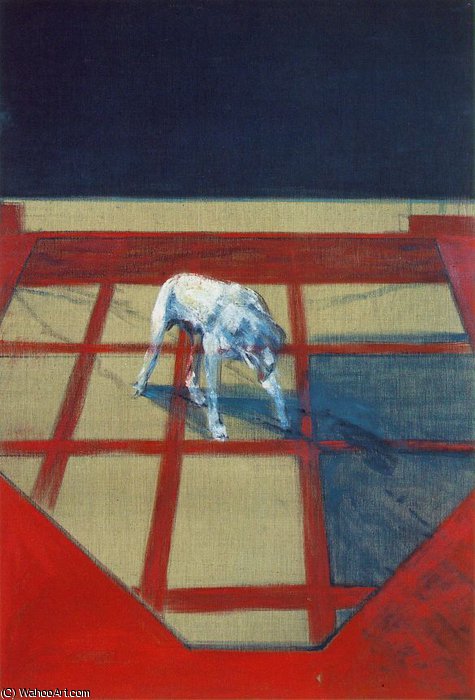
Francis Bacon's *Dog II*, painted in 1952, is not merely a depiction of an animal; it’s a profoundly unsettling exploration of isolation, anxiety, and the primal instincts that lie beneath the veneer of civilized existence. This work, rendered with Bacon’s signature brutal honesty, embodies the core tenets of his Expressionist style – a rejection of idealized representation in favor of raw emotional intensity. The painting immediately confronts the viewer with a dog, seemingly trapped within a claustrophobic space, its posture suggesting both vulnerability and a desperate attempt to assert dominance.
- Subject Matter: The subject itself—a dog—is deliberately ambiguous. Bacon frequently employed animals as vehicles for exploring themes of human suffering and the darker aspects of the psyche. Here, the dog’s vacant stare and distorted form amplify this sense of unease.
- Composition & Technique: Executed in oil on canvas, *Dog II* showcases Bacon's masterful manipulation of paint. Thick impasto layers create a textured surface that seems to writhe with tension. The use of jarring color—primarily reds and whites—further intensifies the emotional impact, evoking feelings of pain, fear, and perhaps even violence.
- The Checkerboard Floor: The checkered floor is a crucial element, adding to the sense of confinement and disorientation. It’s reminiscent of a hospital or prison, subtly suggesting themes of institutionalization and loss of control – recurring motifs in Bacon's oeuvre.
Historical Context & the Post-War Landscape
Painted in 1952, *Dog II* emerged from the turbulent aftermath of World War II. The post-war era was characterized by a pervasive sense of disillusionment and anxiety, reflected in much of the art produced at the time. Bacon’s work resonated with this mood, capturing the psychological trauma and existential dread that many felt in the face of unprecedented destruction and uncertainty. His Dublin origins, marked by instability and familial discord, undoubtedly informed his artistic vision, contributing to the intensely personal and often disturbing nature of his paintings.
Bacon’s rejection of academic tradition and embrace of a distinctly modern aesthetic aligned him with other artists grappling with the changing social and political landscape. His work anticipated the rise of Surrealism and Abstract Expressionism, pushing the boundaries of representation and exploring the subconscious through visceral imagery.
Symbolic Layers & Emotional Resonance
*Dog II* is rich in symbolic potential. The dog’s posture – slumped, watchful, and seemingly trapped – can be interpreted as a metaphor for humanity's precarious position within the natural world, or perhaps even a representation of the artist himself, perpetually struggling with his own demons. Bacon deliberately avoided offering easy answers, instead inviting viewers to confront uncomfortable truths about themselves and the human condition.
The painting’s emotional impact is undeniably powerful. It evokes a sense of profound sadness, loneliness, and vulnerability. The distorted form of the dog forces us to acknowledge our own mortality and the inevitability of suffering. It's a testament to Bacon's ability to translate complex emotions into a single, unforgettable image.
A Masterpiece of Raw Emotion
Francis Bacon’s *Dog II* is more than just a painting; it’s an experience. Its unsettling beauty and profound emotional depth have secured its place as one of the most significant works in 20th-century art. This reproduction offers a unique opportunity to own a piece of this iconic artwork, allowing you to contemplate its enduring themes and appreciate Bacon's unparalleled mastery of technique and expression.