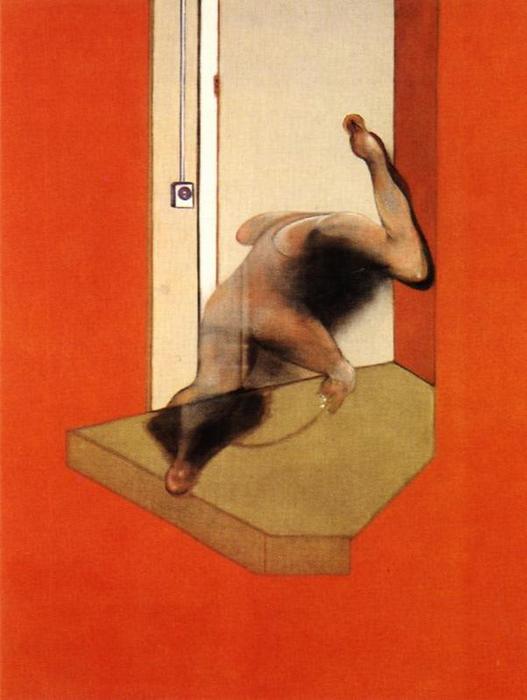
Francis Bacon’s unsettling Figuras en movimiento 1 captures a moment of profound vulnerability—a naked figure grappling with isolation and fear against a stark red backdrop. This iconic piece exemplifies Bacon's expressive figurative style, rooted in the postwar British art scene, inviting viewers to contemplate existential anxieties.
A Portrait of Existential Angst: Exploring Francis Bacon’s “Figuras en movimiento 1”
The painting "Figuras en movimiento 1" by Francis Bacon stands as a haunting testament to the anxieties and uncertainties that characterized the post-war era, encapsulating a profound exploration of human vulnerability and psychological torment. More than just a depiction of a solitary figure, it’s an embodiment of existential dread rendered with visceral intensity—a characteristic hallmark of Bacon's oeuvre.
- Subject Matter: The central subject is undeniably unsettling – a nude male torso positioned in a room bathed in a muted red hue. His back is turned towards the viewer, creating a deliberate barrier that amplifies the sense of isolation and vulnerability. One leg rests precariously on a ledge or table, symbolizing instability and precariousness.
- Style & Technique: Bacon’s style defies easy categorization; he termed it “figuration,” prioritizing psychological representation over realistic depiction. He employed a technique known as “squeeze” – applying paint thickly onto the canvas with spatulas and knives—resulting in textured surfaces that convey palpable emotion. The distorted forms, reminiscent of anatomical sketches and grotesque imagery, contribute to the painting’s disturbing effect.
Historical Context: Bacon emerged during a period marked by disillusionment following World War II. Artists like him wrestled with the trauma of conflict and questioned traditional notions of beauty and order. “Figuras en movimiento 1” reflects this broader cultural preoccupation with confronting uncomfortable truths about human existence—a reaction against the optimism of preceding decades.
Symbolism: The red room serves as a potent symbol of passion, violence, and repressed desire. It’s also interpreted as representing purgatory or Hell – a space devoid of comfort and fraught with torment. The posture of the figure itself speaks volumes about psychological struggle; his slumped shoulders and outstretched hand convey desperation and an attempt to grasp at something unattainable.
Emotional Impact: Bacon's intention wasn’t merely to portray a scene but to evoke a visceral emotional response in the viewer. “Figuras en movimiento 1” succeeds admirably in unsettling the audience, forcing them to confront uncomfortable feelings of fear, anxiety, and despair. It captures the essence of human suffering with unflinching honesty—a quality that continues to resonate powerfully with contemporary audiences.
- Interior Design Considerations: The painting’s monochromatic palette lends itself beautifully to minimalist interior design schemes. Its dramatic textures can be complemented by smooth surfaces and neutral tones, creating a sophisticated contrast that underscores the artwork's emotional depth.
- Collector Appeal: For discerning collectors interested in confronting challenging artistic visions, “Figuras en movimiento 1” represents an exceptional opportunity to own a piece of art history—a work that transcends mere visual beauty to engage with profound philosophical questions about human condition.