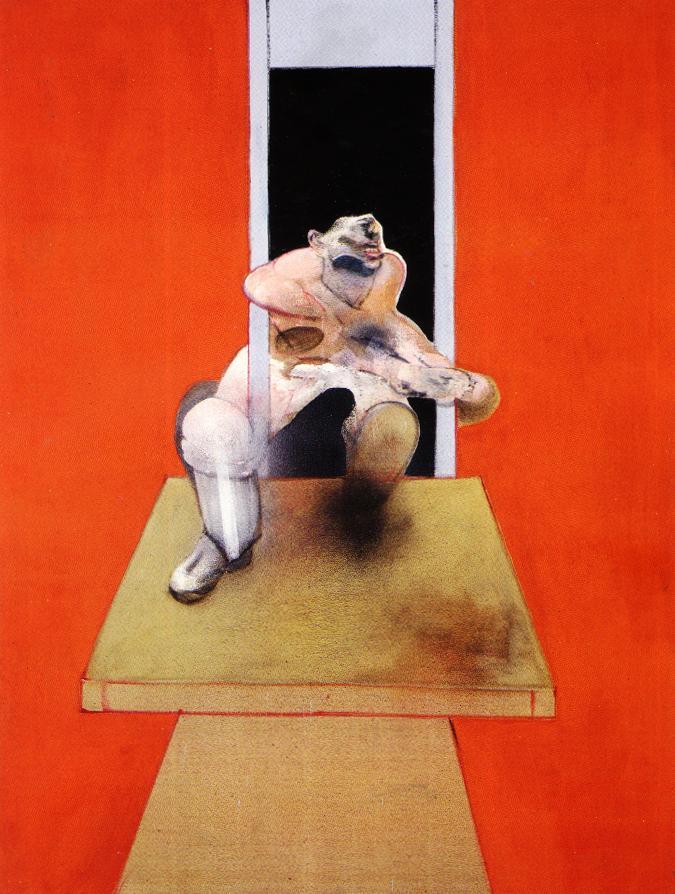
Figure in Movement, 1985 - This painting by Francis Bacon captures the essence of human vulnerability and isolation through its depiction of a man seated on the floor with his head down, surrounded by figures in a dining room setting.
A Visceral Encounter with Existential Dread
In the hauntingly evocative “Figure in Movement,” painted in 1985, Francis Bacon invites the viewer into a space of profound psychological tension. This masterpiece serves as a stark portrait of existential angst, capturing a moment that feels suspended between physical presence and spiritual dissolution. The composition centers on a solitary figure, slumped and seemingly defeated, positioned within a sparse, unsettling environment that suggests a dining room stripped of its domestic comfort. Through the masterful use of distorted forms and a somber palette of grey and ochre, Bacon does not merely depict a man; he captures the very essence of human vulnerability and the inescapable weight of isolation.
The painting’s power lies in its brutal minimalism, a technique where every brushstroke serves to heighten the sense of unease. Bacon famously employed a method he referred to as “squeeze,” applying paint with intense pressure to create textured, agitated surfaces that seem to vibrate with nervous energy. This approach eschews traditional beauty in favor of a raw, visceral impact. The figure’s posture—defeated and heavy—contrasts sharply with the fragmented, almost ghostly presence of other figures in the periphery, creating a sense of dislocation. For the discerning collector or interior designer, this piece offers more than just visual interest; it provides a profound emotional anchor, a conversation starter that demands introspection and rewards deep contemplation.
Echoes of Trauma and the Human Condition
To understand the depth of “Figure in Movement,” one must look toward the twilight years of Bacon’s life and the personal shadows that informed his vision. Painted during a period marked by significant personal loss and the broader social disillusionment of 1980s Britain, the work resonates with the echoes of trauma. The artist’s lifelong engagement with themes of mortality and suffering is palpable here; the bleakness of the room and the fragmented composition reflect a world stripped of its certainties. There is a profound sense of displacement in the way the figure occupies the space, as if caught in a state of permanent transition or loss.
Symbolically, the work functions as a mirror to the human condition, exploring the thin veil between stability and collapse. The presence of the dining table—typically a site of communion and nourishment—is subverted into a stage for loneliness and psychological torment. For those seeking to adorn a space with art that possesses true intellectual and emotional gravity, this reproduction offers an unparalleled opportunity. It is a piece that transcends mere decoration, bringing into a room the heavy, beautiful, and transformative power of one of the 20th century's most significant artistic voices.