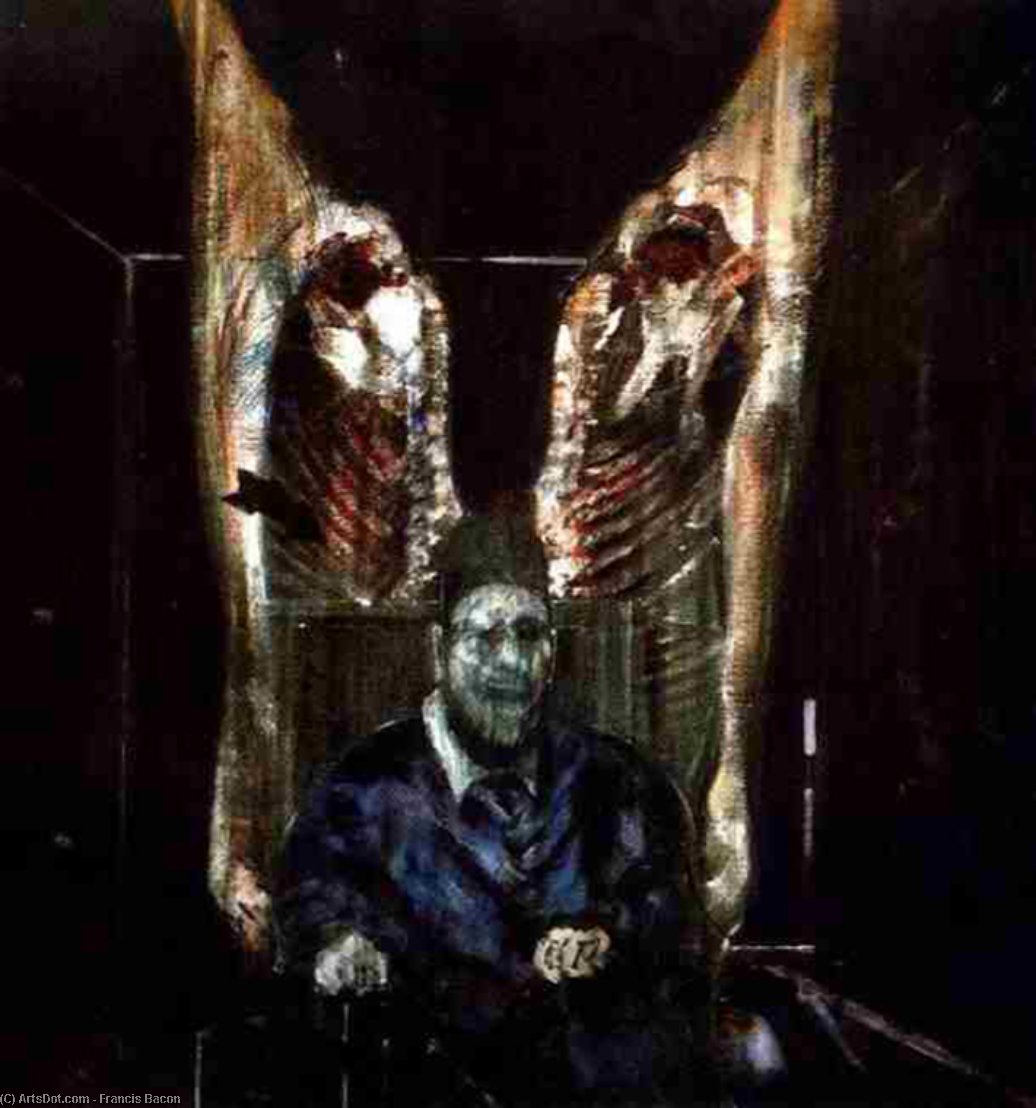
Francis Bacon's 'Figure with Meat' (1954) is a haunting masterpiece exploring mortality and the human condition through distorted forms & raw imagery. A visceral commentary on violence, faith, and existence.
Explore Francis Bacon's (1909-1992) emotionally charged figurative paintings. Known for distorted forms, existential themes & bold expressionism, he remains a cornerstone of modern art. Discover key works & legacy.
A Descent into Visceral Reality: Francis Bacon's "Figure with Meat"
Francis Bacon’s “Figure with Meat,” painted in 1954, isn’t merely an image; it’s a visceral scream rendered on canvas, a profound exploration of the human condition stripped bare and confronted with its own mortality. This iconic work, residing within the Edwin A. Ulrich Museum of Art, continues to provoke and unsettle viewers decades after its creation, solidifying Bacon's place as one of the most significant figures in 20th-century art. The painting’s power lies not in beauty or harmony, but in its raw, unflinching depiction of vulnerability, fear, and the unsettling proximity of life and death. It is a testament to Bacon’s unique ability to translate profound existential anxieties into a visual language that resonates with primal emotions.
Echoes of Velázquez: A Subversion of Authority
The genesis of “Figure with Meat” lies in Diego Velázquez's renowned portrait of Pope Innocent X, a work celebrated for its depiction of papal authority and serene composure. Bacon, however, seized upon this iconic image not to celebrate it, but to dismantle it. He appropriated the composition—the seated figure, the formal pose—but utterly transformed its meaning. The dignified pontiff is replaced by a distorted, almost grotesque figure trapped within an unseen cage, his mouth agape in a silent scream of anguish. This isn't a portrait of power; it’s a depiction of profound terror and isolation. The deliberate subversion of Velázquez’s masterpiece speaks to Bacon’s broader artistic project: to expose the fragility and vulnerability that lie beneath even the most imposing facades of authority, be they religious or societal. The background is equally crucial – not the opulent setting of Velázquez's original, but a stark, almost clinical space dominated by hanging sides of meat, further emphasizing the painting’s themes of physicality, decay, and the inevitability of bodily dissolution.
The Language of Flesh: Technique and Symbolism
Bacon’s technique is as crucial to the painting’s impact as its subject matter. He employed oil paints with a frenetic energy, applying broad, gestural strokes that create a sense of movement and instability. The colors are muted yet intense – fleshy pinks, grays, and blacks dominate the palette, contributing to the overall feeling of unease. The figure itself is rendered in a deliberately distorted manner, its features blurred and fragmented, suggesting a loss of identity or perhaps a glimpse into something beyond human comprehension. The meat hanging in the background isn't merely decorative; it’s laden with symbolism. It represents not just physical sustenance but also the raw materiality of existence, the inescapable reality of our own mortality. The clock on the wall adds another layer of meaning – a relentless reminder of time’s passage and the fleeting nature of life. The tie around the figure's neck can be interpreted as a symbol of constraint or societal expectations, further emphasizing the sense of entrapment that pervades the work.
A Reflection of Post-War Anxiety
“Figure with Meat” emerged from a period of profound upheaval and anxiety in post-World War II Europe. The horrors of the war had shattered traditional notions of faith and order, leaving many grappling with existential questions about the meaning of life and the nature of humanity. Bacon’s work reflects this pervasive sense of disillusionment, offering no easy answers or comforting illusions. Instead, it confronts viewers with a stark and unsettling vision of reality—a world where violence, fear, and isolation are ever-present forces. The painting's resonance extends beyond its historical context; it continues to speak to contemporary anxieties about mortality, identity, and the fragility of human existence. It is a powerful reminder that beneath the surface of everyday life lies a profound sense of uncertainty and vulnerability.
An Enduring Legacy: A Mirror to Our Fears
Francis Bacon’s “Figure with Meat” remains one of his most enduring and impactful works, not just for its technical brilliance but also for its unflinching exploration of the human condition. It is a painting that demands attention, provoking discomfort and challenging viewers to confront their own fears and anxieties. Its influence can be seen in countless subsequent works of art, demonstrating Bacon’s lasting legacy as a master of Expressionism and a profound chronicler of the modern psyche. The work's ability to evoke such powerful emotions across generations speaks to its enduring relevance—a testament to Bacon’s genius and his unwavering commitment to portraying the raw, unfiltered truth of human experience.