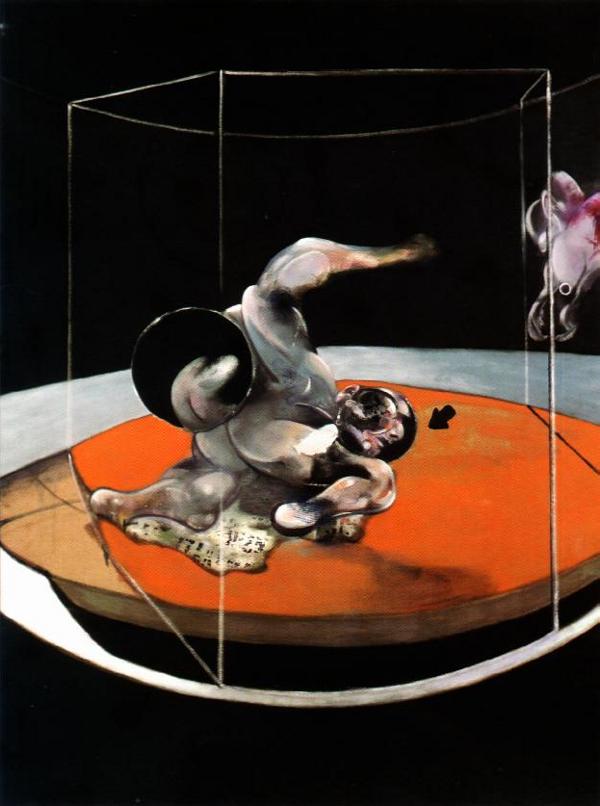
A Visceral Dance of Dislocation: Exploring ‘Figures in Movement,’ 1976
Francis Bacon’s “Figures in Movement,” painted in 1976, isn't merely a depiction of human form; it’s an excavation of the psyche – a raw and unsettling portrait of existential anxiety rendered with his signature brutal honesty. The painting immediately confronts the viewer with a central figure, contorted into a series of impossible poses within a claustrophobic cage. This structure, reminiscent of both confinement and performance, speaks to themes of entrapment, vulnerability, and the struggle for agency in a world increasingly devoid of meaning. Bacon’s deliberate distortion of anatomy – elongated limbs, exaggerated features, and a sense of perpetual motion – rejects traditional notions of beauty and realism, instead prioritizing emotional truth over aesthetic representation.
The background figures, partially obscured yet undeniably present, add layers of complexity to the scene. They aren't passive observers but seem to participate in, or perhaps even exacerbate, the central figure’s turmoil. Their positioning suggests a cycle of witnessing and being witnessed, amplifying the sense of isolation and unease. Bacon frequently employed this dynamic interplay between subject and observer within his work, creating a dialogue that forces the viewer to confront their own anxieties about existence and connection.
The Language of Distortion: Technique and Style
Bacon’s technique is notoriously challenging, demanding both immense skill and an unwavering commitment to expressing inner turmoil. “Figures in Movement” exemplifies this perfectly. The paint application is thick and gestural, built up in layers that create a palpable sense of texture and movement. Notice the aggressive brushstrokes, particularly around the figure's torso – they convey not just physical strain but also a desperate attempt to maintain control amidst chaos. The color palette is deliberately muted, dominated by dark browns, ochres, and bruised reds, contributing to the painting’s overall atmosphere of dread and decay. This restricted range of colors further emphasizes the claustrophobic nature of the scene and heightens the emotional impact.
Bacon's use of color isn't arbitrary; it’s deeply symbolic. The dark backdrop serves as a void, representing the unknown or perhaps the subconscious – a space where anxieties fester and nightmares take form. The flashes of red suggest violence, pain, and suppressed passions, while the muted earth tones evoke a sense of mortality and decay.
A Reflection of the Post-War Condition
To understand “Figures in Movement,” it’s crucial to consider the historical context in which Bacon was working. The 1970s were a period of profound social and political upheaval, marked by economic instability, the lingering trauma of World War II, and a growing sense of disillusionment with traditional values. Bacon's art directly reflects this atmosphere of anxiety and uncertainty. His figures are often depicted as damaged, vulnerable, and stripped bare – embodiments of the human condition in the face of existential dread.
Bacon’s early life, marked by instability and a strained relationship with his father, undoubtedly informed his artistic vision. The recurring themes of isolation, violence, and psychological distress within his work can be interpreted as attempts to grapple with these personal experiences. His art became a vehicle for exploring the darkest corners of the human psyche – a space where trauma, fear, and loneliness find expression.
Collecting an Echo of Intensity
A reproduction of “Figures in Movement” offers a powerful way to engage with Bacon’s intensely emotional world. ArtsDot provides meticulously crafted hand-painted reproductions that capture not only the visual details of the original but also its underlying atmosphere and psychological depth. This artwork is more than just decoration; it's an invitation to contemplate profound questions about human existence, vulnerability, and the enduring power of art to confront our deepest fears. Consider this piece as a window into the mind of one of the 20th century’s most significant and unsettlingly brilliant artists – Francis Bacon.