The Genesis of a Scream
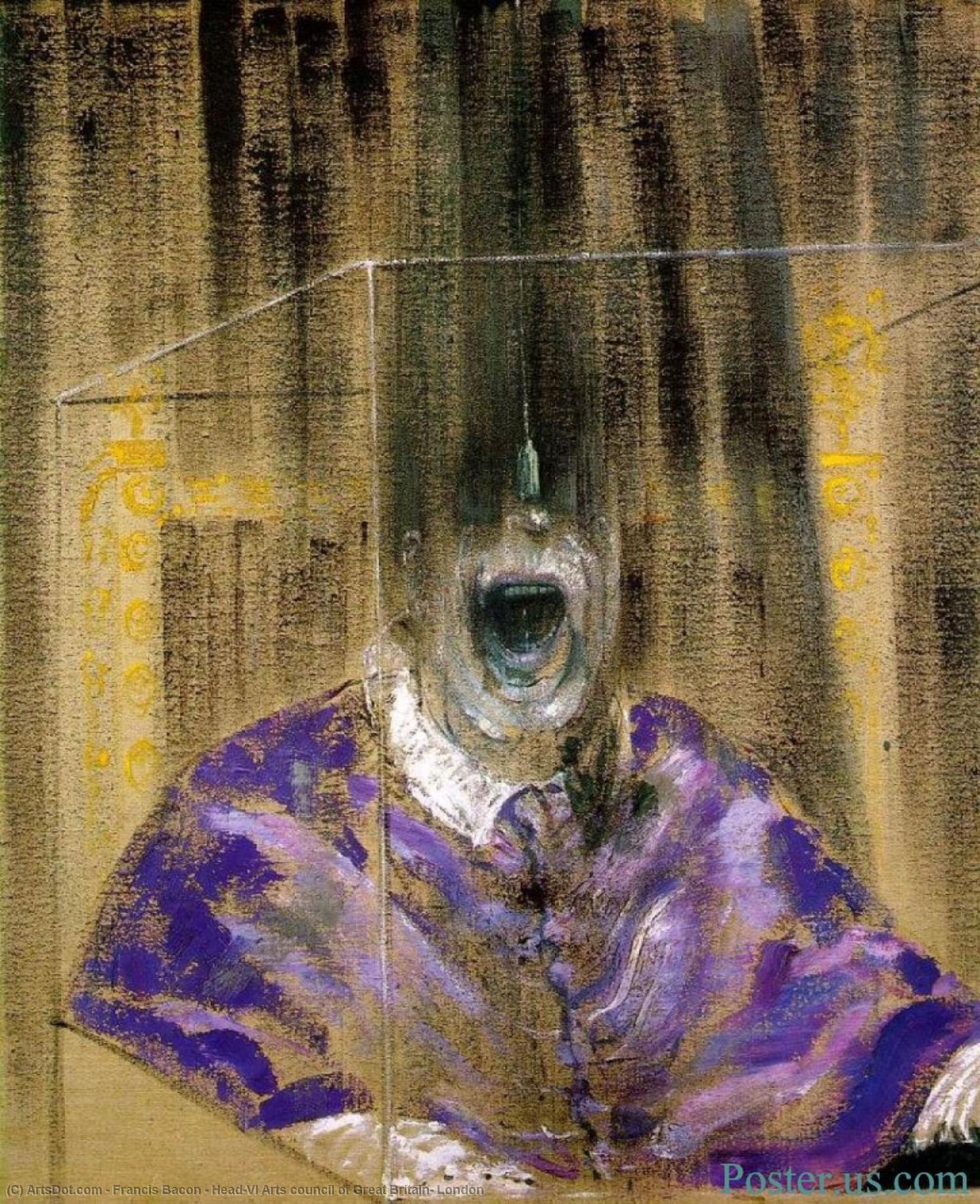
Francis Bacon's Head VI, created in 1949 and now residing within the esteemed collection of the Arts Council of Great Britain, isn’t merely a portrait; it’s an excavation of the human psyche, a raw and unsettling exploration of isolation, anxiety, and the primal scream trapped within us all. The painting immediately confronts the viewer with its central figure – a man whose mouth is flung open in a silent, agonizing howl, a gesture simultaneously reminiscent of both desperate plea and utter despair. This isn’t a depiction of serene contemplation; it's an invitation into a realm of profound unease, a visual representation of existential dread rendered with startling immediacy.
The genesis of this iconic image lies in a surprisingly humble source: Diego Velázquez’s 1650 portrait of Pope Innocent IX. Bacon, grappling with the complexities of his own artistic vision and haunted by the Spanish master's brooding depiction, didn’t seek to replicate Velázquez’s work; instead, he used it as a springboard for his own intensely personal interpretation. The resulting image is a masterful synthesis – a ghostly echo of the past overlaid with Bacon’s signature distortion and emotional intensity. The geometric cage surrounding the figure, constructed from translucent fabric, immediately establishes a sense of confinement, amplifying the feeling of trapped anguish. This framing device isn't merely decorative; it actively contributes to the painting’s suffocating atmosphere, suggesting a world devoid of escape.
A Symphony of Distortion and Color
Bacon’s technique is as crucial to the painting’s impact as its subject matter. He employs bold, gestural brushstrokes – thick, impasto layers that seem to vibrate with energy—to create a surface riddled with texture and movement. The colors are deliberately jarring: deep purples, browns, and ochres collide in a chaotic yet strangely compelling arrangement. The purple robe, draped around the figure, adds a layer of dramatic intensity, while the blurred background serves not as a simple backdrop but as an active participant in the painting’s unsettling narrative. It's a visual representation of disorientation, suggesting that the figure is adrift within a world stripped of clarity and stability.
Notably, Bacon drew heavily on photographic references for this work, including studies of mouth diseases from medical books – a testament to his meticulous approach and his fascination with the physicality of human expression. The inclusion of these anatomical details, combined with his expressive brushwork, elevates Head VI beyond mere representation; it becomes a visceral exploration of the body’s capacity for suffering.
Echoes of Trauma and the Post-War Landscape
To fully appreciate Head VI, one must consider its historical context. Created in the aftermath of World War II, the painting reflects the anxieties and uncertainties of a generation grappling with the devastation of conflict and the collapse of traditional values. The rise of abstract expressionism—and Bacon’s place within it—mirrored this broader cultural shift, as artists sought new ways to articulate the emotional turmoil of the time. The image's raw intensity and unsettling imagery resonated deeply with audiences who were increasingly aware of the fragility of human existence.
Furthermore, the painting’s scream can be linked to a specific visual reference: Sergei Eisenstein’s 1925 silent film *Battleship Potemkin*. Bacon was captivated by a scene depicting a wounded woman screaming in agony after being subjected to violence. This image—with its potent combination of vulnerability and defiance—became a key inspiration for the central figure in Head VI, imbuing it with an almost unbearable sense of pathos. The inclusion of spectacles further emphasizes this connection, echoing the desperate plea of the wounded woman.
A Timeless Portrait of Human Anguish
Head VI is more than just a painting; it’s a profound meditation on the human condition. It's a testament to Bacon’s ability to distill complex emotions into a single, unforgettable image. The painting’s enduring power lies in its refusal to offer easy answers or comforting resolutions. Instead, it confronts us with our own vulnerabilities and reminds us of the ever-present potential for suffering. Today, Head VI continues to resonate with viewers, serving as a potent reminder of the anxieties that lie beneath the surface of modern life. For those seeking an artwork that challenges, provokes, and ultimately moves, Francis Bacon’s Head VI remains a truly exceptional masterpiece.