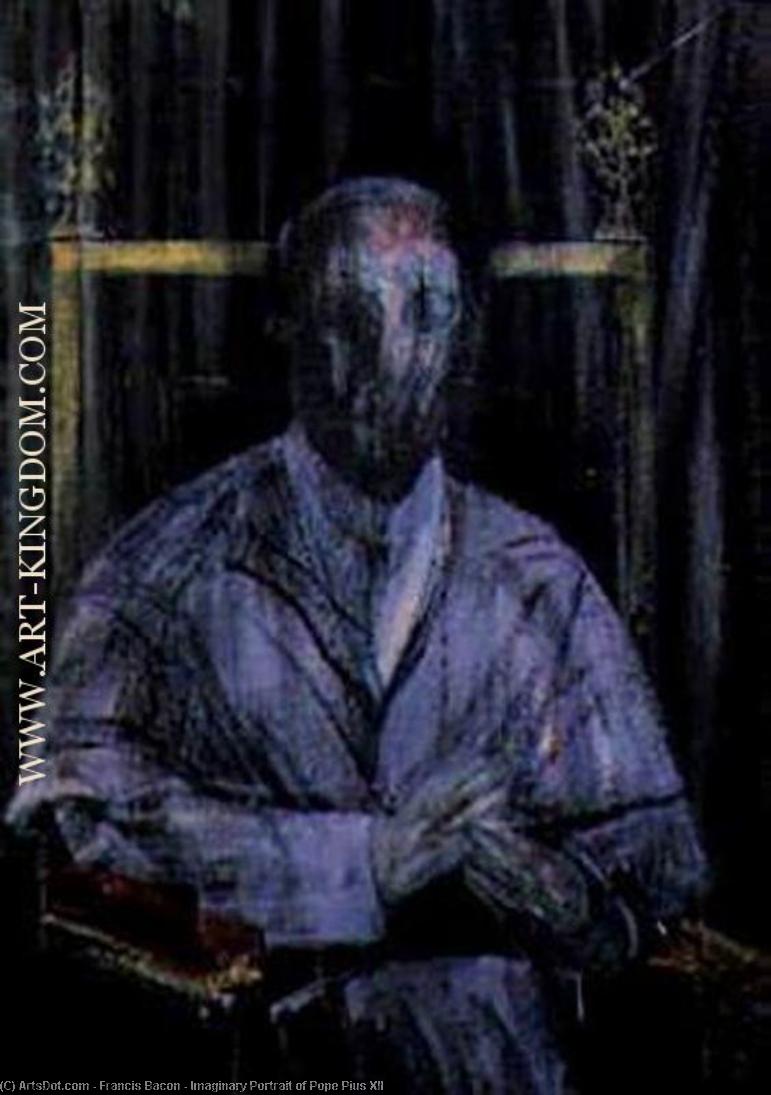
Imaginary Portrait of Pope Pius XII: A Study in Isolation and Formal Tension
Francis Bacon’s “Study Imaginary Portrait of Pope Pius XII,” completed in 1955, stands as a cornerstone of his oeuvre—a haunting meditation on authority, vulnerability, and the inescapable anxieties of modern existence. More than just a depiction of papal iconography, it embodies Bacon's signature stylistic approach: unsettling abstraction layered upon recognizable form.
- Subject Matter & Style: The painting centers around an imagined portrait of Pope Pius XII, rendered in Bacon’s distinctive Expressionist style. Unlike his more overtly violent depictions—the crucifixions and visceral explorations of human suffering—this piece eschews overt brutality for a subtle yet profound psychological drama. It's a deliberate departure from the grandeur typically associated with papal portraits, prioritizing emotional resonance over visual spectacle.
- Technique & Composition: Bacon employed his characteristic “shuttering” technique – vertical brushstrokes against a dark velvety background – to create an illusion of depth and fragmentation. The figure itself is rendered in muted tones, almost spectral, emerging from the shadowy expanse. The careful layering of paint contributes to the painting’s textural richness and reinforces its sense of unease.
- Historical Context: Created during Pius XII's papacy—a period marked by profound moral dilemmas concerning the Holocaust and the Second Vatican Council—the artwork reflects the anxieties of a time grappling with existential questions. Bacon’s preoccupation with Nietzsche’s concept of “enclosed in the wretched glass capsule of the human individual” underscores this intellectual lineage.
- Symbolism & Imagery: The inclusion of spectacles – a motif frequently revisited by Bacon—references Eisenstein's *Battleship Potemkin*, symbolizing observation and scrutiny. Furthermore, the Pope’s hand clasping together subtly evokes images of crucifixion, hinting at themes of sacrifice and suffering. The ghostly pallor of the papal robe contrasts sharply with the dark background, amplifying the feeling of isolation.
- Emotional Impact: “Study Imaginary Portrait of Pope Pius XII” transcends mere representation; it aims to provoke contemplation about the human condition. Bacon’s masterful manipulation of color and texture generates a palpable sense of tension and vulnerability—a chilling reminder that even figures of immense power are susceptible to psychological torment. It's a portrait not merely of a pope, but of the anxieties inherent in confronting mortality and responsibility.
The Sainsbury Centre’s acquisition of this painting solidified its place within Bacon’s artistic legacy—a testament to his ability to distill complex philosophical ideas into arresting visual imagery. Its enduring fascination stems from Bacon's profound understanding of the human psyche, captured with uncompromising honesty and stylistic innovation.