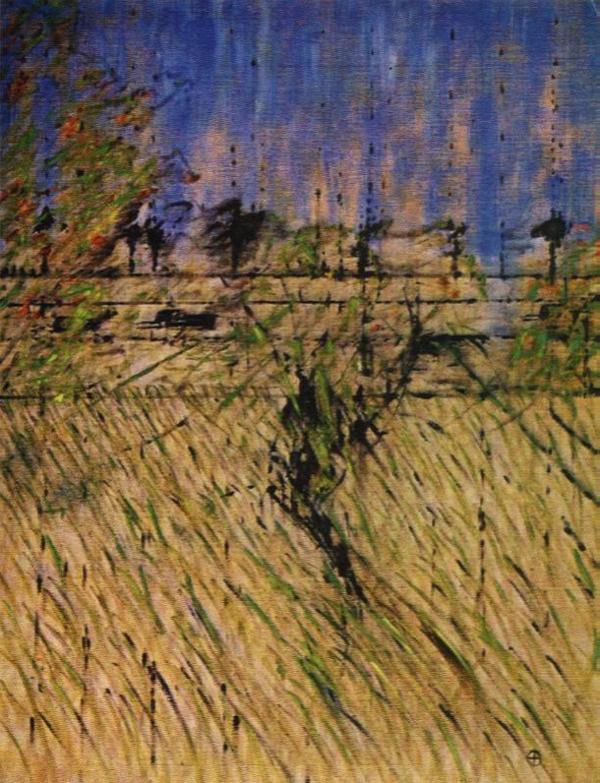
Landscape After Van Gogh – A Meditation on Isolation and Resilience
- Subject Matter: This striking landscape is undeniably inspired by Vincent van Gogh’s iconic cypress trees and starry nightscapes, though it exists as an independent interpretation rather than a direct copy. The scene depicts a rural hillside dotted with grasses and scattered trees—a deceptively tranquil vista that belies the underlying tension conveyed through Bacon's masterful execution.
- Style: Francis Bacon’s signature style is characterized by visceral abstraction, prioritizing emotional expression over representational accuracy. Unlike Van Gogh’s luminous depiction of nature, Bacon employs a deliberately unsettling palette—muted browns and greens dominate—creating an atmosphere of unease and psychological depth. The figures present are rendered in fragmented forms, mirroring the fractured state of consciousness often explored in his oeuvre.
- Technique: Bacon achieved this expressive effect through a technique he termed “squeeze painting.” He applied paint thickly onto canvas with gloved hands, manipulating it to create textured surfaces that resemble flesh and bone. This method lends itself beautifully to capturing the physicality of emotion—the palpable sense of struggle and vulnerability—that defines his artistic vision.
- Historical Context: Produced in 1952, Bacon’s landscape operates within the broader context of post-war British art, where artists wrestled with themes of trauma and disillusionment. Following the devastation of World War II, there was a palpable yearning for beauty amidst despair—a desire to find solace in nature despite its inherent indifference. Bacon's work reflects this sentiment, presenting a solitary human presence confronting an expansive yet emotionally barren landscape.
- Symbolism: The birds circling overhead serve as potent symbols of freedom and aspiration, juxtaposed against the stillness of the hillside and the figures’ grounded stance. This duality underscores the inherent paradox of existence—the constant striving for transcendence within limitations imposed by circumstance. Bacon's deliberate use of color contributes to this symbolic resonance, conveying not merely visual information but profound emotional states.
Emotional Impact: Viewing “Landscape After Van Gogh” evokes a feeling of melancholic contemplation. The artist’s masterful manipulation of texture and color compels the viewer to confront uncomfortable truths about human vulnerability and resilience—a reminder that even amidst bleakness, beauty persists as an elusive ideal.