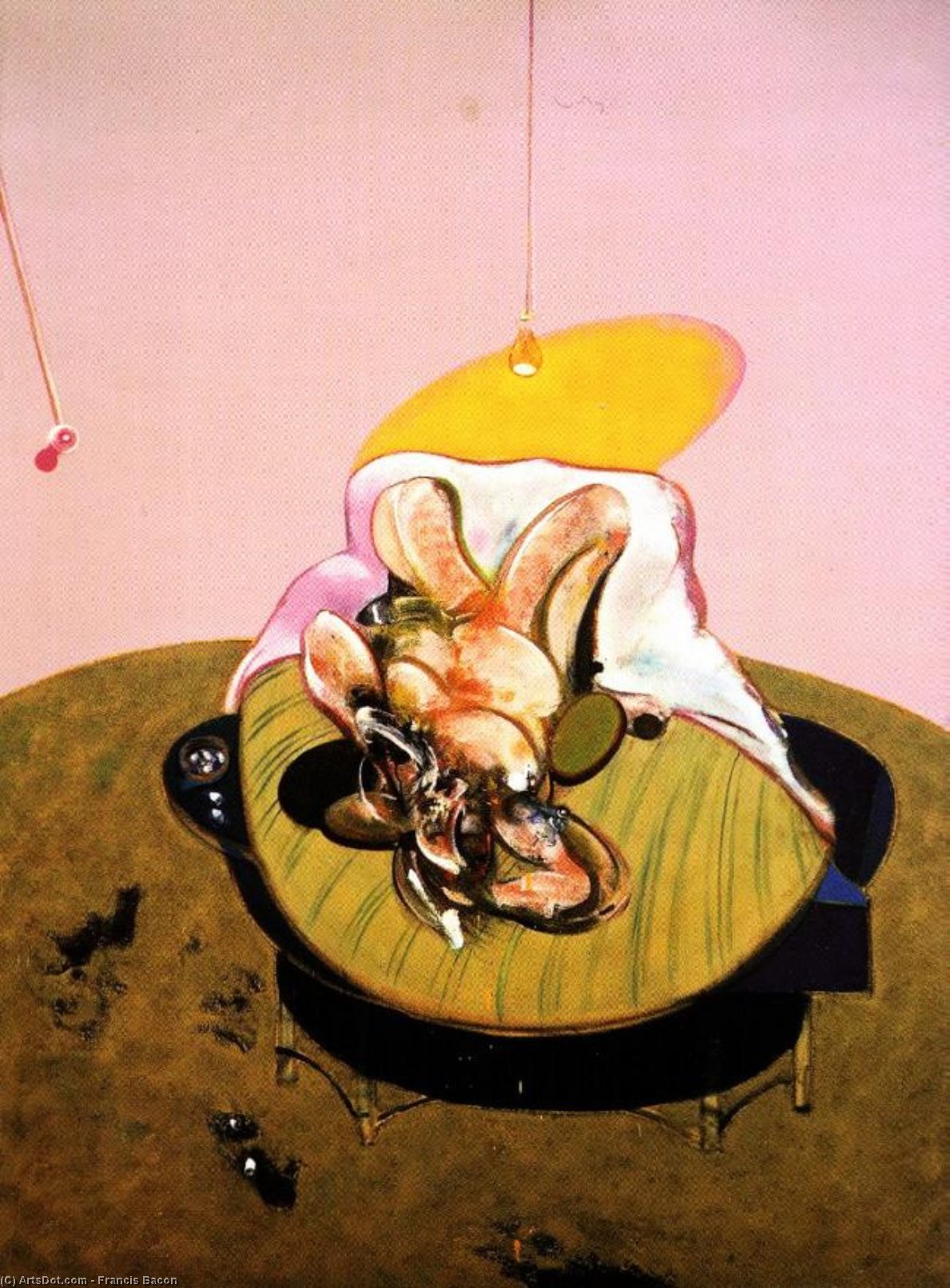
The painting depicts a reclining figure with a turned head, adorned with a hat and possessing avian features – a characteristic motif of Bacon’s oeuvre. Alongside the central figure are two chairs and a clock, contributing to an unsettling atmosphere that reflects the artist's preoccupation with psychological torment and existential anxieties.
A Visceral Encounter with the Human Condition
In the hauntingly evocative masterpiece "Lying Figure," created in 1969, the legendary Irish artist Francis Bacon invites viewers into a profound confrontation with the rawest elements of human existence. This is not merely a painting; it is a psychological landscape where the boundaries between the physical body and emotional trauma blur into a singular, unsettling experience. The composition centers on a figure reclined in a state of profound vulnerability, its head rotated at an unnerving angle that suggests both disorientation and a surrender to existential weight. Through this distorted form, Bacon captures a sense of disquiet that resonates far beyond the canvas, making it a captivating centerpiece for collectors who seek art that speaks to the depth of the human spirit.
The technical mastery behind this work lies in Bacon’s signature expressionist approach, characterized by what he famously termed the "squeeze" technique. By applying thick, heavy impasto with immense pressure, the artist created textured ridges and visceral layers that give the painting a sculptural, almost fleshy quality. This physical manipulation of paint serves as a direct conduit for his inner turmoil, allowing the medium itself to embody the struggle of the subject. The color palette is masterfully somber, utilizing muted ochres, deep crimsons, and ghostly greys to cultivate an atmosphere of gloom and introspection. For the discerning interior designer, such a piece offers a powerful focal point, bringing a sophisticated, moody elegance to a space that demands intellectual and emotional depth.
Historical Resonance and Symbolic Depth
To understand "Lying Figure," one must look toward the shadows of postwar Britain, an era defined by the lingering anxieties of nuclear uncertainty and a widespread sense of existential dread. Bacon’s work emerged from this cultural vacuum, drawing inspiration from the irrationality of Surrealism and Dada to challenge the conventional norms of representation. The painting’s elements—the strangely bird-like appearance of the figure, the presence of isolated chairs, and the looming clock—act as symbolic anchors in a sea of chaos. These objects suggest the passage of time and the loneliness of the individual within an indifferent universe, creating a narrative of isolation that is both timeless and deeply moving.
For those looking to acquire a high-quality reproduction of this seminal work, "Lying Figure" represents more than just an aesthetic choice; it is an investment in a piece of art history. The painting’s ability to evoke empathy through distortion makes it a profound addition to any curated collection. It serves as a conversation starter, a window into the mid-20th century's most pressing psychological questions, and a testament to Bacon's unparalleled ability to transform pain into enduring beauty. Whether displayed in a private gallery or a contemporary living space, this work continues to haunt, inspire, and command the attention of all who behold it.