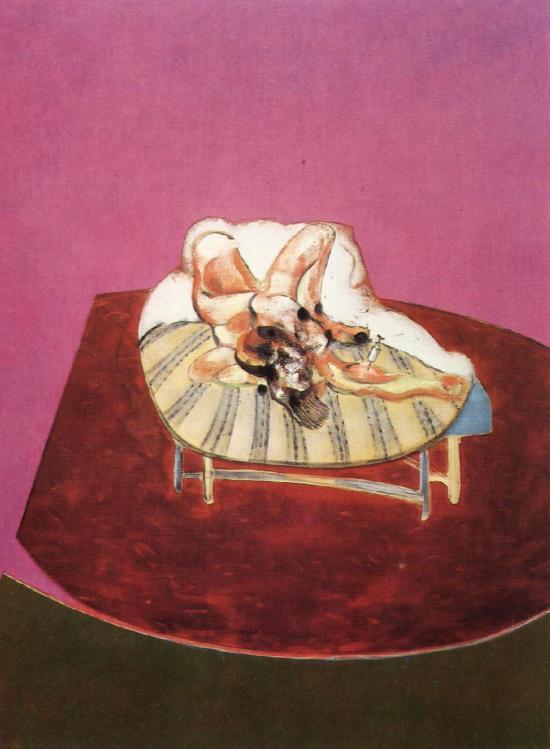
The painting depicts a naked figure lying on a bed with a syringe in their hand against a pink backdrop, accompanied by two other figures partially obscured by the main subject. Bacon's work explores themes of vulnerability and unease through visceral imagery.
Explore Francis Bacon's (1909-1992) emotionally charged figurative paintings. Known for distorted forms, existential themes & bold expressionism, he remains a cornerstone of modern art. Discover key works & legacy.
A Portrait of Vulnerability: Exploring Francis Bacon’s “Lying Figure with Hypodermic Syringe”
The painting "Lying Figure with Hypodermic Syringe," created in 1963 by Francis Bacon, stands as a chilling testament to the artist's unflinching exploration of human psychology and the anxieties of his era. More than just an image of nakedness—though nudity is undeniably present—it’s a deeply unsettling meditation on mortality, pain, and the precariousness of existence, rendered with Bacon’s signature brutal honesty.
Style and Technique: The Expressionist Grip
Bacon's style firmly resides within the expressionist tradition, rejecting representational accuracy in favor of conveying emotion directly onto the canvas. Unlike Impressionists who sought to capture fleeting moments of light and color, Bacon deliberately distorted forms—elongated torsos, grotesque faces—to amplify psychological distress. The painting utilizes a technique characterized by thick impasto – applying paint with heavy ridges – creating palpable texture that mirrors the physicality of suffering. Color is employed sparingly but powerfully; muted pinks dominate the background, serving not as comforting hues but rather as unsettling shades that heighten the sense of unease and isolation. Bacon famously stated he wanted to “paint what I see,” prioritizing visceral sensation over visual illusion.
Historical Context: Shadows of Nuclear Anxiety
“Lying Figure with Hypodermic Syringe” emerged during a period marked by profound anxieties surrounding the Cold War and the threat of nuclear annihilation. Bacon, deeply affected by these concerns, channeled his fears into artistic expression. The hypodermic syringe—a symbol of medical intervention and potentially invasive procedures—represents not just physical pain but also the intrusion of external forces into the individual’s inner life. It underscores the vulnerability inherent in human existence against overwhelming odds – a theme that resonates powerfully with the broader cultural landscape of the time. Bacon himself described feeling “like a man drowning,” reflecting the pervasive sense of dread that gripped Europe during this period.
Symbolism: Anatomical Horror and Psychological Depth
The figure’s contorted pose—a deliberate distortion designed to convey anguish—is laden with symbolic significance. The slumped torso embodies defeat, while the turned head signifies disorientation and a refusal to confront reality. Bacon's meticulous anatomical rendering isn’t intended to celebrate beauty but rather to expose the grotesque underbelly of human anatomy – mirroring the artist’s belief that “beauty is terror.” The syringe itself symbolizes both physical pain and psychological intrusion, representing the inescapable confrontation with mortality and the anxieties surrounding illness and vulnerability.
Emotional Impact: A Confrontation With Darkness
“Lying Figure with Hypodermic Syringe” compels viewers to confront uncomfortable truths about human suffering and the inevitability of death. It’s a painting that refuses easy answers or comforting illusions, demanding engagement on an emotional level. Bacon's masterful manipulation of form, color, and texture achieves a remarkable feat: transforming visual imagery into a conduit for profound psychological exploration. The artwork lingers in the mind long after viewing, prompting reflection on themes of vulnerability, isolation, and the enduring power of art to grapple with existential anxieties—a legacy that continues to inspire artists and collectors alike.