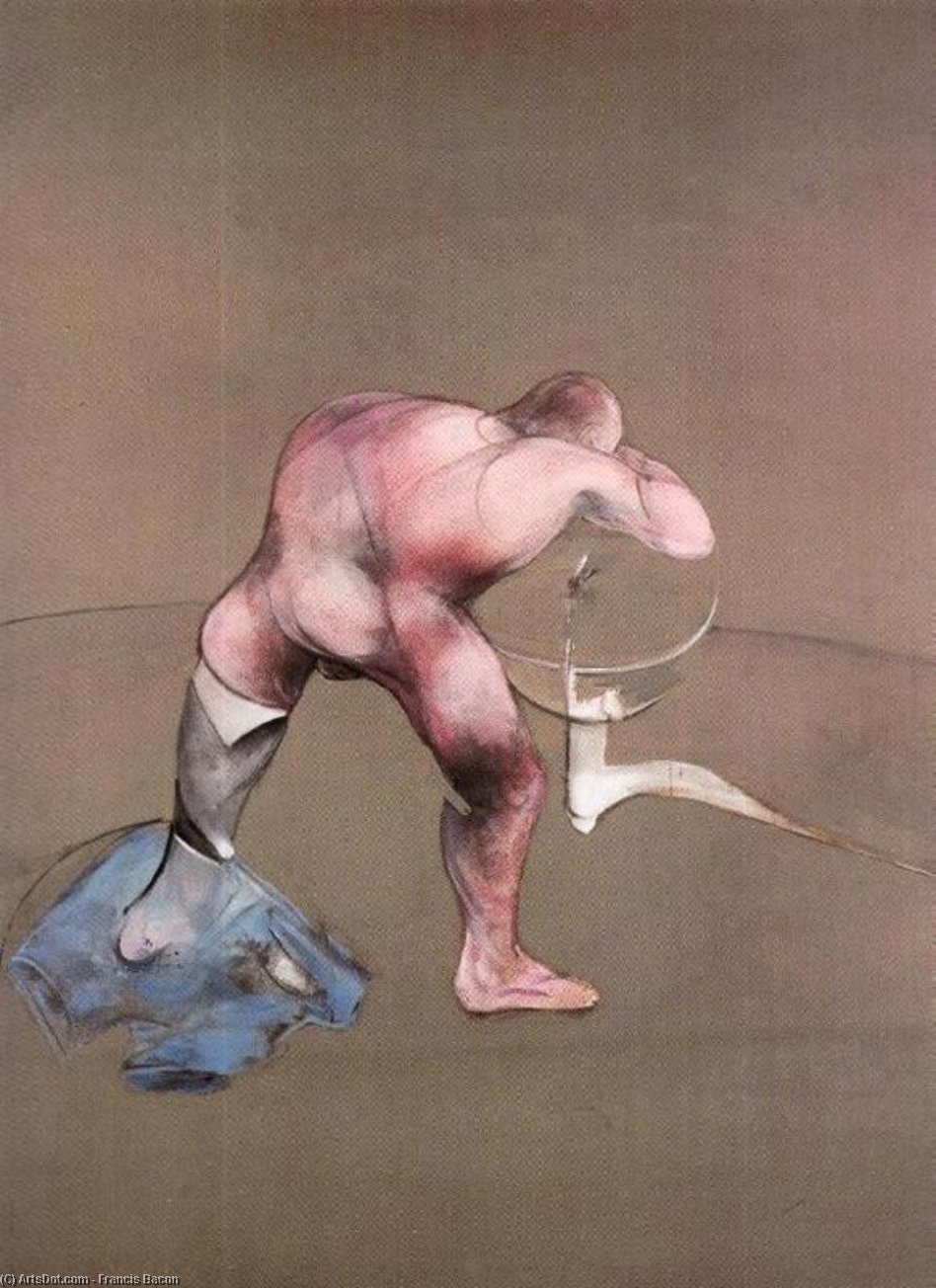
A Portrait of Existential Angst: Examining Francis Bacon’s “Man at Washbasin”
Francis Bacon’s “Man at Washbasin,” painted in 1953, stands as one of the most unsettling and iconic images of his oeuvre—a testament to the artist's unwavering commitment to portraying the human condition stripped bare of illusion. More than just a depiction of a man bathing, it’s an exploration of profound psychological distress, rendered with visceral intensity that continues to captivate audiences decades after its creation.
Style and Technique: Expressionist Boldness
Bacon eschewed traditional academic painting methods entirely, opting for a fiercely independent style rooted in expressionism. He rejected the pursuit of beauty or idealized representation, instead prioritizing raw emotion and psychological truth above all else. The painting’s technique is characterized by thick impasto—a layering of paint that creates palpable texture—and aggressive brushstrokes that convey movement and unease. Bacon famously stated he wanted to “paint what I see,” not what I want to see, a dictum that perfectly encapsulates his artistic philosophy.
Historical Context: The Shadow of Postwar Britain
“Man at Washbasin” emerged during the bleak aftermath of World War II in Britain—a period marked by disillusionment and anxiety. Bacon’s work reflects this pervasive mood of uncertainty, mirroring the anxieties felt by individuals grappling with trauma and loss. Simultaneously, it engages with broader philosophical currents exploring themes of mortality, isolation, and the absurdity of existence – ideas championed by thinkers like Sartre and Camus.
Symbolism: The Vulnerable Body and Ritualistic Action
The painting’s symbolism is multilayered and deliberately ambiguous. The naked man at the washbasin represents vulnerability—a confrontation with one's own mortality and fragility. The towel serves as a futile barrier against exposure, highlighting the inescapable reality of human suffering. Furthermore, the act of bathing itself can be interpreted as a ritualistic gesture—an attempt to cleanse oneself from inner turmoil, yet ultimately unsuccessful in achieving solace.
Emotional Impact: Confronting Darkness Within
"Man at Washbasin" doesn’t offer comfort or reassurance; it demands confrontation. Its unsettling imagery forces the viewer to confront the darkness within themselves—the anxieties and fears that lurk beneath the surface of everyday life. Bacon's masterful manipulation of color—primarily reds, oranges, and yellows—amplifies this emotional intensity, creating a visual experience that lingers long after one has gazed upon it. It remains a powerful reminder that art can serve as a catalyst for introspection and a profound engagement with the complexities of human emotion.
- Artist: Francis Bacon
- Year Painted: 1953
- Medium: Oil on Canvas
- Dimensions: Unknown