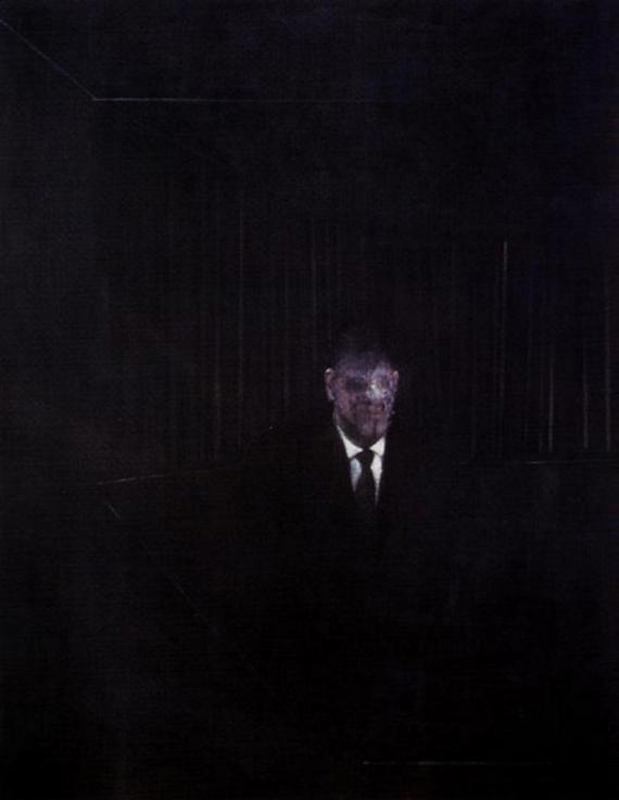
Man in Blue III: A Descent Into Darkness
Francis Bacon’s “Man in Blue III,” completed in 1954, stands as an arresting testament to the artist's preoccupation with psychological torment and existential dread. More than just a depiction of a figure—it’s a visceral exploration of vulnerability, isolation, and the unsettling confrontation with mortality, rendered in Bacon’s signature style.
The photograph captures a stark black and white image of this iconic painting. Overall Impression: The image is dominated by darkness, conveying a profound sense of claustrophobia and anxiety. Strong vertical lines of the doorframe contrast with the amorphous shape of the man's body, creating depth but also reinforcing confinement.
Composition: Centrally positioned within the frame, the solitary figure commands immediate attention. The doorway serves as a framing device, hinting at an unseen space beyond and amplifying the feeling of entrapment. Bacon’s deliberate use of geometric elements—the doorframe—contrasts sharply with the organic distortions of the human form.
Color Palette: Strikingly monochromatic, “Man in Blue III” utilizes shades of black, white, and gray to heighten emotional intensity. This tonal range eschews vibrant hues, prioritizing textural detail and emphasizing the figure’s vulnerability against a backdrop of impenetrable shadow.
Stylistic Innovation & Expressionist Technique
Bacon's approach defied traditional artistic conventions, embracing distortion and fragmentation as tools for conveying inner turmoil. He wasn’t formally trained; instead, he honed his craft through relentless experimentation with materials and techniques—primarily oil paints on canvas—drawing inspiration from artists like Edvard Munch and Pablo Picasso.
The photograph faithfully reproduces Bacon's expressive style, characterized by jagged brushstrokes and layering of paint that imbue the artwork with palpable physicality. The artist’s technique prioritizes capturing raw emotion rather than achieving photographic realism; this deliberate departure from conventional representation underscores the painting’s psychological depth.
Symbolism & Emotional Resonance
"Man in Blue III" delves into profound symbolic territory, mirroring themes of loneliness and alienation prevalent throughout Bacon's oeuvre. The figure’s ambiguous expression—unreadable yet undeniably burdened—represents a universal struggle for identity and meaning amidst the anxieties of modern existence.
The dark setting symbolizes repression and fear, while the distorted body embodies vulnerability and psychological disintegration. Bacon deliberately disrupts visual harmony to provoke contemplation on the human condition, inviting viewers to confront uncomfortable truths about mortality and suffering.
Historical Context & Legacy
Painted in the aftermath of World War II, “Man in Blue III” reflects the pervasive atmosphere of disillusionment and uncertainty that characterized the period. Bacon’s work aligns with Expressionism's broader exploration of psychological states—a reaction against rational optimism and a commitment to portraying subjective experience.
Despite its unsettling imagery, "Man in Blue III" remains one of Bacon’s most celebrated paintings, lauded for its masterful execution and enduring emotional impact. It continues to inspire artists and critics alike, cementing Bacon's place as a pivotal figure in 20th-century art history.