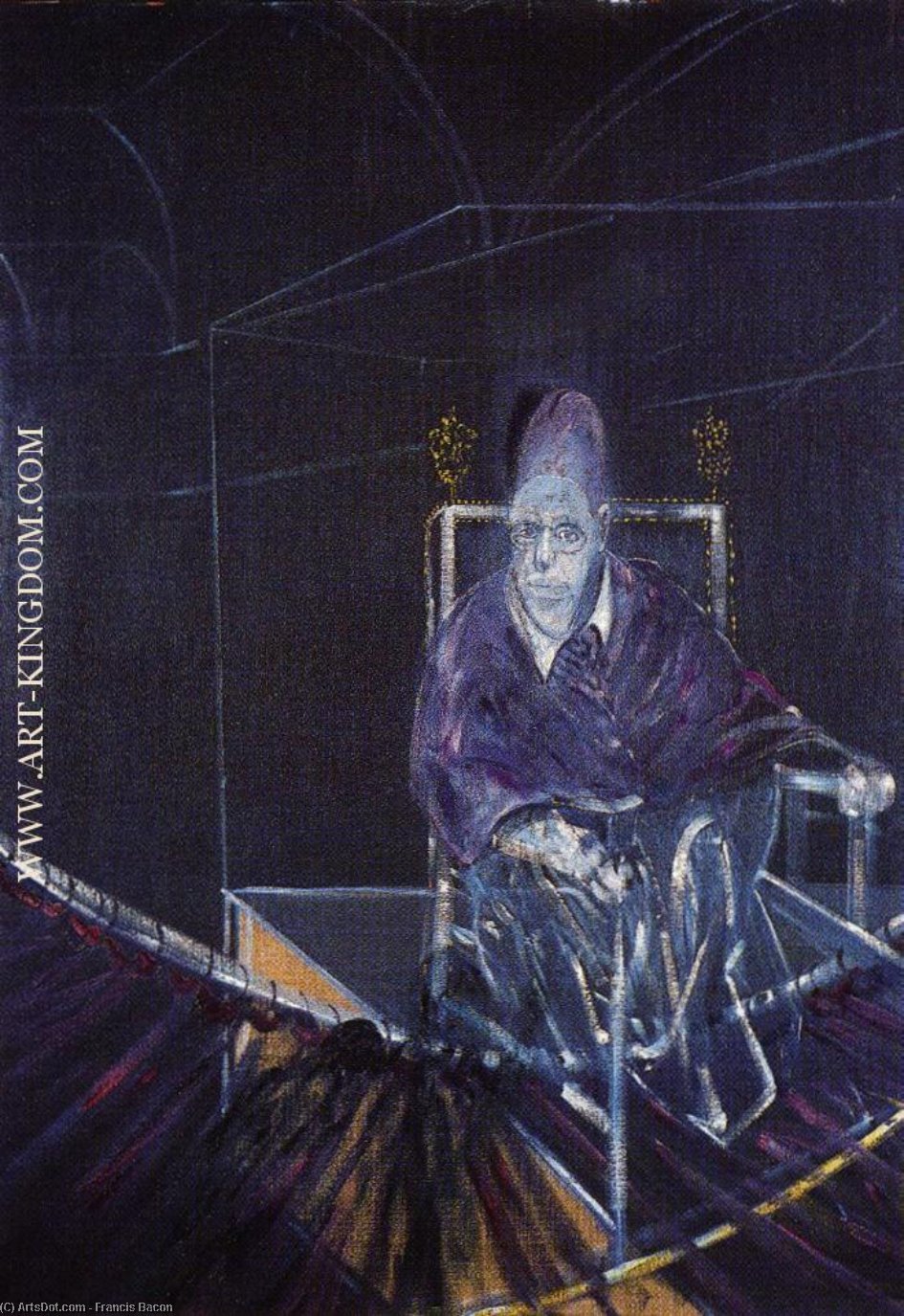
Pope I, 1951: A Study in Trauma and Distortion
Francis Bacon’s *Pope I*, painted in 1951, stands as a haunting testament to the anxieties of postwar Britain and a profound exploration of psychological torment. More than just a portrait, it's an unsettling confrontation with authority—represented here by the papal figure—rendered through Bacon’s signature style of grotesque distortion and claustrophobic composition. The artwork’s genesis lies in Bacon’s fascination with Velázquez’s iconic *Portrait of Pope Innocent X*, which he encountered primarily through postcards, a deliberate choice that underscores the artist's preoccupation with confronting idealized representations of power with their inherent vulnerability.
- Subject Matter: The painting depicts a solitary figure seated in a chair, positioned within an enclosed space reminiscent of a cage—a visual metaphor for confinement and repression. Bacon deliberately eschewed traditional portraiture conventions, opting instead for a depiction that prioritizes emotional intensity over realistic likeness.
- Style & Technique: Bacon’s distinctive style is characterized by jagged lines, fragmented forms, and a palette dominated by muted reds, browns, and blacks—colors associated with decay and suffering. He employed oil paint on canvas, applying thick impasto strokes that contribute to the painting's tactile quality and heighten its expressive power.
- Historical Context: Created in the immediate aftermath of World War II, *Pope I* reflects the pervasive sense of disillusionment and trauma experienced by artists grappling with the horrors of conflict. Bacon’s work engages directly with anxieties surrounding totalitarian regimes and the erosion of moral certainty—themes powerfully articulated during the Nuremberg Trials.
Symbolism: The cage-like structure enclosing the papal figure symbolizes imprisonment, both physical and psychological. Bacon deliberately references Velázquez's portrait, highlighting the artist’s desire to destabilize idealized representations of power by exposing their underlying anxieties. The umbilical cord beneath the throne serves as a visual reminder of vulnerability and dependence—a subtle critique of paternalistic authority. Furthermore, the inclusion of spectacles suggests an awareness of observation and scrutiny, mirroring the pressures faced by individuals under surveillance.
- Emotional Impact: *Pope I* evokes a palpable sense of unease and dread through its unsettling imagery and distorted perspective. Bacon’s masterful manipulation of color and form compels viewers to confront uncomfortable truths about human nature—specifically, the capacity for cruelty and repression.
- Reception & Legacy: The painting garnered considerable acclaim upon its debut in 1956, cementing Bacon's reputation as one of Britain’s foremost artists of his era. Critics lauded its boldness and psychological depth, recognizing it as a seminal work within Expressionism—a movement that championed subjective experience and emotional honesty.
The artwork’s enduring fascination stems from its ability to capture the essence of existential anguish—a preoccupation with mortality and the absurdity of existence—that defines Bacon's oeuvre. *Pope I* remains a powerful reminder of art’s capacity to confront uncomfortable realities and provoke profound contemplation about the human condition. Its unsettling beauty continues to inspire artists and collectors alike, securing its place as a cornerstone of modern art history.