A Study in Existential Dread
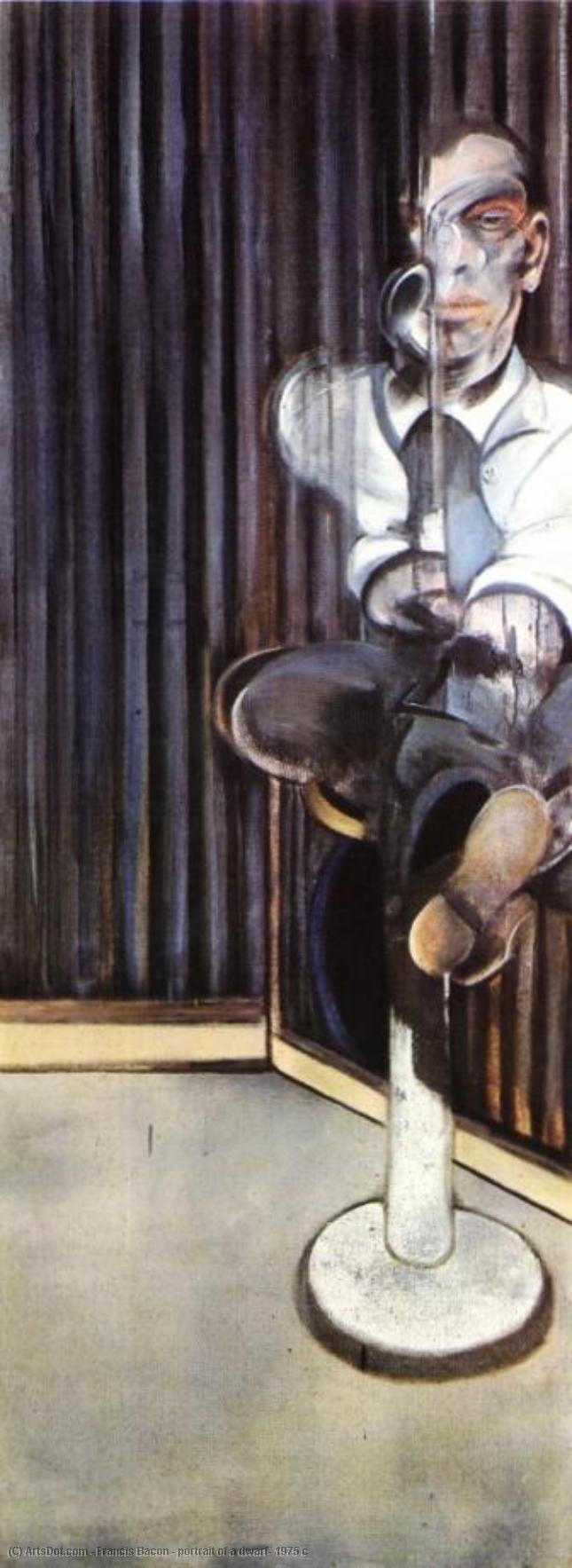
In the hauntingly visceral masterpiece "Portrait of a Dwarf," created circa 1975, Francis Bacon invites the viewer into a profound confrontation with the human condition. This is not merely a portrait of an individual; it is a chilling distillation of existential dread and psychological torment. The central figure, seated rigidly upon a chair, dominates the canvas with a posture that suggests both confinement and suppressed emotion. Through his uniquely distorted lens, Bacon eschews the comforts of idealized beauty, opting instead for a grotesque representation of a man whose very features seem to vibrate with anguish. The composition is masterfully claustrophobic, utilizing dark vertical lines—reminiscent of heavy curtains or partitions—to trap the subject within a void of isolation, making the viewer an intimate witness to a private moment of profound vulnerability.
The symbolism embedded within this work serves to deepen its emotional resonance. A subtle yet potent detail is the cigarette held between the figure's fingers; far from being a mere incidental accessory, it functions as a visual metaphor for self-destructive habits and the futile human attempt to ward off an encroaching despair. The palette is intentionally somber, dominated by heavy shades of grey, black, and brown, which are punctuated only by subtle, unsettling flashes of pink and raw flesh tones. This calculated use of color creates a sense of decay and biological reality, stripping away the pretenses of the subject to reveal the trembling pulse of existence beneath the skin.
Expressionism and the Mastery of Texture
Technically, "Portrait of a Dwarf" stands as a triumph of Expressionism. Bacon rejects the polished precision of academic traditions in favor of a technique that prioritizes raw, subjective experience over objective accuracy. His use of oil paint is characterized by loose, gestural brushstrokes and energetic marks that allow the pigment to retain its physical presence on the canvas. There is no meticulous blending here; instead, the textured surfaces pulsate with a palpable tension, as if the paint itself were struggling to contain the subject's distress. The lighting is harsh and artificial, casting deep, dramatic shadows that accentuate the contorted features of the man, further flattening the perspective and intensifying the psychological weight of the scene.
For the discerning collector or interior designer, this artwork offers a profound sense of gravity and intellectual depth. It is a piece that demands attention and provokes conversation, making it an extraordinary focal point for spaces designed to evoke contemplation and strength. Whether viewed as a historical landmark of post-war British figurative painting or as a timeless exploration of human suffering, a high-quality reproduction of this work brings the uncompromising vision of Francis Bacon into the modern home. It serves as a reminder of the power of art to confront the shadows of our own existence, transforming the visceral reality of pain into a sublime and enduring aesthetic experience.