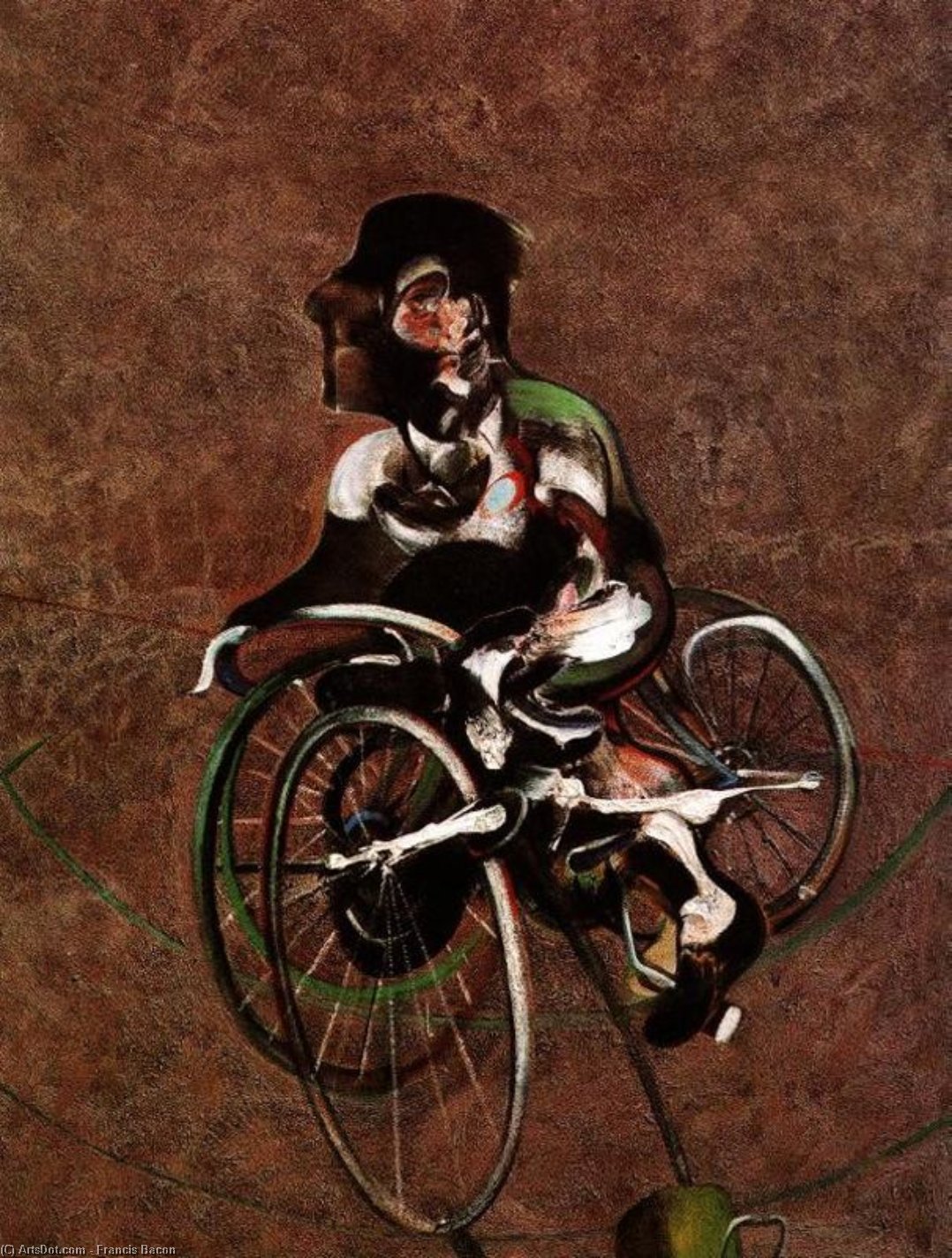
Francis Bacon’s unsettling portrait captures George Dyer astride a bicycle amidst a stark chair backdrop—a visceral depiction emblematic of his signature style and the bleak emotional landscape of the 1960s. Explore this iconic artwork and bring its haunting beauty into your home.
Explore Francis Bacon's (1909-1992) emotionally charged figurative paintings. Known for distorted forms, existential themes & bold expressionism, he remains a cornerstone of modern art. Discover key works & legacy.
A Portrait of Isolation: Exploring Francis Bacon’s “Portrait of George Dyer Riding a Bicycle”
The painting "Portrait of George Dyer Riding a Bicycle," created in 1966 by Francis Bacon, stands as a haunting testament to the artist's preoccupation with psychological torment and the unsettling beauty found within fractured perception. More than just a depiction of a man on a bicycle—a seemingly mundane subject—it’s an intensely visceral exploration of vulnerability and loneliness rendered through Bacon’s signature style. This artwork encapsulates the core tenets of his artistic vision, cementing its place as one of his most recognizable and emotionally resonant pieces.
Style and Technique: The Brutal Elegance of Expressionism
Bacon's approach to painting defies easy categorization but firmly resides within the realm of Expressionism. He eschewed traditional representational methods, prioritizing emotional intensity over accurate depiction. Instead of striving for realism, Bacon employed a technique characterized by distorted figures rendered in thick, impasto paint—a process where pigment is applied directly onto the canvas with considerable force and texture. The bicycle rider’s form isn't idealized; it’s brutally fragmented, mirroring the artist’s own internal struggles. Layers upon layers of paint create a palpable sense of unease and claustrophobia, capturing not just what is seen but what is felt—a profound disturbance beneath the surface. Bacon famously stated that he wanted to “paint what I see,” which translates into an uncompromising commitment to conveying raw emotion through visual language.
Historical Context: The Shadow of Existential Angst
The painting emerged during a period marked by significant societal upheaval following World War II, reflecting the anxieties and disillusionment prevalent in post-war Europe. Bacon’s artistic output coincided with a burgeoning interest in psychoanalysis and existential philosophy—ideas that questioned traditional notions of identity and purpose. Dyer himself was a troubled figure – a poet battling mental illness – and Bacon deliberately chose him as his subject to confront themes of isolation, trauma, and the fragility of human existence. The bicycle serves as an ironic symbol; it represents movement and freedom, yet within Bacon’s canvas, it becomes a cage—a vehicle for confinement rather than liberation.
Symbolism: Fractured Form and Emotional Resonance
The fractured anatomy of Dyer's figure is paramount to understanding the painting’s symbolic significance. Bacon deliberately distorted the human form, mirroring the disintegration of psychological stability. The bicycle itself isn’t merely an object; it embodies a sense of precariousness and vulnerability. Its positioning within the frame contributes to the overall feeling of confinement—a visual representation of Dyer's internal turmoil. Furthermore, the presence of two figures in the background – one standing behind Dyer and another further back – adds layers of complexity, hinting at observation and judgment, perhaps reflecting the artist’s own self-awareness and critique of human behavior.
Emotional Impact: Confronting Darkness Within Light
Ultimately, “Portrait of George Dyer Riding a Bicycle” compels viewers to confront uncomfortable truths about the human condition. Bacon doesn't offer solace or comfort; he presents a disturbing image that lingers in the mind long after viewing it. The painting’s unsettling beauty derives from its ability to capture the essence of despair without resorting to melodrama. It’s a masterful distillation of psychological anguish—a portrait not just of a man but of the human spirit grappling with darkness and uncertainty. This artwork continues to resonate powerfully today, demonstrating Bacon's enduring legacy as one of the most influential artists of the 20th century.