The Visceral Echoes of Dublin: Unpacking Francis Bacon’s Portrait
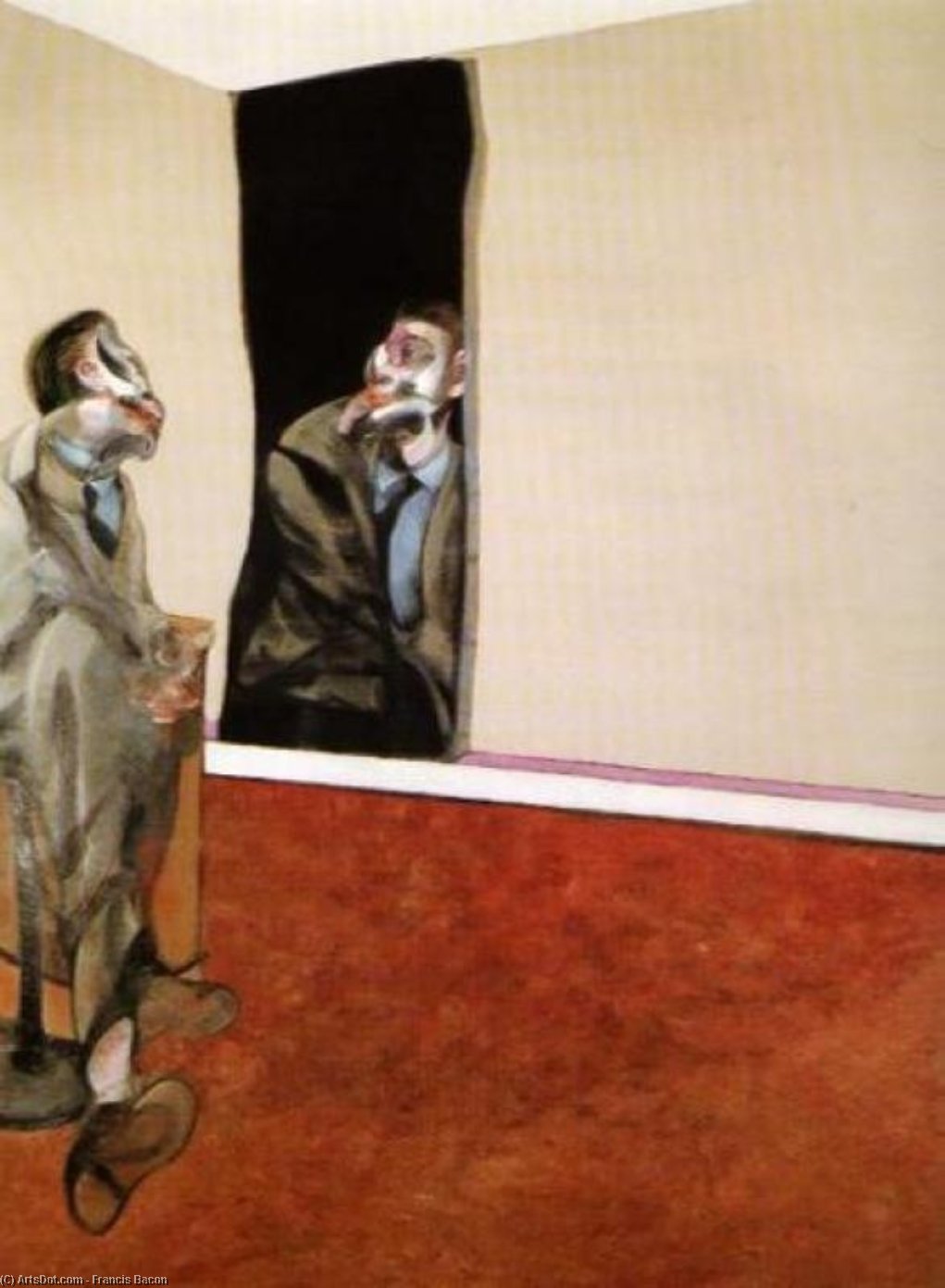
Francis Bacon's "Portrait of George Dyer Staring into a Mirror" isn’t merely a depiction of two men; it’s a raw, unsettling plunge into the heart of human vulnerability and the fraught dynamics of friendship. Painted in 1967, this work stands as a pivotal moment in Bacon’s oeuvre, capturing a specific, intensely personal relationship against the backdrop of post-war Britain's turbulent artistic landscape. The painting immediately confronts us with its starkness – a red-walled office setting, dominated by the distorted reflection of George Dyer within a mirror. This isn’t a conventional portrait; it’s an excavation of emotion, a visual representation of psychological tension and unspoken anxieties.
Bacon's relationship with Dyer was notoriously complex and deeply intertwined with his own artistic process. Dyer, a struggling artist and musician himself, became Bacon’s constant companion, model, and confidante during the 1960s. Their connection was fueled by mutual fascination and a shared sense of alienation – Dyer’s troubled past and volatile personality mirroring, in some ways, Bacon's own internal struggles. The painting isn’t about capturing Dyer’s likeness; it’s about embodying his essence—his restlessness, his vulnerability, and the shadows that clung to him.
Distortion as Revelation: Technique and Style
Bacon’s signature technique is brutally evident here. He employs a method of working from photographs, not directly from life, which he believed inhibited true expression. The image is built up through layers of paint – turpentine, oil, and even rags are smeared across the canvas, creating an almost violent surface texture. This deliberate disruption of form isn’t haphazard; it's a conscious effort to break down recognizable representation and reveal something deeper—the raw energy beneath the surface. The figures aren’t sharply defined; they bleed into one another, their features dissolving into amorphous shapes. The red walls amplify this sense of claustrophobia and unease, further isolating the subjects within their shared space.
Notice particularly the mirror itself – it's not a pristine reflection but a fractured, distorted image, mirroring Dyer’s own internal turmoil. Bacon’s use of color is equally significant. The stark red contrasts sharply with the muted tones of the figures and the background, drawing attention to the emotional intensity of the scene. The overall effect is one of disorientation and psychological pressure – we are invited to confront the uncomfortable truths about human connection and the fragility of identity.
Symbolism and Context: A Portrait of a Troubled Era
“Portrait of George Dyer Staring into a Mirror” resonates powerfully within the context of 1960s Britain. The era was marked by social upheaval, artistic experimentation, and a growing sense of existential anxiety. Bacon’s work reflects this mood—a questioning of traditional values, an exploration of psychological darkness, and a rejection of idealized representations. Dyer himself embodies many of these anxieties – a troubled artist struggling with addiction and mental health issues. The mirror becomes a potent symbol of self-reflection, but also of the deceptive nature of appearances and the difficulty of truly knowing oneself or another.
Furthermore, Bacon’s fascination with the double portrait—presenting two perspectives simultaneously—adds another layer of complexity. It suggests that Dyer is not simply being observed; he's actively confronting his own reflection, grappling with his identity and his place in the world. The painting isn’t a static image; it’s a dynamic representation of a complex relationship unfolding in real-time.
The Enduring Power of Raw Emotion
Ultimately, “Portrait of George Dyer Staring into a Mirror” is a testament to Bacon's ability to capture the rawest emotions—fear, vulnerability, and loneliness—with unflinching honesty. It’s a challenging but profoundly rewarding work of art that continues to resonate with viewers today. Reproductions offer an opportunity to experience this intensity firsthand, bringing Bacon’s visceral vision into your own space. Consider how the painting's unsettling atmosphere and distorted forms can add depth and intrigue to any interior design scheme – a reminder that art doesn’t just decorate; it provokes thought and evokes feeling.