A Portrait of Existential Anguish: Francis Bacon’s 1966 Masterpiece
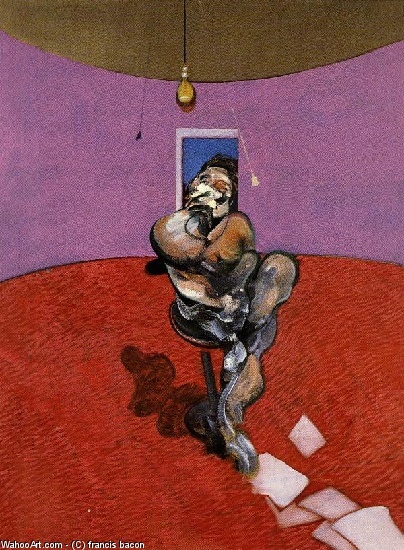
Francis Bacon's *Portrait of George Dyer Talking*, painted in 1966, is a searing and psychologically charged depiction of his lover, George Dyer. More than just a likeness, this work embodies the raw emotional intensity that defines Bacon’s oeuvre, solidifying its place as a pivotal example of Expressionist portraiture. The painting recently sold for over £42 million, underscoring its significance in the art world and its appeal to collectors.
Subject & Context: A Tumultuous Relationship
The subject, George Dyer, was not merely Bacon’s lover but also a frequent – and often tormented – model. Their relationship was famously volatile, marked by passion, jealousy, and ultimately, tragedy. Dyer's suicide in 1971 deeply affected Bacon, inspiring a series of poignant memorial paintings. Knowing this biographical context adds layers of meaning to the work; the painting feels less like observation and more like an excavation of Dyer’s inner turmoil – and perhaps, Bacon’s own. The film *Love Is the Devil: Study for a Portrait of Francis Bacon* (1998) offers further insight into their complex dynamic.
Style & Technique: Deconstructing Form
Bacon's style is instantly recognizable. He eschews traditional portraiture conventions, opting instead to *distort and fragment the human form*. The painting showcases his signature use of bold, contrasting colors – particularly vibrant reds, pinks, and blues – creating a claustrophobic and unsettling atmosphere.
Impasto, the thick application of paint with visible brushstrokes, is central to Bacon’s technique. This tactile quality lends a visceral energy to the work, emphasizing the physicality of Dyer's presence while simultaneously suggesting his vulnerability. The flattened perspective and ambiguous space contribute to the painting’s dreamlike – or rather, nightmarish – quality.
Symbolism & Interpretation: Confinement & Communication
The composition is rich with symbolic elements. Dyer sits on a revolving office stool within an abstract, semi-circular room, suggesting a sense of confinement and disorientation. His hands partially obscure his face, hinting at inner struggle or a desire to conceal himself. The arched doorway in the background offers a tantalizing glimpse of another space, perhaps representing escape or transformation, yet remains ultimately unreachable. The discarded papers around Dyer’s feet could symbolize fragmented thoughts or lost opportunities.
The very act of “talking” is rendered ambiguous; is he speaking *to* someone, or simply muttering to himself?
Emotional Impact & Legacy: A Mirror to the Modern Psyche
*Portrait of George Dyer Talking* isn’t a comfortable painting. It evokes feelings of anxiety, isolation, and existential dread. Bacon doesn't offer beauty in the conventional sense; instead, he presents an unflinching portrayal of human vulnerability and psychological distress. This honesty is what makes his work so compelling and enduring. The painting stands as a powerful testament to the anxieties of the 20th century and continues to resonate with viewers today. Its influence can be seen in contemporary art that explores themes of identity, alienation, and the darker aspects of the human condition.
- Style: Expressionism
- Medium: Oil on canvas
- Key Characteristics: Distorted forms, bold colors, impasto technique, psychological intensity.