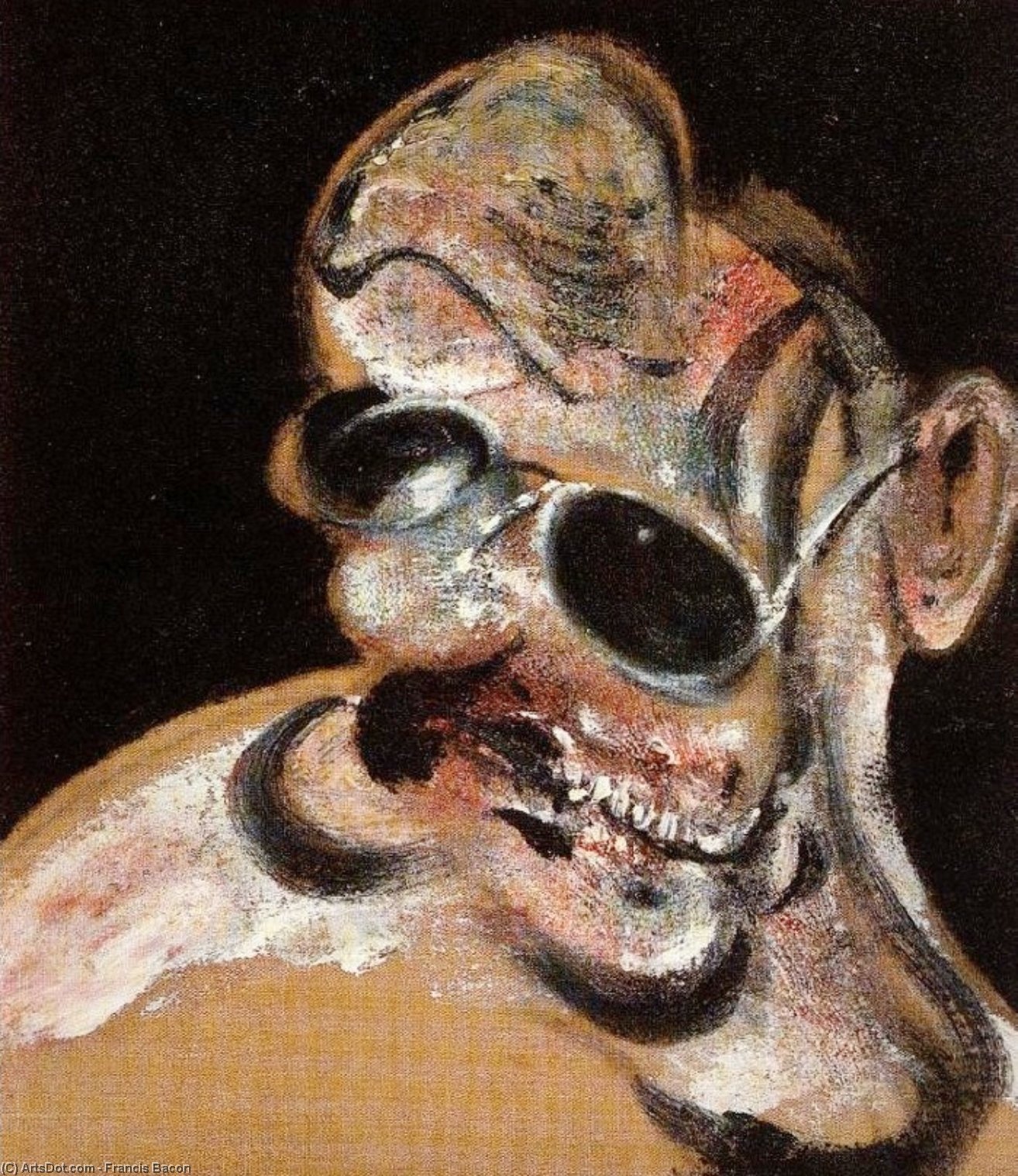
Portrait of Man with Glasses III, 1963 - This striking oil painting by Francis Bacon captures the unsettling gaze of a man obscured by sunglasses. Executed in 1963, it exemplifies Bacon's signature style – visceral emotion conveyed through distorted forms and textures.
A Portrait of Existential Angst: Examining Francis Bacon’s “Study After Velázquez”
Francis Bacon's "Study After Velázquez," completed in 1953, stands as one of the most unsettling and psychologically astute paintings of its era. It’s not merely a depiction of a figure; it’s an embodiment of profound unease—a visceral exploration of human vulnerability confronted with the inescapable realities of mortality.
The painting's genesis lies in Bacon’s fascination with Diego Velázquez’s monumental portrait “Las Meninas,” which depicts King Philip IV and his court. Rather than attempting a straightforward imitation, Bacon dismantled Velázquez’s composition, fracturing it into grotesque shards of flesh and pigment. This deliberate act of fragmentation isn’t simply stylistic; it mirrors the disintegration of identity—the way in which experience relentlessly chips away at our sense of self.
- Style: Bacon's style is famously described as “nightmarish,” characterized by distorted figures, grotesque textures, and a pervasive atmosphere of dread. He rejected academic conventions entirely, prioritizing emotional expression over realistic representation.
- Technique: Bacon employed a technique he termed "squeeze painting," applying paint directly to the canvas with his hands—a method that ensured maximum spontaneity and allowed him to capture the immediacy of feeling. The resulting surface is uneven, riddled with ridges and punctures, mirroring the fractured psychological landscape depicted within.
- Historical Context: Created in the wake of World War II, "Study After Velázquez" reflects the anxieties of a generation grappling with trauma and disillusionment. Bacon’s work anticipates the existentialist philosophies championed by Sartre and Camus—a preoccupation with freedom, responsibility, and the absurdity of existence.
The figure at the center of the canvas is rendered in an almost embryonic state—a grotesque parody of Velázquez's idealized depiction. Its limbs are contorted, its torso riddled with holes, suggesting a profound loss of control and a confrontation with decay. The sickly pallor of its skin underscores the vulnerability inherent in human existence.
Symbolism: Bacon’s use of color—primarily crimson and ochre—amplifies the painting's emotional impact. Crimson symbolizes passion, violence, and death—themes recurrent throughout Bacon’s oeuvre—while ochre evokes earthiness, decay, and the inescapable passage of time. The holes puncturing the figure’s flesh serve as visual metaphors for wounds inflicted by experience—both physical and psychological.
"Study After Velázquez" transcends mere visual representation; it compels viewers to confront uncomfortable truths about themselves and the human condition. It remains a haunting testament to Bacon's unparalleled ability to translate inner turmoil into enduring artistic achievement, cementing its place as a cornerstone of 20th-century art.