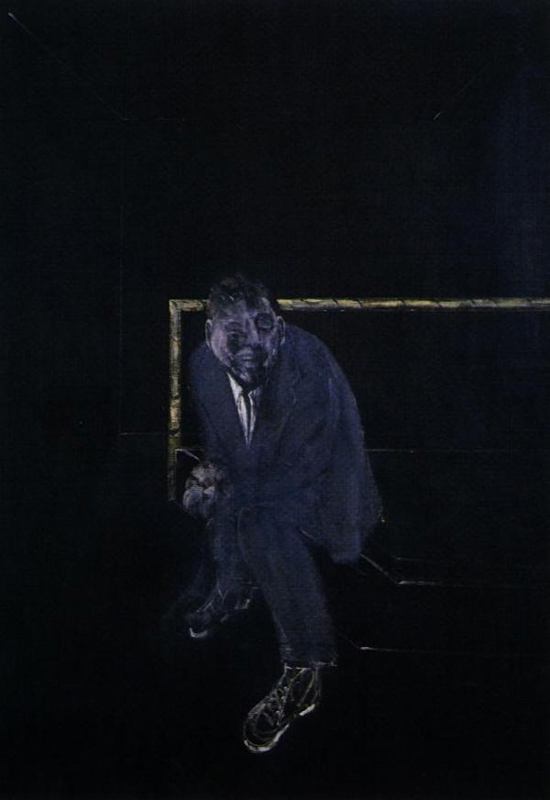
A Portrait of Existential Angst: Exploring Francis Bacon’s “Study After Velázquez”
Francis Bacon’s “Study After Velázquez,” completed in 1953, stands as one of the most unsettling and psychologically astute paintings of its era. It's not merely a depiction of a figure; it’s an excavation into the depths of human consciousness—a visceral confrontation with fear, vulnerability, and the inescapable awareness of mortality.
The painting draws heavily from Diego Velázquez’s “Las Meninas,” arguably one of the greatest portraits in Western art history. Bacon doesn't attempt to recreate Velázquez’s masterpiece faithfully; instead, he fragments it, distorting and fracturing the image into a series of grotesque, overlapping forms. This deliberate departure from realism is central to Bacon’s artistic vision—he sought not to represent what he saw but to express what he felt.
- Style: Bacon's style is characterized by its brutal honesty and uncompromising exploration of psychological torment. He eschewed traditional techniques, favoring a method he termed “intuitive painting,” where he allowed subconscious impulses to guide his brushstrokes.
- Technique: Bacon employed a distinctive layering technique—applying paint in multiple thin glazes over a textured surface created with collage materials like gauze and burlap. This process produced a disconcerting sense of depth and movement, mirroring the turbulent inner life he sought to portray.
Historically, “Study After Velázquez” emerged during the bleak aftermath of World War II—a period marked by disillusionment and anxiety about the future. Bacon’s preoccupation with themes of death and decay reflects the pervasive anxieties of his time, mirroring the existential concerns articulated by philosophers like Sartre and Camus.
Symbolism: The figure in “Study After Velázquez” is deliberately ambiguous—its face obscured, its body contorted into grotesque poses. This anonymity serves as a conduit for universal human experience—representing not an individual but rather the collective struggle against fear and despair. The fragmented composition symbolizes the disintegration of identity and the breakdown of rational thought.
Emotional Impact: Viewing “Study After Velázquez” is undeniably disturbing—it confronts the viewer with uncomfortable truths about the human condition. Yet, it’s precisely this unsettling quality that elevates the painting to its enduring significance. Bacon compels us to confront our own mortality and to grapple with the darker aspects of our psyche—leaving an indelible mark on anyone who dares to contemplate its profound emotional resonance.
The Collage Technique: A Gateway to Inner Turmoil
Bacon’s innovative use of collage – incorporating materials like gauze, burlap, and even fragments of newspaper – wasn't simply a stylistic choice; it was an integral component of his artistic process. These textured surfaces served as a springboard for expressive brushstrokes, amplifying the painting’s unsettling atmosphere.
Material Exploration: Bacon meticulously experimented with various collage materials, seeking to capture the tactile qualities of decay and disintegration—mirroring the psychological fragmentation he aimed to convey.
Surface Texture: The resulting surface texture – reminiscent of weathered skin or crumbling stone – created a palpable sense of unease and disorientation. It actively resisted conventional notions of beauty, prioritizing emotional impact over visual harmony.
Influences Beyond Velázquez
While “Study After Velázquez” undeniably serves as the foundational image for Bacon’s work, his artistic sensibilities extended far beyond the confines of Baroque painting. He drew inspiration from Surrealist artists like Salvador Dalí and René Magritte—embracing dreamlike imagery and challenging viewers' perceptions of reality.
Surrealist Echoes: The unsettling juxtaposition of forms and perspectives found in “Study After Velázquez” anticipates the Surrealists’ fascination with irrationality and subconscious desire.
Psychological Depth: Bacon’s exploration of psychological complexity—similar to that pursued by Freud—reflects a broader intellectual engagement with psychoanalytic theory.
A Legacy of Discomforting Beauty
"Study After Velázquez" remains a cornerstone of modern art, continuing to provoke debate and inspire awe. Its enduring power lies in its ability to capture the essence of human vulnerability—forcing us to confront our fears and anxieties without offering easy answers or comforting illusions.