A Portrait of Trauma: Examining Francis Bacon’s “Self Portrait”
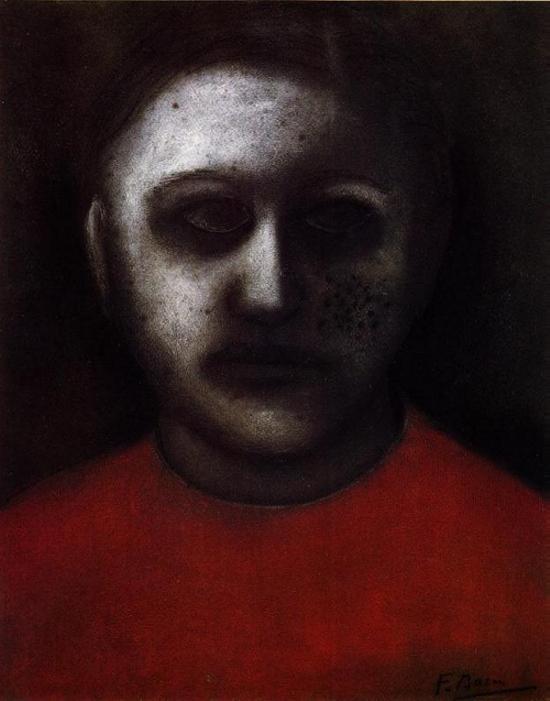
The canvas holds an unsettling gaze – a man’s face rendered in stark crimson against a bruised violet backdrop, embodying the profound anxieties that defined the artist's oeuvre. This is Francis Bacon’s “Self Portrait,” painted in 1930, and it transcends mere representation; it delves into the depths of psychological torment, establishing itself as one of Bacon’s most iconic works and a cornerstone of British Surrealism.
- Subject Matter & Style: Bacon meticulously captured his own visage, fracturing it into grotesque distortions—a deliberate rejection of idealized portraiture prevalent during his time. The style is unmistakably Surrealist, prioritizing emotional expression over realistic depiction. Influenced by artists like Giorgio Morandi and Ernst Käthe Kollwitz, Bacon eschewed conventional artistic conventions to convey inner turmoil with visceral immediacy.
- Technique: Bacon employed a revolutionary technique—a method he termed “knife painting.” Rather than brushes, he utilized palette knives to apply thick layers of oil paint onto the canvas, creating textured surfaces that resemble flesh and bone. This approach wasn’t merely stylistic; it mirrored Bacon's preoccupation with physicality and decay – themes central to his artistic vision.
Historical Context: The Shadow of War & Existential Dread
Painted in the immediate aftermath of World War I, “Self Portrait” reflects the pervasive disillusionment felt across Europe. Bacon wrestled with anxieties surrounding mortality and trauma – experiences profoundly shaped by his own unstable childhood and fraught relationships. The painting speaks to a broader cultural preoccupation with confronting uncomfortable truths about human existence—a sentiment powerfully articulated during the period’s intellectual ferment.
- Symbolism: The crimson hue dominates the composition, symbolizing blood – both literal and metaphorical – representing pain, suffering, and vulnerability. The fractured face embodies psychological fragmentation, mirroring Bacon's own internal struggles. Furthermore, the violet undertones evoke melancholy and decay, reinforcing the painting’s overarching theme of existential dread.
Emotional Impact & Legacy
“Self Portrait” remains profoundly disturbing yet undeniably captivating. It compels viewers to confront uncomfortable emotions—fear, vulnerability, and despair—forcing them to grapple with questions about identity and the human condition. Bacon’s unflinching honesty cemented his reputation as a visionary artist who dared to explore the darkest recesses of the psyche. Today, reproductions of this masterpiece continue to inspire artists and collectors alike, serving as a testament to its enduring power.
- Interior Design Considerations: When incorporating “Self Portrait” into an interior space, consider pairing it with complementary colors—muted greens or blues—to create a sense of balance. The painting’s textural surface lends itself beautifully to textured wallpaper or upholstery fabrics, enhancing the overall aesthetic experience.
Concluding Thoughts: An Uncompromising Vision
Francis Bacon's “Self Portrait” is more than just an image; it’s a confrontation—a visceral exploration of human vulnerability and psychological complexity. Its enduring influence stems from its refusal to sugarcoat reality, presenting instead a portrait of profound trauma rendered with breathtaking artistry and unwavering conviction.