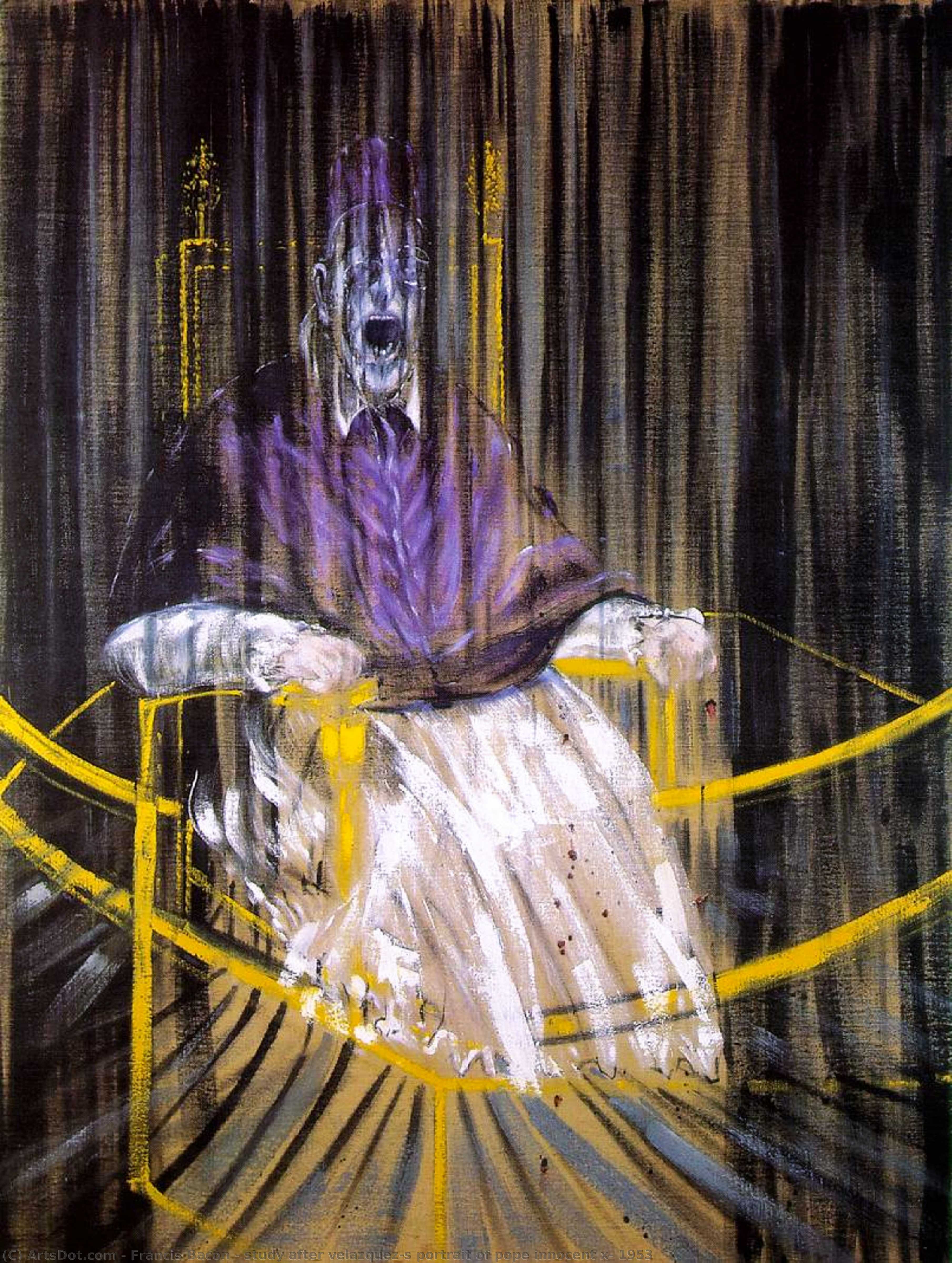
Francis Bacon’s haunting ‘Study After Velázquez’s Portrait of Pope Innocent X’ – a masterpiece of expressionism. Explore its dark allure & powerful symbolism.
Explore Francis Bacon's (1909-1992) emotionally charged figurative paintings. Known for distorted forms, existential themes & bold expressionism, he remains a cornerstone of modern art. Discover key works & legacy.
Discover modern & contemporary art at the Des Moines Art Center! Free admission, sculpture parks, classes & works by Hopper, Matisse & Warhol. Buildings by Saarinen, Pei & Meier.
A Masterpiece of Modern Expressionism
Francis Bacon's *Study After Velázquez's Portrait of Pope Innocent X* (1953) is a seminal work that redefines the boundaries of portraiture and expressionist art. This haunting reinterpretation of Diego Velázquez's iconic 1650 portrait captures the essence of raw emotion and existential angst, making it a must-have for collectors and art enthusiasts alike.
Subject and Composition
The artwork depicts a solitary figure seated on a chair against a dark, vertical-striped background. The central focus is the figure's face, rendered in ghostly white and gray tones, evoking a sense of isolation and melancholy. The bright yellow lines outlining the chair create a stark contrast, drawing the viewer's eye to the figure and emphasizing its presence.
Style and Technique
Bacon's distinctive style is characterized by bold brushstrokes and a dramatic use of color. The thick, expressive lines define the contours of the figure and the chair, adding a sense of chaos and unease. The color palette consists primarily of dark tones—deep blacks, purples, and browns—which dominate the background and the figure's attire. This somber palette is punctuated by the bright yellow lines of the chair, creating a jarring contrast that enhances the emotional intensity of the piece.
Historical Context
This painting is part of Bacon's series inspired by Velázquez's *Portrait of Pope Innocent X*. Unlike Velázquez's realistic and flattering portrayal, Bacon's version distorts the figure, capturing a sense of inner turmoil and existential dread. The artwork was created during a period when Bacon's palette became darker, reflecting his personal struggles and the influence of his tumultuous relationship with Peter Lacy.
Symbolism and Emotional Impact
The ghostly appearance of the figure's face and hands symbolizes emotional detachment and introspection. The bright yellow lines of the chair could represent confinement or the boundaries of the figure's mental state. The vertical folds in the background resemble curtains, emphasizing the figure's isolation and adding to the overall sense of unease.
Why This Artwork Stands Out
*Study After Velázquez's Portrait of Pope Innocent X* is a testament to Bacon's ability to convey deep emotion through distorted forms and dramatic use of color. Its haunting beauty and powerful symbolism make it a timeless piece that continues to captivate viewers. Whether you are an art lover, collector, or interior designer, this artwork adds a layer of sophistication and depth to any space.
Bring This Masterpiece into Your Home
Own a high-quality reproduction of this iconic artwork and experience the raw emotion and artistic brilliance of Francis Bacon. Perfect for contemporary interiors, this piece is sure to become a focal point in your collection, inspiring conversation and admiration. Elevate your space with a touch of modern expressionism and let the dark allure of *Study After Velázquez's Portrait of Pope Innocent X* transform your environment.